Ever wondered why some systems chew through workloads while others stutter? The secret often lies in how your rig handles data. Whether you are dropping a few thousand ZAR on a new build or just trying to squeeze more frames out of your current setup... understanding how unified memory works differently to standard RAM is crucial. Let us dive into the architecture and explore why it matters for performance. ⚡
The Traditional Approach: Standard RAM
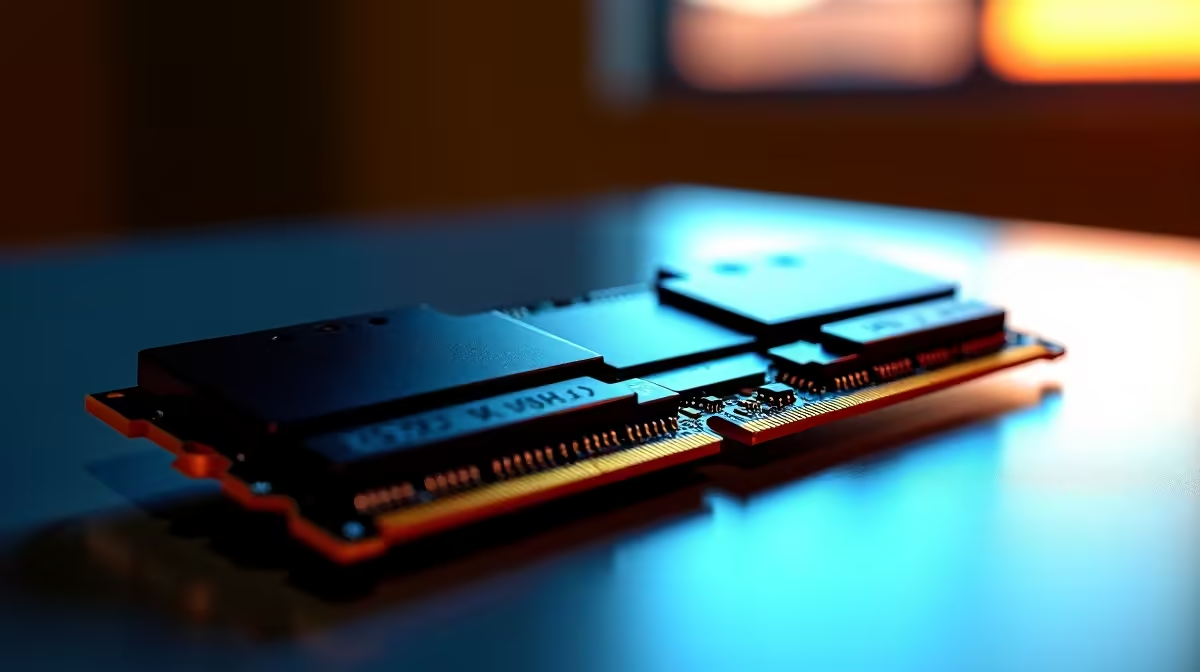
In a classic desktop build, your CPU and graphics card operate in entirely separate neighbourhoods. Your processor relies on standard system memory to keep applications running smoothly. If you need more multitasking power, you simply browse the latest memory kits and slot them right in.
Meanwhile, your graphics card has its own dedicated VRAM. When you load up a heavy game, your CPU has to copy textures and models from the system memory over to the GPU. This constant back-and-forth copying takes time. While modern PCIe lanes are incredibly fast, that tiny delay is exactly what causes micro-stutters during intense gaming sessions.
The Shift to Shared Architecture
Unified memory flips this traditional script entirely. Instead of keeping these data pools separate, the CPU and GPU share a single, massive block of memory. There is absolutely no copying required. When the processor loads a massive 3D model, the graphics core can access that exact same data instantly.
Because this memory is often soldered directly next to the processing chip rather than slotted into traditional PC motherboards, the physical distance data travels is drastically shorter. This physical proximity reduces latency to almost zero. It is the primary reason why modern consoles and advanced laptop chips feel so incredibly snappy. ✨
Upgrade Tip 🔧
Remember that unified memory cannot be upgraded later. If you are buying a system with a shared memory architecture, always spec it higher than you think you need today to future-proof your investment.
Why Does It Matter for Performance?
It all comes down to bandwidth and raw efficiency. Standard RAM setups offer incredible flexibility. You can swap out sticks when your budget allows... making it a favourite for PC builders. However, unified architectures deliver a level of power efficiency that traditional setups struggle to match natively.
If you are rendering 4K video or playing massive open-world titles, eliminating that data-copying phase means smoother frame rates and faster export times. For South African gamers looking to maximise every ZAR, weighing these two architectures is vital. Sometimes a traditional, highly upgradeable powerhouse from our best gaming PC deals is exactly what you need for pure brute force.
Finding Your Perfect Balance
Ultimately, both memory types have their rightful place in the tech landscape. Traditional RAM gives you the ultimate freedom to build, tweak, and upgrade your rig over time. Unified setups give you blistering efficiency right out of the box... though you sacrifice that modular freedom.
Whichever route you choose to optimise your digital workspace, ensuring you get the best value is key. Keeping a close eye on exclusive tech specials guarantees you never overpay for your performance gains. 🚀
Ready to Maximise Your Performance? Whether you want the modular freedom of standard RAM or a pre-built powerhouse, we have the gear you need. Explore our massive range of PC component specials and find the perfect hardware to conquer your next build.