You just dropped thousands of Rands on a dream multi-screen setup. You plug in your cables, boot up your PC, and wait for the magic. But instead of buttery-smooth frames, one screen is stuck at 60Hz... or worse, completely black. Solving display connectivity limitations when running multiple high refresh rate monitors is a common headache for South African gamers. Let us fix that right now.
Understanding Your Bandwidth Bottleneck ⚡
Why does this happen? Every single pixel and frame requires data. When you push 144Hz or 240Hz across several screens, you consume massive bandwidth. Standard cables simply cannot keep up with this demand.
If you are browsing for high-performance monitors, you must match them with the correct connections. DisplayPort 1.4 and HDMI 2.1 are your best friends here. Older ports will throttle your speed and ruin your gaming experience. You cannot push a firehose of data through a garden hose.
Solving Display Connectivity Limitations Step-by-Step
The true secret to solving display connectivity limitations when running multiple high refresh rate monitors lies in Display Stream Compression. DSC is a visually lossless compression technology. It preserves rich colour while freeing up massive amounts of bandwidth.
You must ensure both your graphics card and your screens support it. This feature is especially vital when connecting premium 4K displays alongside ultra-fast competitive panels. Additionally, you should avoid cheap adapters at all costs. A low-quality dongle will instantly strip away your high refresh rate capabilities. Always plug directly into your GPU whenever possible.
Cable Quality Matters 🔧
Always use VESA-certified DisplayPort cables or Ultra High Speed HDMI cables. A cheap cable from the local shop might save you R150 today, but it will cost you hundreds of dropped frames tomorrow.
The Mixed Refresh Rate Dilemma ✨
Many gamers run a fast primary screen and a slower secondary screen. Windows has historically struggled with this mix... often locking the fast monitor to the slower refresh rate. To optimise your setup, ensure hardware acceleration is disabled in background apps like Discord or Chrome. You should also update your GPU drivers regularly. This simple software tweak prevents unnecessary stuttering across your extended desktop.
When Your Graphics Card Reaches Its Limit 🚀
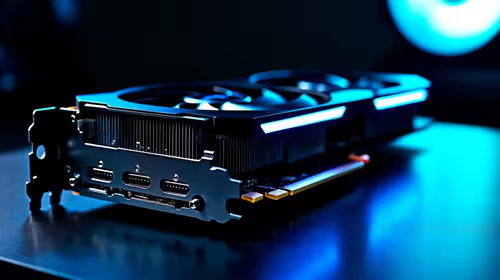
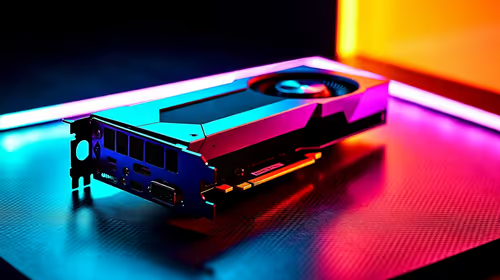
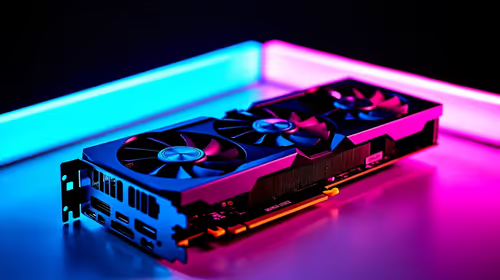
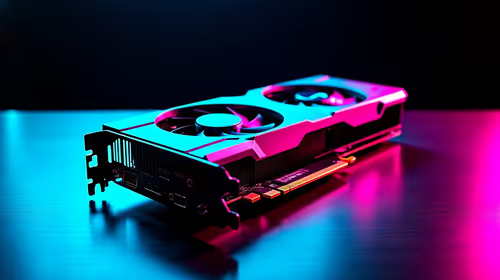
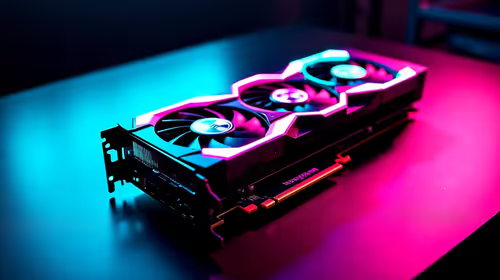
Sometimes your cables are perfect... but your GPU simply lacks the ports or processing power. Most modern cards support up to four distinct displays. However, pushing maximum frames across all of them simultaneously requires serious horsepower.
If your current rig is struggling to keep up, it might be time for a hardware upgrade. Exploring powerful gaming PCs can give you the modern architecture needed for massive multi-display setups.
Do not let outdated hardware hold back your visual experience. You can often find incredible value by keeping an eye on the latest tech specials to upgrade your graphics card or power supply. A stronger system ensures every single monitor runs at its absolute peak performance without dropping a single frame.
Ready to Expand Your View? Do not let pixelated screens and low frame rates ruin your gaming sessions. Browse our massive range of custom-built PCs and build the ultimate multi-display setup today.