Fake PC Parts: Authenticity Checks to Ensure They're Real
Fake PC parts can cost you performance and money. Learn authenticity checks—serials, packaging, software reads, and retailer vetting—to ensure your PC parts are genuine. 🔍✅
|
Loading tags...
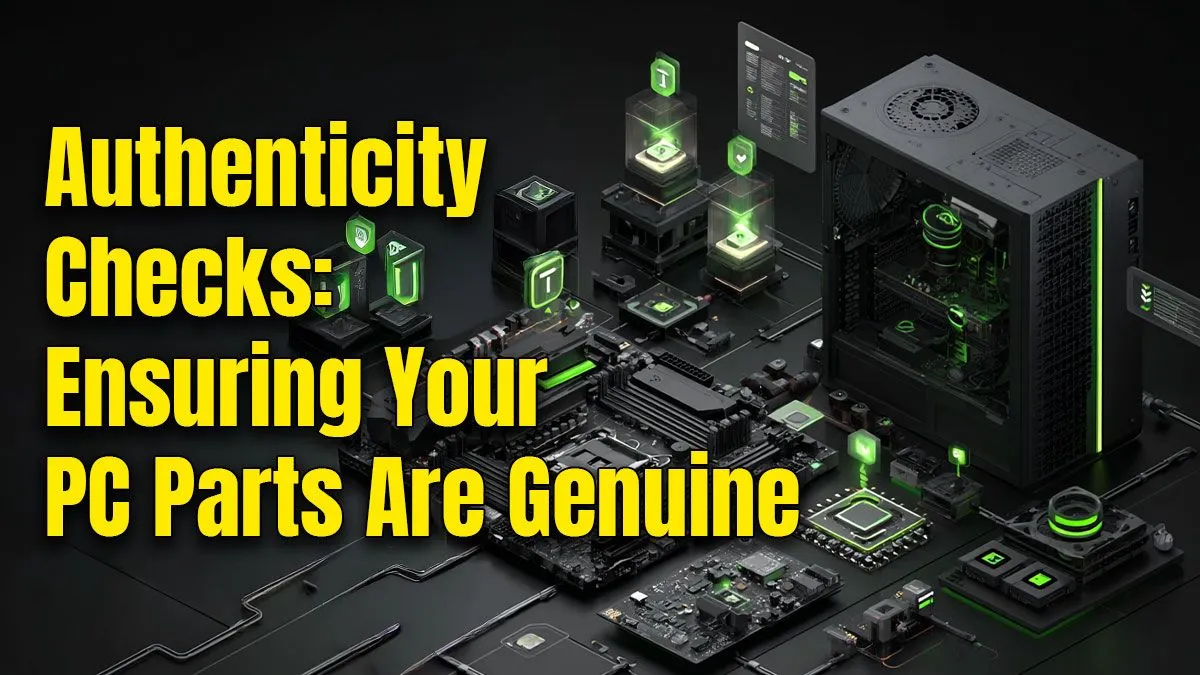
That unbelievable deal on a high-end graphics card you saw online? It could be a costly mistake. In South Africa, the market for PC components is thriving, but so is the shadow market for fake PC parts. These counterfeits promise premium performance for a fraction of the price but deliver nothing but headaches, system instability, and wasted rands. Before you click "buy," let's arm you with the knowledge to perform crucial authenticity checks and protect your rig.
AMD RYZEN 7 9800X3D RTX Pro 4500 DDR5 Workstation PC
R78644.00In Stock
Intel Core Ultra 9 285K 5.7GHz RTX 5000 Ada 32GB DDR5 Workstation PC
R133349.00In Stock

RYZEN 9 9900X 5.6GHz RTX 5070 Ti 16GB DDR5 Gaming PC
R41369.00In Stock

AMD RYZEN 5 3600 4.2GHz ARC A380 6GB Gaming PC
R9659.00In Stock
RYZEN 9 9950X 5.7GHz RTX 5090 32GB DDR5 Gaming PC
R78119.00In Stock
![[Pre Built] AMD Ryzen 7 9800X3D RTX 5080 Gaming PC](https://img.evetech.co.za/repository/ProductImages/ryzen-7-9800-x-3-d-rtx-5080-gaming-pc-48-gb-main-1600px-v1.webp)
[Pre Built] AMD Ryzen 7 9800X3D RTX 5080 Gaming PC
R77699.00In Stock
The Dangers of Counterfeit PC Components
Spotting fake PC parts isn't just about avoiding a bad deal; it's about protecting your entire system. A counterfeit component can cause a cascade of problems. A dodgy power supply, for instance, might not just fail... it could fry your entire motherboard. Similarly, a fake CPU or GPU will bottleneck your performance, leading to frustrating stutters and crashes in the middle of a crucial match. These knock-offs often use substandard materials and skip essential safety certifications, making them a real risk.
The bottom line? The initial savings are never worth the potential cost of replacing your entire build. Starting with a foundation of genuine, reliable parts is the only way to guarantee performance and peace of mind. For a secure start, considering vetted motherboard and CPU bundle packs from a trusted retailer eliminates the guesswork from your core setup.
Your First Line of Defence: The Visual Inspection
Before a component even gets near your PC, you can often spot a fake with a careful eye. Genuine manufacturers invest heavily in quality control, and it shows. Here’s what to look for:
Packaging & Print Quality
Authentic boxes have sharp, high-resolution printing with vibrant colours. Counterfeits often feature blurry text, spelling mistakes, or logos that look slightly "off." Check for quality seals and holograms; fakes might have a cheap sticker that peels easily or a hologram that doesn't shimmer correctly.
AMD RYZEN 7 9800X3D RTX Pro 4500 DDR5 Workstation PC
R78644.00In Stock
RYZEN 9 9900X 5.6GHz RTX 5070 Ti 16GB DDR5 Gaming PC
R41369.00In Stock
AMD RYZEN 5 3400G 4.2GHz Radeon Vega PC
R5879.00In Stock
Intel Core Ultra 7 265K 5.3GHz RTX 5060 8GB DDR5 Gaming PC
R29399.00In Stock
Intel Core Ultra 5 225F 4.9GHz RTX 3050 6GB DDR5 Gaming PC
R16274.00In Stock
RYZEN 7 9700X RTX Pro 2000 DDR5 Workstation PC
R35699.00In Stock
The Component Itself
Examine the part up close. A genuine NVIDIA or AMD graphics card will have a precisely engineered PCB (Printed Circuit Board) with clean solder points. Fakes often look messy, with slight imperfections, scratches, or even signs of previous use. The weight can also be a giveaway; counterfeit parts may feel unusually light due to cheaper, less dense materials. This same principle applies to everything from your chassis and computer case, where panel gaps and flimsy materials are a red flag, to the heatsink on your RAM.
TIP FOR YOU
Verify with Software Sleuths 🕵️
Once installed, the ultimate authenticity check is software. Download free, trusted utilities like CPU-Z and GPU-Z. These programs read the hardware's internal information directly from the source. A fake GPU might be sold as an RTX 3080, but GPU-Z will reveal its true identity as a much older, weaker card that has been flashed with a fake BIOS. If the specs don't match the box, you've found a fake.
Digging Deeper: Serial Numbers & Key Components
If a visual check passes, your next step is to verify the component's identity online. This is one of the most reliable authenticity checks you can perform.
Serial Number Verification
Every legitimate product has a unique serial number. Find it on the component or its box and head to the manufacturer's official website. Most major brands (like NVIDIA, Intel, AMD, Corsair, and ASUS) have a support or warranty section where you can enter the serial number to confirm its authenticity. If the number doesn't register or comes back as invalid, you're looking at a fake.
Intel Core Ultra 7 265K 5.3GHz Quadro A1000 8GB DDR5 Workstation PC
R33389.00In Stock
RYZEN 5 9600X 5.4GHz A1000 8GB DDR5 Workstation PC
R25199.00In Stock
![[Pre Built] Intel Core Ultra 7 265KF RX 9070 XT Gaming PC](https://img.evetech.co.za/repository/ProductImages/intel-core-ultra-7-265-kf-rx-9070-xt-gaming-pc-pbs-main-1600px-v1.webp)
[Pre Built] Intel Core Ultra 7 265KF RX 9070 XT Gaming PC
R42209.00In Stock
AMD RYZEN 7 5700 4.6GHz A1000 8GB Workstation PC
R20159.00In Stock
![[Pre Built] AMD RYZEN 5 5500 ARC A380 Gaming PC](https://img.evetech.co.za/repository/ProductImages/gamdias-talos-e3-gaming-case-ryzen-5-5500-arc-a380-gaming-pc-pbs-main-1600px-v1.webp)
[Pre Built] AMD RYZEN 5 5500 ARC A380 Gaming PC
R12494.00In Stock
Intel Core Ultra 5 225F ARC A380 6GB Gaming PC
R14174.00In Stock
Critical Components to Scrutinise
While any part can be faked, some are more dangerous than others. A counterfeit Corsair power supply is a serious fire hazard, lacking the internal safety features that protect your system from power surges. Fake DDR4 or DDR5 gaming RAM modules often use lower-grade memory chips, leading to data corruption and the infamous Blue Screen of Death. Even a knock-off CPU cooler can lead to thermal throttling or permanent processor damage due to its inability to dissipate heat effectively. Always source these critical parts from a reputable dealer. A genuine motherboard from a trusted brand ensures stable power delivery and compatibility for all your other precious components.
Building a PC should be an exciting journey, not a gamble. By performing these simple authenticity checks, you ensure that every rand you invest goes towards genuine performance and reliability. ✨
Ready to Build with Confidence? Dodging fake PC parts is simple when you buy from a source you trust. At Evetech, every component is guaranteed authentic. Explore our guaranteed genuine bundle packs and build your dream rig with total peace of mind.
Related Products
AMD RYZEN 5 3400G 4.2GHz Radeon Vega PC
R5879.00In Stock
RYZEN 5 9600X 5.4GHz A1000 8GB DDR5 Workstation PC
R25199.00In Stock
![[Pre Built] AMD RYZEN 7 9700X RTX 5070 Gaming PC](https://img.evetech.co.za/repository/ProductImages/ryzen-7-9700-x-rtx-5070-gaming-pc-pbs-main-1600px-v1.webp)
[Pre Built] AMD RYZEN 7 9700X RTX 5070 Gaming PC
R35699.00In Stock
RYZEN 5 8400F 4.7GHz GT 710 2GB DDR5 Workstation PC
R10079.00In Stock
Ryzen 7 9700X 5.5GHz RTX 5060 Ti 16GB DDR5 Gaming PC
R29399.00In Stock
RYZEN 5 9600X 5.2GHz GT 710 2GB DDR5 PC
R14489.00In Stock
Compare price and specs, inspect packaging/fonts, and verify serials with the maker. Use CPU-Z/GPU-Z reads to spot fake PC parts.
Find the sticker on card and box, then check the brand’s warranty portal or support chat. Save proof to verify GPU serial number.
Yes. Use CPU-Z to match model, cores, and clocks to vendor specs, then compare with box labels to check CPU authenticity.
Look for intact seals, aligned print, correct holograms, and QR codes that resolve to the brand site. Confirm capacity/firmware in CrystalDiskInfo for genuine vs fake SSD.
Use warranty check PC components pages with serial and receipt. Avoid sellers who strip serials or void warranties.
Useful but not foolproof. Do barcode and QR code verification, then confirm serials on the official site and match device firmware.
Use authorized resellers, brand stores, or major marketplaces with invoices and returns. Prefer trusted PC parts retailers with strong RMA records.
Stop using it, photograph evidence, run software reads, and report counterfeit PC hardware to the brand/marketplace. Request refund or chargeback.