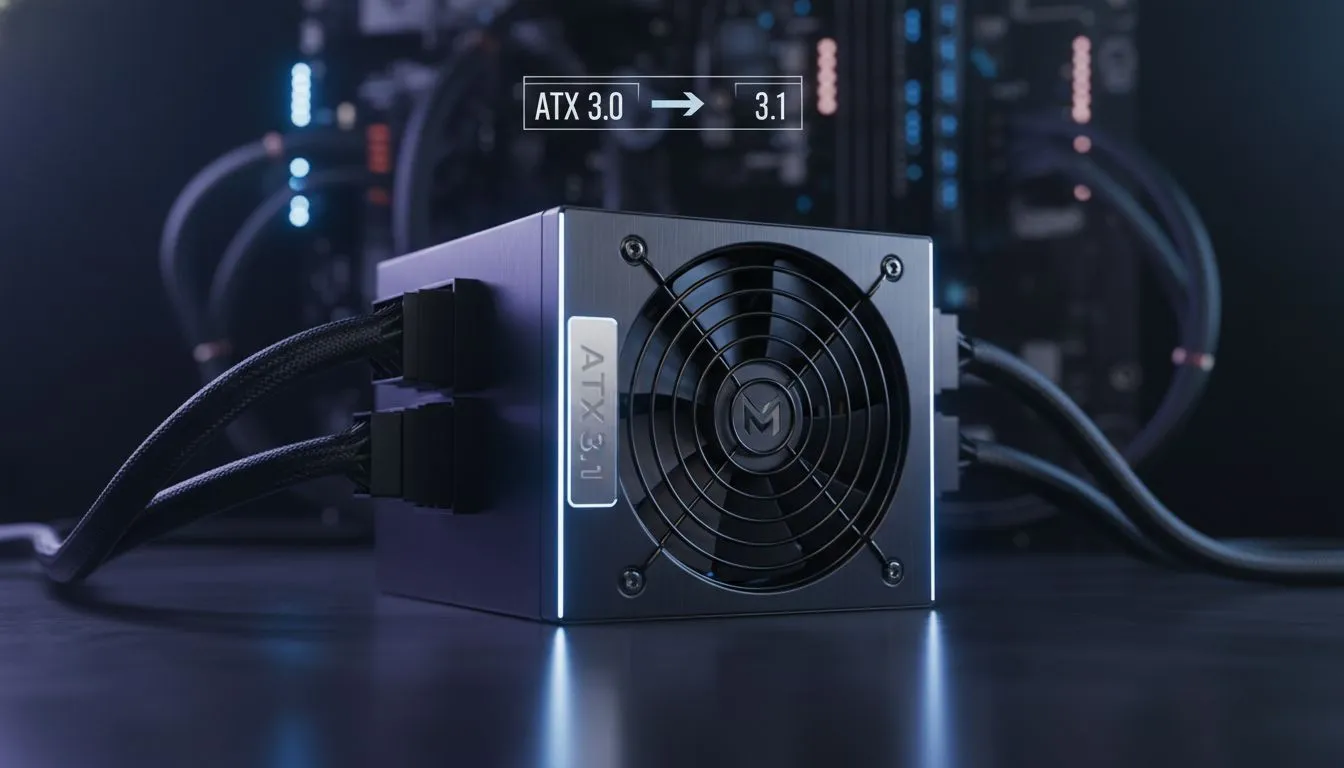
Building a new PC in Mzansi with a beefy RTX 40-series card? You've likely hit the ATX 3.0 vs 3.1 power supply dilemma. What’s the real difference in the new PSU standard, and does it actually matter for your rig? Is your current PSU suddenly obsolete, or is this just marketing noise? Let's cut through the confusion and see what this update means for your build. ⚡
Understanding the ATX Standard: The Heart of Your PC
Before we dive into the ATX 3.1 vs 3.0 debate, let's quickly recap what the ATX standard is. Developed by Intel, the Advanced Technology eXtended (ATX) specification is a set of guidelines for motherboards, cases, and, most importantly for us, Power Supply Units (PSUs).
Think of it as the rulebook that ensures all your components can talk to each other and fit together properly. For PSUs, the standard dictates power delivery, connector types, and efficiency levels. As PC components become more powerful and power-hungry, this standard has to evolve to keep everything running smoothly and safely.
A Quick Recap: Why ATX 3.0 Was a Big Deal
The ATX 3.0 standard, introduced in 2022, was a significant leap forward. Its headline feature was the new 12VHPWR power connector, designed to deliver up to 600W of power to a single component. This was a direct response to the massive power demands and sudden, sharp power spikes (called "excursions") of new-generation graphics cards like the NVIDIA GeForce RTX 4090.
ATX 3.0 PSUs were built to handle these excursions without shutting down, ensuring system stability during intense gaming or creative workloads. For any serious builder at the time, choosing from the range of high-quality power supplies that met this new standard was a crucial step.
ATX 3.1 vs 3.0: The Key Changes You Need to Know
So, if ATX 3.0 was so great, why do we already have ATX 3.1? The latest update is less of a revolution and more of a refinement. It’s an incremental change focused on safety, reliability, and minor performance tweaks. Here are the main differences.
The New and Improved 12V-2x6 Connector
This is the most significant change in the ATX 3.1 update. The original 12VHPWR connector from ATX 3.0 has been revised and renamed to 12V-2x6.
Why the change? You might have seen reports of the original 12VHPWR connectors overheating or melting. This was primarily caused by the connector not being fully seated. The new 12V-2x6 design addresses this with a small but clever mechanical tweak: the four small "sense pins" are now slightly shorter.
This means the PSU will only deliver full power if the plug is inserted all the way, creating a more secure and reliable connection. It's a fantastic safety improvement that brings peace of mind. ✨ The best part? It's fully backward compatible. You can safely use a 12V-2x6 cable with a 12VHPWR port, and vice-versa. Top manufacturers are already rolling out updated models, with brands like GAMDIAS offering robust options for discerning builders.
PSU Buying Tip 🔧
When choosing a PSU, don't just look at the total wattage. Check the 12V rail's amperage. For a modern gaming PC, a strong single 12V rail is crucial for delivering stable power to your power-hungry CPU and GPU, especially during intense gaming sessions. It's the secret to a rock-solid system.
Faster Power-On Response
ATX 3.1 also tightens up the timing for how quickly the PSU needs to be ready after you press the power button. This is a subtle change that improves compatibility with systems that use alternative sleep states and can lead to slightly faster boot-up times. It’s a minor tweak, but it contributes to a more responsive feel.
So, Should You Upgrade to an ATX 3.1 PSU?
This is the big question. The answer depends entirely on your situation.
- Building a brand-new, high-end PC? Absolutely. Opt for an ATX 3.1 certified PSU. You get the latest safety features, future-proofing, and the peace of mind that comes with the improved 12V-2x6 connector. It’s the smart choice.
- Already own a quality ATX 3.0 PSU? You can relax. There is no urgent need to upgrade. Your PSU is still a modern, capable unit. The key is to always ensure your power connectors are fully and securely seated.
- Upgrading your GPU to a power-hungry model? This is the perfect time to consider a new PSU. Pairing a powerful new graphics card with a modern power supply is always a good investment in system stability. For any build, aiming for a unit with an 80 PLUS Gold or higher rating is a smart move for long-term power savings and reliability. 🚀
Ultimately, the move from ATX 3.0 to 3.1 is a positive, sensible evolution focused on making our powerful gaming rigs safer and more reliable.
Ready to Power Up Your Next Build?
Choosing between ATX 3.1 vs 3.0 is about future-proofing and peace of mind. For your next high-performance rig, the latest standard is the smartest choice. Explore our massive range of PC power supplies and find the perfect, reliable heart for your machine.