

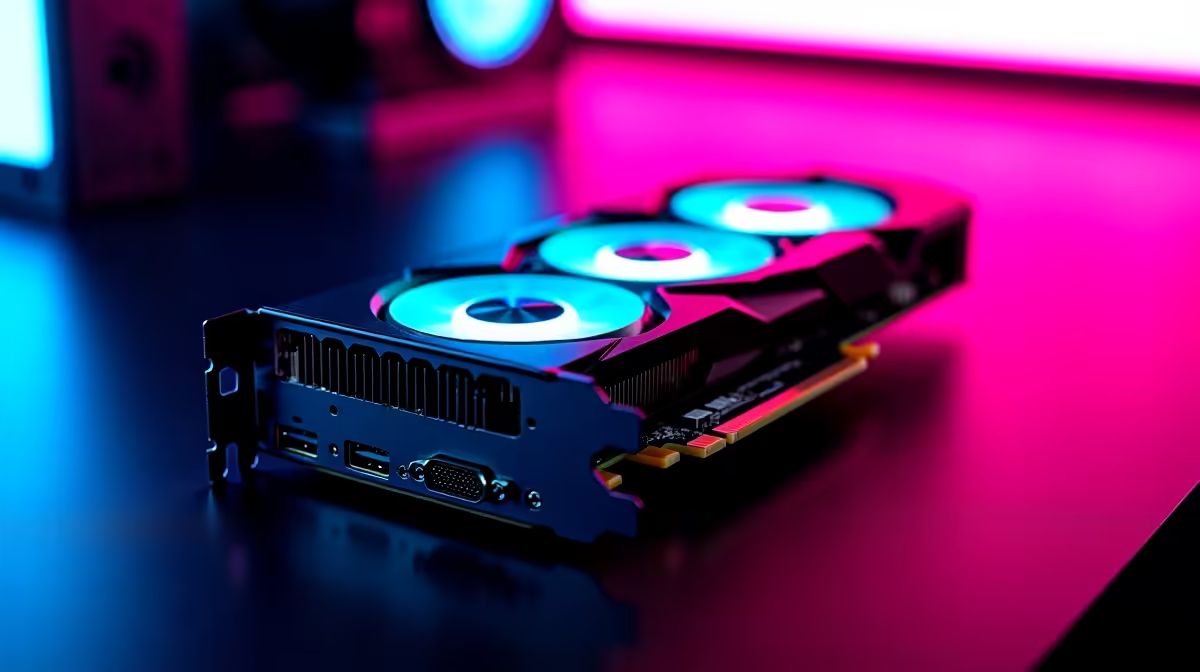
Let's be honest, South African gamers have been loving AI upscaling. NVIDIA's DLSS and AMD's FSR give us those sweet, sweet frames we crave. But what's next? If you think AI's only job is to boost your FPS, you're in for a wild ride. We're looking at a future where the very fabric of game worlds is shaped by AI. This is a look at the incredible AI features in gaming GPUs coming your way... well beyond 2026.
The AI Revolution Beyond Frames Per Second
For years, the GPU's job was simple: render graphics as fast as possible. Now, with dedicated hardware like NVIDIA's Tensor Cores and AMD's AI Accelerators, its role is evolving. This isn't just about making existing pixels look better; it's about creating entirely new experiences. The focus is shifting from pure rendering power to intelligent creation. 🧠
This leap forward is being driven by the most powerful cards on the market. The AI capabilities in a high-end GPU, like those in the top-tier NVIDIA GeForce lineup over R15,150, are already giving us a glimpse into this exciting future.
Next-Gen AI Features in Gaming GPUs We'll See Soon
The raw potential simmering inside today's graphics cards is about to boil over. Forget just upscaling. Here are the real, tangible AI features in gaming GPUs that will reshape our interactive entertainment.
Hyper-Intelligent NPCs ✨
Imagine flanking an enemy in a shooter, only for their squad leader to recognise your tactic from a previous encounter and set a trap. Or having a companion in an RPG who remembers your choices and offers genuinely unique, unscripted advice. This is the promise of AI-driven NPCs. Instead of walking predictable paths, they will learn, adapt, and react, making every playthrough feel completely organic. This level of immersion will be standard across the entire stack of modern NVIDIA GeForce graphics cards.
On-the-Fly World Generation
Tired of the same old quests? Future games, powered by your GPU's AI, will generate content in real-time. This is called Procedural Content Generation (PCG). It could mean a dungeon that's different every time you enter, unique side-quests based on your playstyle, or even entire planets being built as you explore them. The era of a game being "finished" is ending; worlds will become truly endless. You can be sure that rival tech from AMD's Radeon lineup is also pushing these generative AI features forward, and even newcomers like Intel with their Arc GPUs are building for this AI-driven future.
What This Means for Your Next PC Build
As we look towards 2026 and beyond, choosing a GPU will be about more than just TFLOPs and clock speeds. The efficiency and power of its AI cores will become a critical metric. These new features will be demanding, requiring not just a powerful GPU but a balanced system to support it. Interestingly, this kind of tech often debuts in powerful workstation graphics cards before making its way to the consumer gaming space.
This AI processing power also draws... well, power. Ensuring your rig is ready is crucial.
Power Up Your AI Rig ⚡
's GPUs are thirsty for electricity, and future AI-heavy cards will be even more so. Always check the GPU manufacturer's recommended power supply wattage before you buy. A reliable PSU is non-negotiable. Checking out a top brand like [Corsair](https: www.evetech.co.za PC-Components corsair-power-supply-78) is a great first step. For a super clean build, a [fully modular Corsair PSU](https: www.evetech.co.za PC-Components corsair-power-supply-78?attributes-modular=Full+Modular) makes cable management a breeze!
You don't have to wait years to get on board. You can already find a selection of future-proof graphics cards over R15,000 that pack serious AI horsepower for today's and tomorrow's games.
Getting Ready for the AI Gaming Future
The takeaway is clear: the GPU is becoming the AI brain of your gaming PC. The next time you're planning an upgrade, think beyond today's benchmarks. Consider the AI features in gaming GPUs that will unlock the dynamic, intelligent, and endlessly replayable worlds of tomorrow. The foundation for this future is already here. Why not start browsing the huge selection of GPUs available right now and see what fits your budget and ambitions?
Ready to Power Your AI Future? 🚀 The world of AI in gaming is just getting started. To experience it, you need the right hardware. From today's upscaling marvels to tomorrow's intelligent worlds, the perfect GPU is waiting. Explore our massive range of graphics cards and find the perfect engine for your next adventure.











