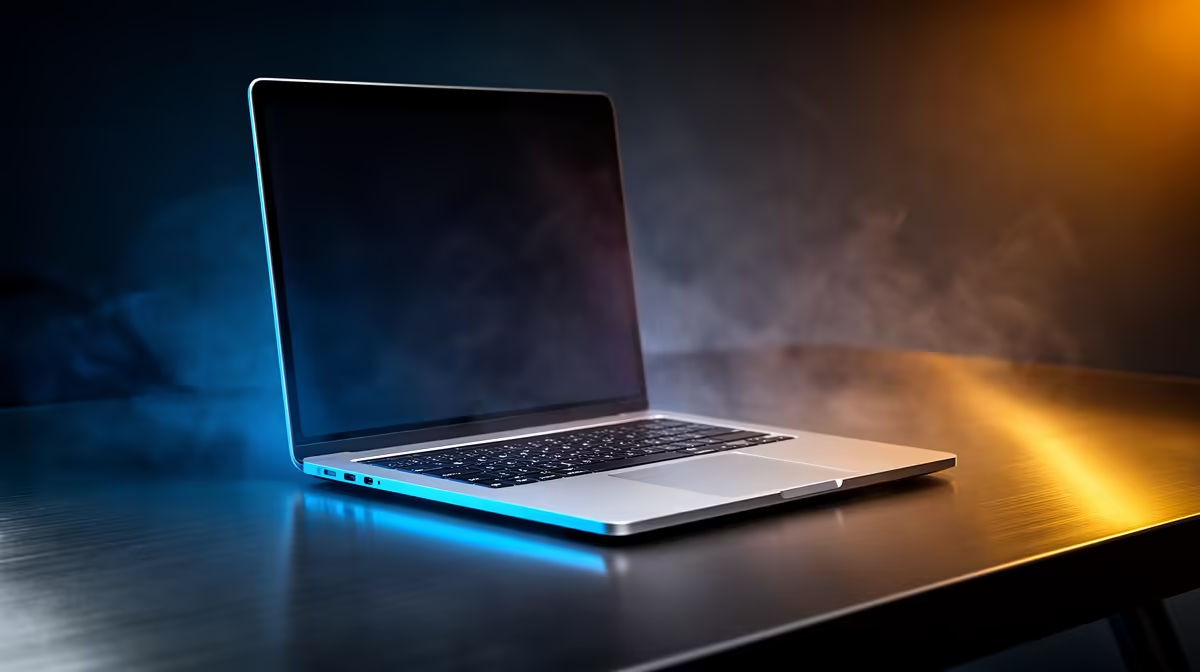
Microsoft's new Copilot+ PCs are here, promising a new era of on-device AI that could revolutionise how we work and play. But one feature, "Recall," has sparked a massive debate online. It promises a photographic memory for your PC, but many are worried about the potential privacy nightmare. So, what are the real Copilot+ security concerns for South African users, and how can you stay in control of your data? Let's dive in. 💻
What is Copilot+ Recall and Why the Fuss?
At its core, Recall is designed to be your digital elephant. It periodically takes screenshots of your active screen, creating a searchable timeline of virtually everything you've done on your PC. Seen a cool product in a video last week but can't remember where? Just search for it, and Recall should be able to find that exact moment.
The idea is powerful, but the privacy implications are obvious. This feature creates a detailed, visual log of your browsing history, private messages, and sensitive documents. While Microsoft insists this data is processed locally, the existence of such a comprehensive record raises valid questions about the security of Copilot+ PCs, especially if a device is ever compromised. The conversation around this technology is a key part of what makes modern AI laptops so smart, sleek, and supercharged.
The Main Copilot+ Security Concerns Addressed
Let's break down the primary worries and separate the facts from the fear. Understanding these issues is the first step to using your tech safely.
Data Storage & Encryption
Microsoft has stated that all Recall data, or "snapshots," are stored and encrypted directly on your device's hard drive using BitLocker. They are not uploaded to the cloud or used to train Microsoft's AI models. This is a crucial detail. However, if someone gains physical or remote access to your logged-in user account, that encryption won't protect your Recall timeline. This makes strong account security more important than ever.
The Risk of Malware
This is perhaps the biggest concern. If sophisticated malware or spyware infects your system, it could potentially access and scrape your entire Recall history. Imagine a keylogger, but for your entire screen history. This could expose everything from banking details to private conversations. It highlights that even with powerful on-device processing, like that found in the latest AMD laptops on special, fundamental security practices remain non-negotiable.
User Control and Consent
Initially, a major criticism was that Recall would be enabled by default. Following significant feedback, Microsoft has changed its stance. Now, during the setup of a new Copilot+ PC, you will be explicitly asked if you want to enable Recall. It is an opt-in feature, giving you the choice from the very beginning.
Security Pro Tip 🛡️
Your first line of defence is always a strong, unique password for your Windows account, combined with multi-factor authentication (MFA). Even if someone gets your password, MFA can stop them from accessing your machine and your Recall data. Set it up via your Microsoft Account settings—it only takes a minute!
A Practical Guide to Managing Recall in South Africa
If you decide to try Recall, you aren't just stuck with an "all or nothing" choice. Microsoft has built-in controls to help you manage your privacy.
- Turn It Off (or On): You can disable or re-enable Recall at any time in your PC's settings.
- Pause on Demand: Need to do something sensitive? You can manually pause Recall right from the system tray icon.
- Delete Snapshots: You can delete individual snapshots, a specific time range, or your entire Recall history whenever you want.
- Exclude Apps & Websites: You can create an exclusion list for specific applications (like your password manager or banking app) and websites in supported browsers to prevent them from ever being recorded. ✨
Ultimately, the debate over Copilot+ security concerns comes down to personal choice and responsibility. The feature offers undeniable convenience, but it requires a new level of vigilance. By understanding how it works and using the available controls, you can decide whether the trade-off is right for you.
Ready to Harness AI Power... Safely?
The new era of AI computing is exciting. While it's smart to be aware of Copilot+ security concerns, the right machine gives you both power and control. Explore our massive range of laptop specials and find the perfect AI-ready PC to conquer your world.