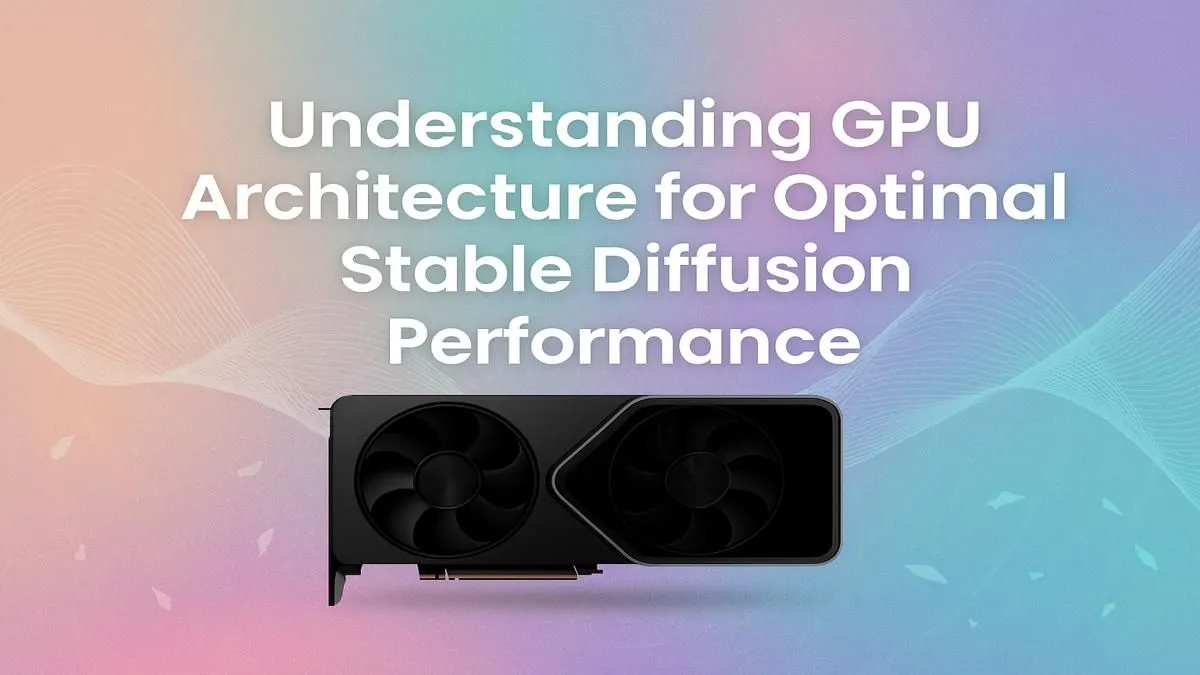
Ever imagined creating a photorealistic image of a protea blooming on Mars, just by typing a few words? That’s the magic of Stable Diffusion. This incredible AI tool is no longer just for massive tech labs; it’s for every creator and enthusiast in South Africa with a powerful PC. But to turn your wildest ideas into digital art, you need the right engine... and that engine is your graphics card. Understanding its architecture is key to unlocking top-tier Stable Diffusion GPU performance.
Why Your GPU is the Heart of AI Image Generation
Think of your computer's processor (CPU) as a brilliant problem-solver, great at handling tasks one by one. Your Graphics Processing Unit (GPU), however, is an army of workers, built to handle thousands of simple tasks all at once. This is called parallel processing.
AI image generation involves millions of tiny calculations to interpret your text prompt and build an image pixel by pixel. A GPU's design is perfectly suited for this massive, parallel workload, making it thousands of times faster than a CPU for these tasks. Better GPU architecture directly translates to faster image generation, higher resolutions, and a smoother creative flow.
Decoding GPU Architecture for Peak AI Performance
Not all GPUs are created equal when it comes to AI. A few key specifications determine how well a card will handle Stable Diffusion. Let's break them down.
VRAM: The AI Artist's Canvas 🎨
Video Random Access Memory (VRAM) is the dedicated memory on your graphics card. For Stable Diffusion, it's your digital canvas. It holds the AI model, the image you're generating, and all the temporary data.
- 8GB VRAM: A decent starting point for generating standard 512x512 images. You might need to use some optimisations for larger images.
- 12GB VRAM: The sweet spot for enthusiasts. It allows for higher resolutions, more complex models, and faster batch processing without constant memory issues.
- 16GB+ VRAM: The professional's choice. With this much memory, you can comfortably work with large, high-resolution images and train your own custom AI models.
CUDA Cores & Tensor Cores: The Engine Room ⚡
This is where the NVIDIA vs. AMD debate gets interesting. NVIDIA's CUDA platform is a mature and widely supported ecosystem for parallel computing. Most AI tools, including Stable Diffusion, are heavily optimised for it. The powerful NVIDIA GeForce cards are packed with two crucial components:
- CUDA Cores: These are the general-purpose parallel processors. More cores generally mean faster processing.
- Tensor Cores: These are specialised cores found in NVIDIA's RTX series cards. They are specifically designed to accelerate the matrix calculations that are fundamental to AI and machine learning, offering a massive boost to Stable Diffusion GPU performance.
While the latest AMD Radeon GPUs are incredibly capable for gaming, their AI ecosystem (ROCm) is less mature and often requires more technical setup to get working with tools like Stable Diffusion. For plug-and-play AI performance, NVIDIA currently holds the edge.
Check Your VRAM Usage! 🔧
When running Stable Diffusion, keep an eye on your VRAM consumption using a tool like GPU-Z or the NVIDIA SMI command line. If you're constantly hitting your VRAM limit, it's a clear sign that an upgrade will significantly improve your workflow and allow you to tackle more ambitious projects.
Pro-Grade Power vs. Gaming Champion
So, do you need a beastly professional card? For most users, a high-end gaming GPU like an NVIDIA RTX 4070 or 4080 offers phenomenal performance for both AI and gaming.
However, if your work involves large datasets, 3D rendering, or training complex AI models, then dedicated workstation graphics cards like NVIDIA's RTX Ada Generation series are built for that marathon-level reliability and come with certified drivers and massive VRAM pools (up to 48GB). They represent the pinnacle of GPU architecture for AI.
Ultimately, the best GPU for you depends on your budget and creative ambitions. From entry-level cards that let you dip your toes into AI art to professional powerhouses... exploring Evetech's vast selection of graphics cards is the first step towards finding your perfect match. 🚀
Ready to Build Your AI Art Powerhouse?
The world of AI is moving fast, and the right hardware makes all the difference. For the best performance, compatibility, and value in South Africa, an NVIDIA RTX GPU is the clear choice for Stable Diffusion. Explore our incredible range of NVIDIA graphics cards and find the perfect engine for your creativity.