

Quick Answer
Finding a decent PC case under R800 in South Africa is absolutely possible in 2026, with several options offering solid airflow, tempered glass panels, and tool-free builds at this price point. The budget segment has matured significantly, meaning you no longer need to compromise on thermals or build quality to stay within a tight budget.
What to Expect From a Sub-R800 PC Case
At the R800 price ceiling, you are shopping in the entry-level to lower-mid segment of the South African PC case market. Expectations need to be calibrated correctly. You will find cases with steel or SPCC construction, basic front panel I/O (usually one USB 3.0 and one USB 2.0 port), and support for micro-ATX or ATX motherboards. Tempered glass side panels are increasingly common even at this price, though they tend to be thicker acrylic glass rather than genuine tempered glass on the priciest models. Airflow-focused designs with mesh front panels are available in this bracket and make a meaningful difference to CPU and GPU temperatures, particularly relevant given how warm South African summers can get in areas like the Western Cape and Gauteng.
Best Options and Form Factors Available Under R800
For mATX and Mini-ITX builds, the compact case segment delivers excellent value under R800. Compact cases are ideal for student builds, especially if you are living in res at UP, UCT, or Wits where desk space is limited. For full ATX builds on a tight budget, look for cases with removable drive cages, which free up space for larger GPUs and improve cable routing. Key features to prioritize at this price: at least two pre-installed case fans, a power supply shroud to hide cables, and a side panel that lets you show off your build. Avoid cases with flimsy front panel connectors or poorly fitting side panels, which are common quality control issues in the deep-budget segment. Reading user reviews from South African buyers is particularly useful because local climate and dust levels (especially in drier regions like the Northern Cape or North West) affect long-term case performance.
Airflow vs Aesthetics: Finding the Balance
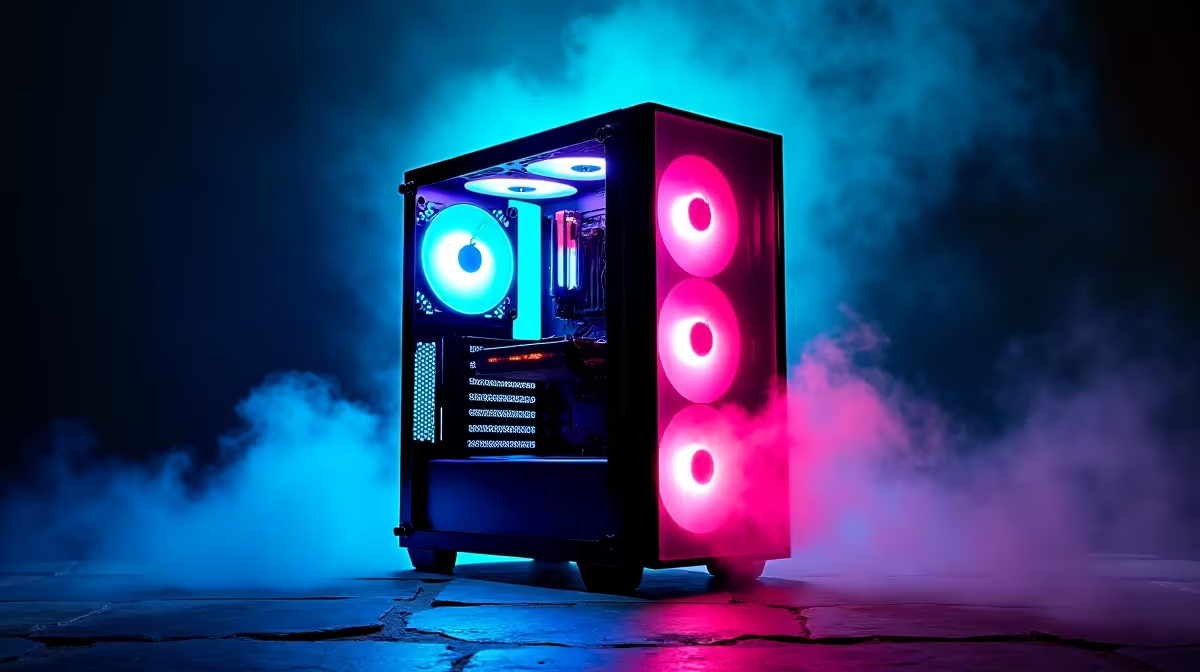
The R800 case market splits roughly into two camps: airflow-first designs with mesh panels and aesthetic-first designs with solid fronts and RGB lighting. If you are building a gaming PC and plan to run a mid-range GPU consistently, airflow should be your priority. A mesh front panel can drop GPU temperatures by 5 to 10 degrees Celsius compared to a sealed aesthetic front, which translates directly into better sustained performance and longer component lifespan. For a home office build or a system that will spend most of its time running productivity workloads, the aesthetic-first design is a reasonable trade-off. Many cases in this bracket now include at least one ARGB fan, giving you some visual flair without pushing the price higher.
Loadshedding Considerations for Budget Case Buyers
If you are running your PC through a UPS during loadshedding, consider that compact cases tend to draw slightly less power overall due to the smaller components they typically house. A mATX build in a compact sub-R800 case combined with an efficient power supply means your UPS battery lasts longer per loadshedding stage. Cable management also matters here: a clean build inside your case improves airflow, which reduces the thermal load on your components, which in turn reduces power draw. Every watt you save extends your UPS runtime during Stage 4 or Stage 6 cuts.
Frequently Asked Questions
Can I fit a full-size GPU in a PC case under R800? Yes, most ATX cases under R800 support GPU lengths of at least 300mm, which covers the majority of current mid-range graphics cards. Always check the specific GPU clearance listed in the case specifications before buying.
Do budget PC cases come with fans pre-installed in South Africa? Most do include at least one rear 120mm exhaust fan. Some include a front intake fan as well. Budget cases rarely include more than two fans, so factor in the cost of additional fans if your build runs hot components.
Is a tempered glass panel worth it at the sub-R800 price point? If showing off your build matters to you, yes. Most glass at this price is thinner tempered glass or acrylic, which is scratch-prone but still looks good. If you are building a no-frills workhorse, a solid steel panel is perfectly fine and sometimes more durable.
Will a sub-R800 case support liquid cooling later? Some will, particularly those with 240mm radiator support at the front or top. Check the case specifications carefully if liquid cooling is in your future upgrade plans, as not all budget cases accommodate AIO coolers.
Ready to Find Your Perfect Match? Browse the full range of PC cases at Evetech and filter by price to find the best value option for your budget build.











