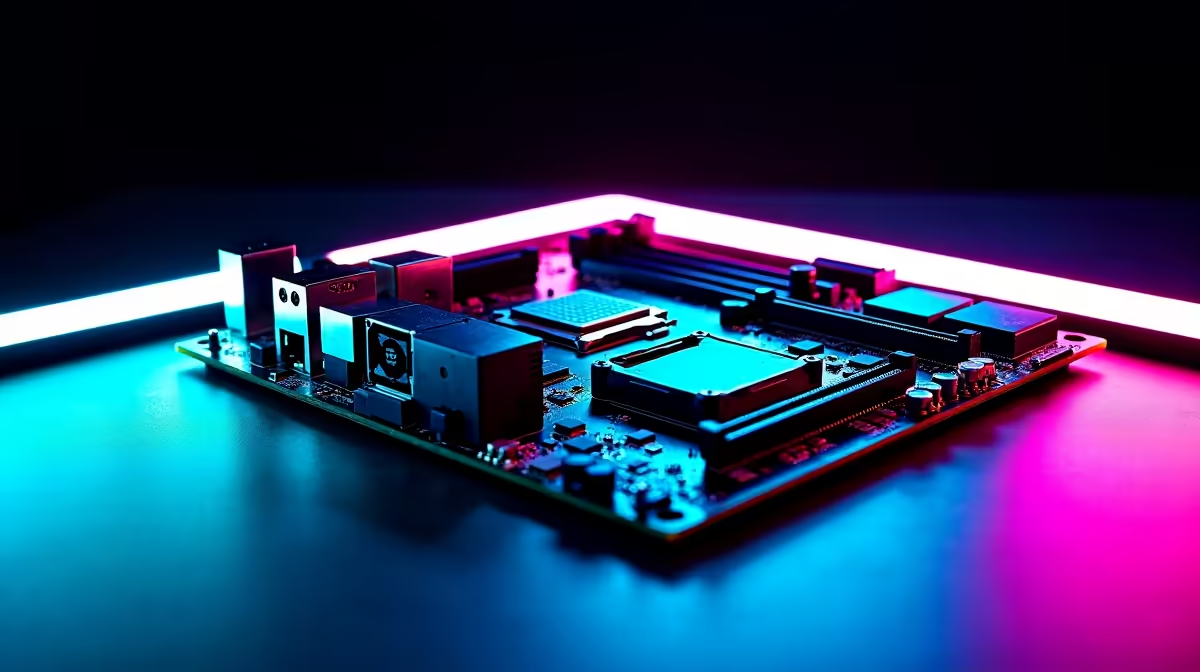
Dreaming of a beastly rig with a powerful E-ATX motherboard? That extra real estate for VRMs, M.2 slots, and PCIe lanes is pure gold for a top-tier build. But hold up, boet. Before you drop your hard-earned ZAR, let's talk about the classic E-ATX build mistakes that can turn your dream project into a proper nightmare. A bigger board means bigger challenges, from case compatibility to cable chaos. Let's get it right. 🚀
The Number One E-ATX Pitfall: Case Incompatibility
This is the big one. You see "E-ATX Support" on a case's spec sheet and assume you're good to go. Not so fast. The "E-ATX" standard isn't as… well, standard as ATX. Motherboard widths can vary, and some case manufacturers play fast and loose with the term.
A case might technically fit the board, but the motherboard tray could cover up essential cable routing grommets, making a clean build impossible. Or worse, the stand-off holes might not align perfectly. You absolutely cannot cram an E-ATX board into a chassis designed for smaller formats, like this otherwise excellent Cooler Master E301 Mini-Tower. The key is to check the case's maximum supported motherboard width in millimetres, not just the marketing label.
Underestimating Cooler and Component Clearance 📏
So, you've found a case that fits the motherboard. Awesome! But another common E-ATX build mistake is forgetting how that extra board width affects everything else.
CPU Coolers and Radiators
A wider motherboard pushes your CPU socket further from the side panel. This can be good for massive air coolers, but it creates a new problem: top-mounted radiator clearance. An E-ATX board can easily collide with a 280mm or 360mm radiator and its fans mounted in the roof of the chassis. Always check the motherboard's height above the standoffs and the case's internal top clearance. Many builders have to front-mount their AIOs because of this E-ATX pitfall.
Graphics Card Length
While not directly caused by the motherboard's size, it's part of the puzzle. In a massive case designed for E-ATX, you're likely using a monster GPU. Ensure your case has enough length, especially if you plan on front-mounting a radiator, which can eat up 30-60mm of internal space. Planning your component layout is crucial, and a quality brand like Cooler Master cases often provides detailed clearance diagrams.
Measure Twice, Build Once 🔧
Before buying, grab the exact dimensions of your E-ATX motherboard from the manufacturer's website. Then, cross-reference them with the detailed spec sheet of your chosen case on Evetech. Pay special attention to motherboard width and CPU cooler height clearance. A few minutes of research now can save you hours of frustration later.
Forgetting the Cable Management Nightmare
More features mean more cables. An E-ATX board is packed with fan headers, RGB connectors, SATA ports, and front panel USBs. The problem? As mentioned, the board's extra width can completely obscure the main cable routing cutouts in a poorly designed case.
You're left trying to bend thick 24-pin and CPU power cables at extreme angles, which looks messy and can put stress on the connectors. Look for cases with routing channels and grommets specifically placed to accommodate E-ATX layouts. Brands that focus on smart design, like many Gamemax computer cases, can make a huge difference here.
Don't Skimp on the Chassis Foundation ✨
Building with an E-ATX board is a premium experience, so don't put it in a budget box that fights you every step of the way. A well-engineered chassis provides the space, airflow, and quality-of-life features needed to avoid common E-ATX errors. Look for features like removable radiator brackets, a spacious PSU shroud, and plenty of tie-down points.
Whether you're looking at the aesthetic-focused TRYX gaming cases or pure performance towers, investing in a good foundation is the best way to ensure your high-end components can breathe and perform at their peak. Your future self will thank you when it's time to upgrade.
Ready to Build Without the Blunders? Choosing the right chassis is the first step to avoiding common E-ATX build mistakes. It's the foundation of your entire rig. Explore our massive range of PC cases and find the perfect foundation to conquer your dream build.