You just bought a blazing-fast NVMe drive. You plug in your external SSD to copy a 150GB game folder before loadshedding hits... and it crawls at a painful 40MB/s. Sound familiar? We all know the pain of waiting for a progress bar to finish while the clock ticks down. Fixing slow file transfers on modern PCs is a common headache for South African gamers. Let us break down exactly why your USB 10Gbps ports, NVMe lanes, and network speed might be bottlenecking your daily performance.
Understanding USB 10Gbps and Port Confusion 🔧
Not all USB ports are created equal. You might own a premium external drive, but plugging it into a standard USB 2.0 port will ruin your transfer rates. PC manufacturers often mix high-speed and basic ports to save on manufacturing costs. If you are browsing the latest notebooks for sale in South Africa, you must check the spec sheet carefully.
Look specifically for USB 3.2 Gen 2 support. This standard delivers that sweet 10Gbps speed. Using the correct cable is just as crucial. A cheap charging cable simply cannot handle massive data loads. Always invest in a certified data cable to prevent unexpected connection drops.
Port Identification Tip ⚡
Look for the tiny 'SS' (SuperSpeed) logo or a '10' next to your USB ports. Blue or red plastic inside the physical port usually indicates higher speeds. This ensures you get maximum performance from your external storage drives.
The Secret Life of NVMe Lanes
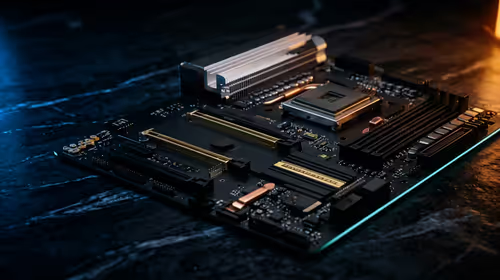
Your motherboard has a limited number of PCIe lanes. Think of these lanes as a multi-lane highway for your data. If you install multiple M.2 drives, extra capture cards, and a massive graphics card... you might run out of bandwidth.
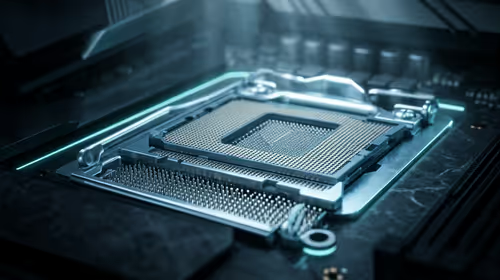
When PCIe lanes are shared, your motherboard forces your storage drives to run at half speed. This is a vital factor to consider when looking at the best gaming PC deals available today. A well-balanced build ensures your primary NVMe drive gets dedicated lanes directly to the CPU. Modern processors provide specific lanes just for storage. Reading your motherboard manual helps you avoid plugging a fast drive into a slow chipset slot.
Network Speed and Local Transfers 🚀
Moving files between PCs over your home network? Your Wi-Fi router might be the main culprit. Standard 2.4GHz Wi-Fi is terrible for large file transfers. You should always use a wired Gigabit Ethernet connection for heavy lifting.
Upgrading your home setup to handle massive local transfers is easier than you think. Keeping an eye on our weekly tech specials is a smart way to stretch your Rands when buying networking gear. Upgrading to a proper Wi-Fi 6 router or a 2.5Gbps network switch can completely transform your local sharing speeds. Do not forget to use quality CAT6 cables to prevent signal drop-offs.
Quick Software Fixes for Windows
Sometimes the fix is entirely software-based. Fixing slow file transfers on modern PCs often requires tweaking Windows settings. Windows indexing can severely slow down bulk transfers. Antivirus scans running in the background will also throttle your read and write speeds.
Pause these background services temporarily when moving massive files. You should also check your drive health using basic diagnostic tools. A failing SSD will drastically reduce its transfer speeds to protect your data from corruption. Finally, make sure your motherboard chipset drivers are fully updated to optimise data flow.
Ready to Eliminate Transfer Bottlenecks? Stop waiting for progress bars to finish. Whether you need a motherboard with better PCIe lane distribution or a blazing-fast Gen4 NVMe drive, we have you covered. Explore our massive range of PC upgrade kits and build a machine that respects your time.