


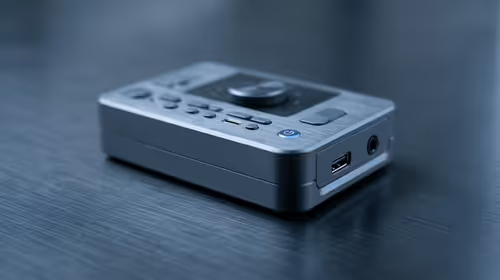
Fix stuck pixel on a USB DAC in South Africa
Stuck pixel on a usb dac usually needs a settings, driver, thermal, or power check first. Work through safe SA troubleshooting steps before replacing parts or assuming a full upgrade.
Read moremATX mini-tower compatibility checklist — ensure your motherboard, PSU, storage, and cooler fit and perform. Quick measurements, connector checks, and build tips to avoid returns 🔧🧩
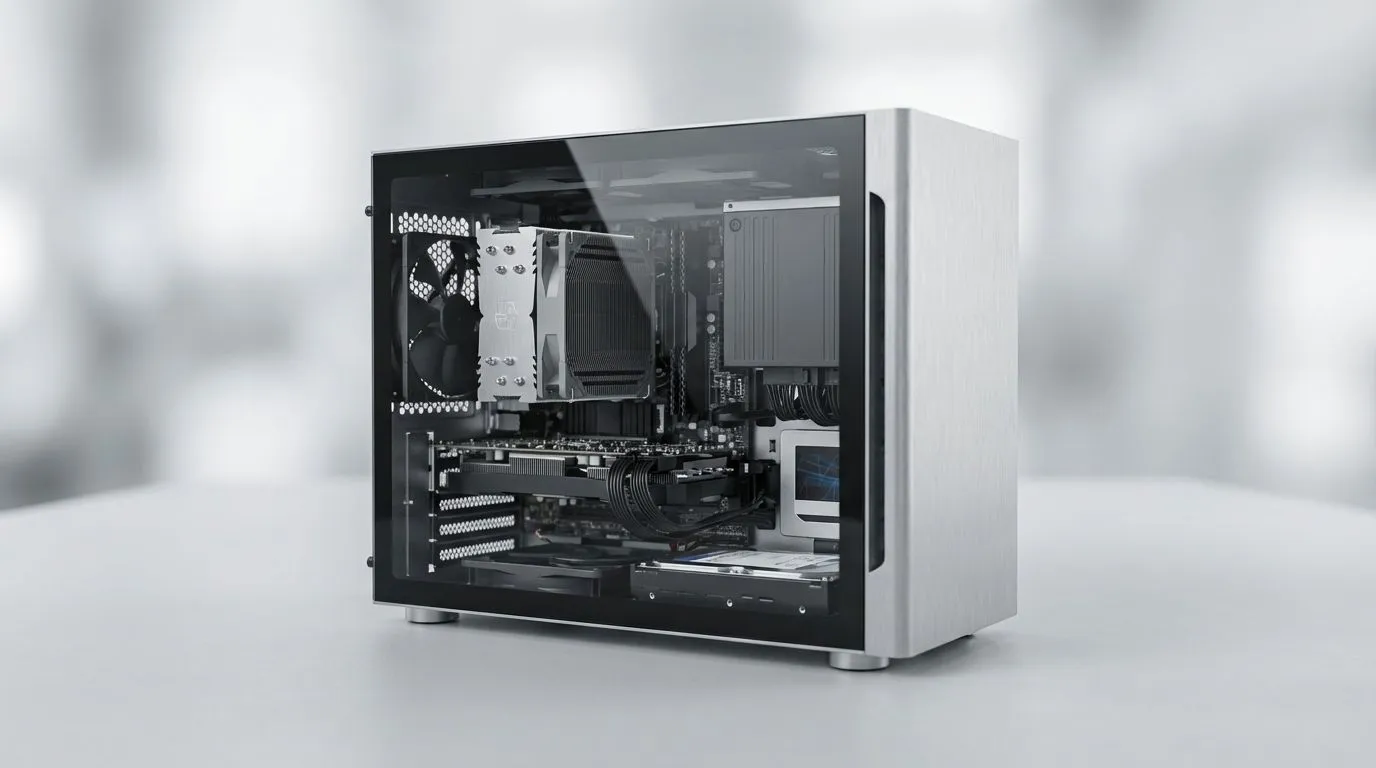
Building a compact gaming rig in South Africa shouldn't feel like a high-stakes game of Tetris. While the appeal of a smaller footprint is obvious, fitting modern hardware into a smaller chassis requires a solid mATX mini-tower compatibility checklist. You want that clean, desk-saving look without sacrificing the thermal performance needed for those hot summer afternoons in Gauteng. Let us ensure your parts actually fit before you click buy. 🔧
The heart of your build is the motherboard. A Micro-ATX (mATX) board is the "Goldilocks" of the PC world... not too big, not too small. When browsing the massive variety of computer cases available, remember that an mATX case will not fit a standard ATX board. However, most will comfortably house a tiny ITX board if you decide to go even smaller later. Always verify the standoff positions match your specific board layout to avoid any short circuits.
Modern graphics cards are getting longer and thicker. This is the most common pitfall in a mini-tower build. You must check the "Maximum GPU Length" spec of your chosen chassis against the physical dimensions of your card. If you are looking for premium builds with clever internal layouts, Fractal Design PC cases are famous for maximising space. A card that is even 5mm too long will result in you having to remove front fans... or worse... returning the hardware. 🚀
When working in a mini-tower, always plug your EPS (CPU power) and 24-pin motherboard cables in before mounting your air cooler. Space gets tight very quickly in these builds... doing this first prevents you from scraping your knuckles against sharp heatsink fins later on.
In a smaller volume of air, heat builds up fast. You need to decide between a tower air cooler or an All-In-One (AIO) liquid cooler. If you prefer air, check the "CPU Cooler Height" clearance. Many Gamdias gaming cases offer excellent height clearance for their size, but always double-check. For AIO enthusiasts, ensure the case supports the radiator size... usually 240mm or 280mm... on the top or front panel without hitting your RAM sticks. ⚡
Not all mini-towers require expensive SFX power supplies. Many modern mATX cases still support standard ATX PSUs, which helps keep costs down. If you are building on a budget, you can find great budget-friendly gaming cases that offer surprisingly good compatibility for standard parts. Just be mindful of non-modular power supplies... the extra cables can quickly turn your beautiful mini-tower into a "spaghetti-tower" that blocks all airflow. ✨
Ready to Build Your Compact Powerhouse? Finding the right balance between size and performance is easier when you have the best hardware at your fingertips. Browse our full range of mATX cases and start your next build with confidence today.
Measure GPU length, CPU cooler height, PSU length, and drive bay space. These determine if your motherboard and components will fit.
Most mATX cases accept standard micro ATX boards, but check standoff positions and I/O shield alignment first.
Compare PSU length and cable routing to the case's clearance and modular support. Some mini-towers require SFX or shorter ATX PSUs.
Check CPU cooler max height and radiator mounting options. Many mATX cases support low-profile coolers or 240mm AIOs only.
Verify available 2.5" and 3.5" bays, M.2 slots on the motherboard, and any cage interference with GPUs or PSUs.
Plan fan placement, radiator clearance, and cable management. Good airflow prevents thermal throttling in compact builds.
Measure from the rear PCI bracket to the drive cage or front panel. Match that to your GPU length spec to confirm fit.
Stuck pixel on a usb dac usually needs a settings, driver, thermal, or power check first. Work through safe SA troubleshooting steps before replacing parts or assuming a full upgrade.
Read more
Windows 11 with an RX 9070 XT build can miss a monitor because of input, cable, driver, or adapter conflicts. For SA gamers, check the signal path, hardware detection, and graphics driver before swapping parts.
Read more
Dragon Age The Veilguard PC build planning at R10,000 should stay cautious about parts and settings. Balance GPU, CPU, RAM, storage, cooling, and upgrade room before picking a South African gaming PC.
Read more
A recommended build for Stalker 2 Heart of Chornobyl at R50 000 should push high-refresh 1440p without poor balance. Shape the SA build around GPU power, CPU pairing, quiet cooling, storage, and upgrade life.
Read more
NBA 2K25 R100,000 PC build planning starts with balanced parts. For SA gamers, compare CPU and GPU fit, RAM needs, SSD space, PSU headroom and cooling before buying.
Read more
Stardew Valley R15,000 PC build planning starts with balanced parts. For SA gamers, compare CPU and GPU fit, RAM needs, SSD space, PSU headroom and cooling before buying.
Read more
Tests reported audio capture and local-network scanning on a specific LG television with its screen off. LG says supported standby modes can keep voice and connected-device features active, so owners should review model-specific settings.
PCIe 5.0 and PCIe 4.0 differ most in lane support, compatibility, and upgrade value for video editing in 4k. SA buyers should match the choice to their actual hardware and games.
Real world difference between b850 b650 mmo live service games sits in stability, networking, storage, and upgrade room. SA players should compare LAN quality, USB layout, RAM support, and SSD slots for always-updated games.

Dead Pixel on Wi-Fi 7 Router is likely a display-path or source-title issue, so check the screen, cable, driver state, and related system symptoms before blaming the device itself.
Industry reports point to another roughly 10 percent Intel processor increase from 5 October, but Intel has not published a consumer price list confirming the scope. South African buyers should treat it as a risk signal, not a guaranteed Rand change.

Put the headphones in pairing mode, open Bluetooth and devices in Windows 11, then add the headset. If it fails, remove the old pairing and check charge, range and drivers.

Microsoft says upcoming Windows 11 work will target memory use on 8GB PCs and improve boot and sign-in responsiveness. There is no public release date or measured uplift yet.
Windows 11 does not show CPU temperature in its standard Settings pages. Use your CPU maker's supported utility or a trusted monitor, then read idle and loaded temperatures in context.

For a stable RTX 5070 starting point, use 1440p, the High preset, Ray Tracing Medium and DLSS Balanced, then measure the base frame rate before adding Frame Generation. Path tracing is a separate showcase mode, not the default.

Microsoft's September release is reported to address 972 vulnerabilities, including two zero-days. The practical response is to back up, secure the BitLocker recovery key, prioritise exposed systems and verify business-critical apps after deployment.

Minecraft frame generation currently means an unofficial Fabric mod, not the same thing as official Bedrock RTX with DLSS upscaling. Check the game edition, loader, version, GPU path and base frame rate before installing anything.
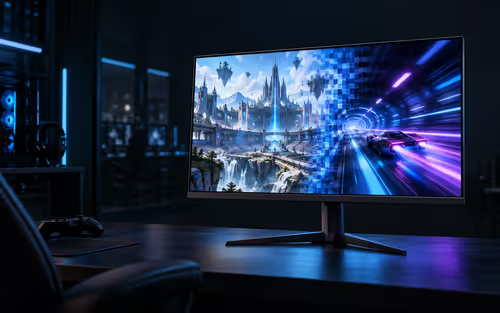
HKC's 27-inch Shield 27Q560 runs QHD at 560Hz or 1280 x 720 at up to 1060Hz. The headline rate is specialised: resolution, sustained frame rate, ports and eventual South African support decide whether it is useful.