Your First Sim Rig Doesn’t Have to Break the Bank
Picture this: it’s a Sunday evening in Joburg. You’ve just installed Assetto Corsa, fired up your mid-tier gaming rig, and your mate challenges you to a 10-lap sprint at Spa-Francorchamps. You grin, but there's a problem—you’re stuck using a controller. Every turn feels like guesswork. That’s when you realise... it's time to build a proper setup. The best sim racing rig setup guide starts here. 🏁
Why Sim Racing is Exploding in South Africa
In the last few years, sim racing has shifted from niche hobby to mainstream obsession in Mzansi. From school learners to working professionals, thousands are turning to titles like F1 24, iRacing, and Gran Turismo 7 to scratch that motorsport itch. Why?
- Fuel prices are sky-high.
- Real track access is limited.
- But the tech? More accessible than ever.
Even a modest setup can deliver the thrill of a corner exit at 200km/h… without risking your insurance premium.
What Makes the Best Sim Racing Rig Setup for Beginners?
Let’s be honest: it’s easy to over-research and over-spend. You don’t need R40K gear to start. What matters most is building a foundation that feels good, responds fast, and keeps you excited to race again.
Core components:
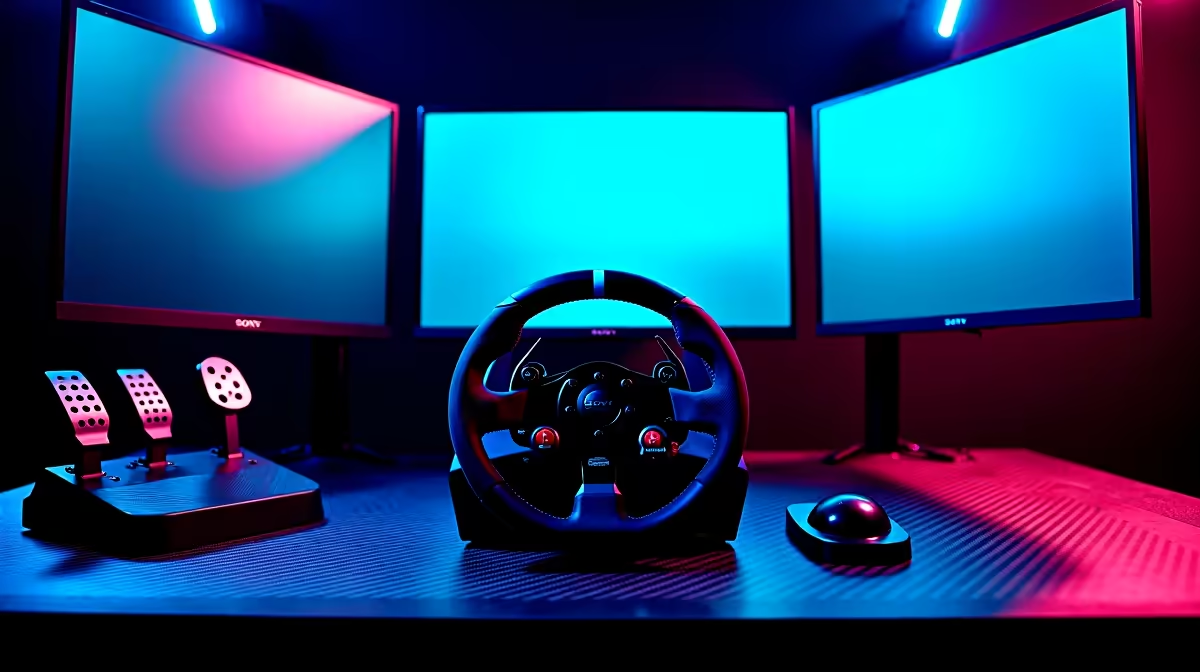
- Racing wheel with decent force feedback
- Pedal set (at least two pedals to start)
- Mounting solution: table clamp, stand, or cockpit
- Monitor or VR headset (if budget allows)
For anyone testing the waters, we recommend exploring these entry-level racing bundles. Many include everything you need for under R5,000—ideal for casual players or future fanatics.
Don’t Rush the Upgrade
Use your starter setup for at least 20–30 hours before upgrading. You’ll know what’s lacking and what matters to you.
Middle-Tier Rigs: The Sweet Spot for Serious Beginners
Once the bug bites, you’ll want tighter handling, stronger force feedback, and a more immersive rig feel. Mid-tier options often offer:
- Higher rotation angles (900°+)
- Load cell brakes (for more realistic pedal pressure)
- More durable materials (metal > plastic)
These mid-tier setups typically range from R5,000 to R12,000. One standout option? The Logitech G29 or G923 series—reliable, long-lasting, and widely compatible across PC, PS, and Xbox.
Don’t forget: a solid rig stand (like Next Level Racing’s Wheel Stand Lite) can make a big difference in comfort and control. Mounting your wheel on a wobbly desk? Recipe for frustration.
The Full Sim Cockpit Experience 🚀
If you’re eyeing endurance races, league events, or serious immersion, full cockpits are the way to go. They offer:
- Racing seat (reclined, bolstered, adjustable)
- Pre-mounted points for wheel, pedals, shifter
- Monitor arms or mounts
- Sturdy frame with minimal flex
A full cockpit transforms your racing space into something that feels like a driver’s seat. Just be warned—it also takes space. Measure twice. Then measure again.
Browse Evetech’s complete racing gear catalogue to see which frame, mount, or pedal set suits your space and ambition.
Local Setup Advice: What SA Racers Are Doing
We chatted with Devon, a Cape Town-based digital artist who races nightly:
“Started with a G29 and desk mount. After two months, I added a wheel stand. Next thing I knew, I had a full GT-style cockpit. My tip? Invest slowly. Every upgrade feels like a prize.”
From Pretoria to Durban, more local players are documenting their builds on TikTok and Discord. Join a few ZA-based sim groups—you’ll find pricing advice, tune setups, and even race invites.
Final Thoughts: It’s About Feel, Not Flash ✨
The best sim racing rig setup guide isn’t just about gear—it’s about momentum. Start with something that puts you in the seat. Upgrade only when your skills and interest demand it. And don’t be swayed by overseas hype. Your perfect rig is the one that makes you excited to race again tomorrow.
Build Your First Racing Rig
No more excuses. Your sim journey starts here… Shop now at Evetech for performance that leaves lag in the dust.