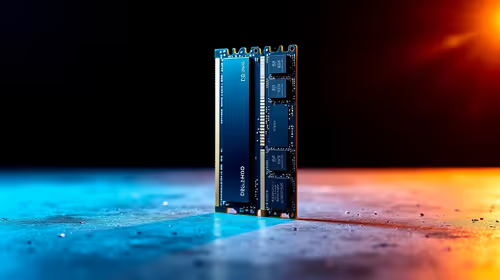
You just dropped a serious chunk of ZAR on a top-tier gaming rig. You boot up, run a benchmark, and... utter disappointment hits. Why is my NVMe drive not reaching full speed on a PCIe 5.0 motherboard? It is a surprisingly common frustration for South African PC builders. Before you panic and request an expensive RMA, let us look at the common culprits slowing down your storage. 🚀
The PCIe Generation Gap Explained
Your shiny new board supports the absolute latest standards. But what about the drive itself? A PCIe 5.0 motherboard is fully backward compatible. However, if you plug a standard Gen 3 or Gen 4 SSD into a cutting-edge Gen 5 slot, it will only run at the drive's maximum rated speed.
To unlock those massive 10,000MB/s transfer rates, both the drive and the motherboard slot must be Gen 5. If you are planning a complete system overhaul, browsing the latest motherboards ensures you have the right foundation for future storage leaps. Always double-check your drive specifications before expecting record-breaking numbers.
M.2 Slot Placement and Lane Sharing 🔧
Not all M.2 slots are created equal. Think of PCIe lanes as digital highways. Most modern boards have one primary M.2 slot wired directly to the CPU. The remaining slots connect through the chipset. Chipset lanes share crucial bandwidth with other devices... like USB ports, networking cards, and secondary drives. If you install your primary drive in a secondary slot, you might lose out on peak performance.
This architecture varies depending on your chosen platform. For instance, high-end ASUS Intel motherboards handle lane distribution differently compared to the latest ASUS AMD motherboards. Always check your physical manual to find the dedicated CPU-linked M.2 slot. Sometimes, populating certain SATA ports will even disable an M.2 slot entirely.
Thermal Throttling and System Bottlenecks
Extreme speed generates extreme heat. PCIe 5.0 NVMe drives run incredibly hot, especially during our warm South African summers. If your drive lacks a proper heatsink, it will quickly reach its thermal limit. The drive then throttles performance to protect its memory chips. This drops your read and write rates drastically.
Your overall system configuration also plays a massive role. A blazing fast drive needs a PC that can keep up. If you prefer avoiding the hassle of manual configuration, our best gaming PC deals are perfectly balanced to avoid these nasty bottlenecks. Furthermore, having insufficient RAM can force your system to use your SSD as a paging file constantly. Upgrading your memory kits ensures your processor and storage communicate without unnecessary delays. ✨
Build Lab Pro Tip ⚡
Always install your primary OS and gaming NVMe drive in the top M.2 slot closest to your CPU. Ensure the motherboard's integrated heatsink is screwed down firmly with the thermal pad plastic removed!
Ready to Maximise Your Storage Speeds? Do not let bottlenecks hold back your load times. Whether you need a massive storage upgrade or a brand new platform, Evetech has the best hardware at unbeatable prices in South Africa. Explore our massive range of SSD deals and build the ultimate gaming machine.