Quick Answer
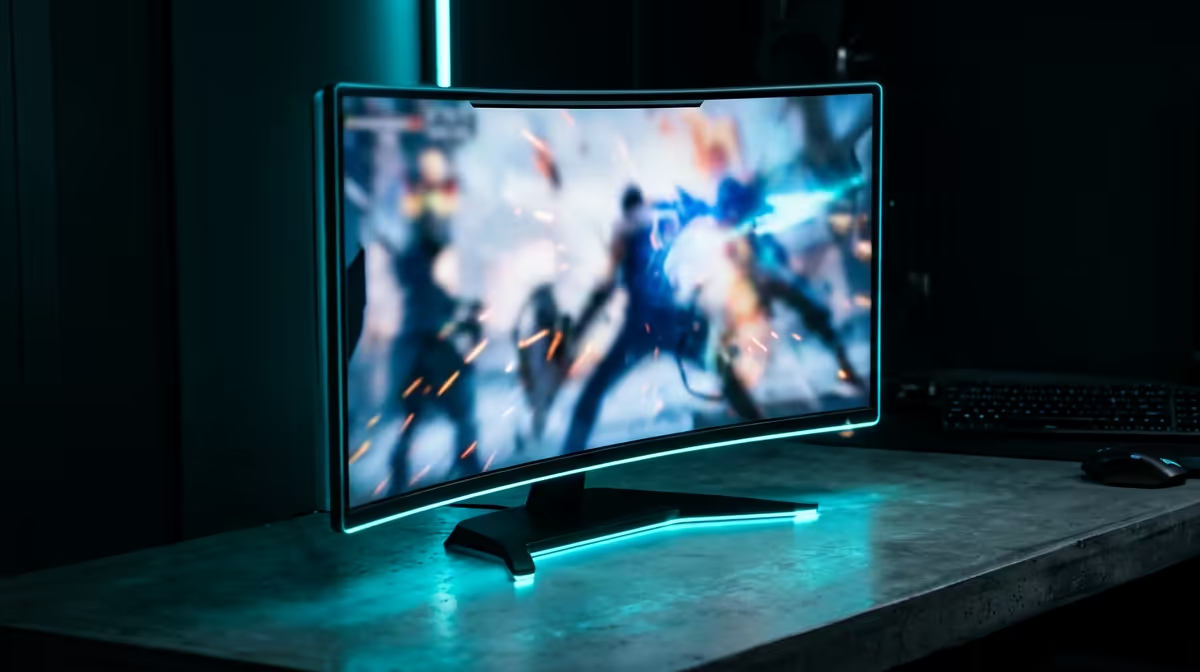
Motion blur usually comes from low refresh rate, slow pixel response or overdrive set too high. A 144 Hz IPS panel with adaptive sync is the practical floor for fast PC games, while some cheap VA panels smear even at their rated refresh.
Build The Shortlist Around The Real Job
For motion blur in fast games, compare the screen by the job it must do: 144 Hz or 165 Hz, DisplayPort, height adjustment and a panel suited to your room lighting. Expect a practical local range of R2,500-R8,500, with ASUS TUF VG27AQ, LG UltraGear 27GP850 and Samsung Odyssey G5 as reference options. A 144 Hz or 165 Hz screen is enough for most family and study setups; 240 Hz helps only if the PC can push high fps.
Where The Money Actually Changes Daily Use
Panel type matters more than a flashy spec line. IPS is safer for text and shared viewing, VA can give deeper contrast but may smear dark motion, and ultrawide 3440x1440 needs more GPU than 1080p. For lecture recording, also check flicker comfort and webcam placement.
Mistakes That Make The Cheap Option Costly
Do not buy a monitor for backup planning, cable tidiness or power protection alone; those jobs belong to storage, cable management and a UPS. Buy the screen when it improves visibility, motion clarity or desk productivity in the room where it will live. Match the screen to south african room size, desk depth and family sharing needs.
FAQ
What is the safest budget for gaming monitor buyers in SA?
A realistic working band is R2,500-R8,500, with the lower end for basic builds and the upper end for quieter, faster or more expandable options. Use the price as a shortlist filter, then confirm the exact live cart before purchase because stock and promotions move.
Which spec should I check first for motion blur in fast games?
Start with 144 Hz or 165 Hz, DisplayPort, height adjustment and a panel suited to your room lighting. That one check catches most bad fits before you worry about branding, RGB or small benchmark differences.
When should I spend more instead of taking the cheapest option?
Spend more when the cheaper option blocks the next upgrade, runs too loud, lacks capacity or cannot hit the target such as 60 fps, 144 Hz or a 1 TB project drive. Save money when the premium feature will sit unused in your room or workload.