


Headset Stock Levels in Bloemfontein: January 2026 Report
Headset Stock Levels in Bloemfontein: January. Current stock data & price tracking for SA buyers. See what is available and where prices are heading.
Read moreAnswered: Is my hard drive failing Detailed answer with SA data, expert analysis & practical recommendations for local buyers.
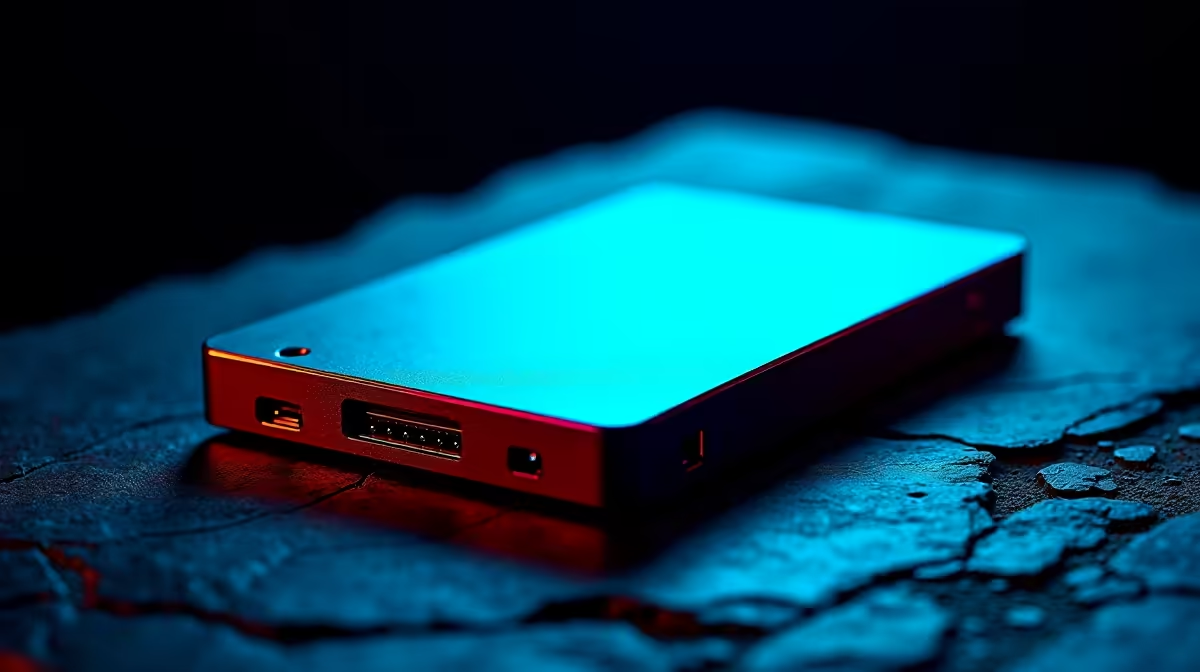
A failing hard drive typically gives several warning signs before complete failure: clicking or grinding noises, slow file transfer speeds, files that become inaccessible or corrupt, frequent system crashes, and SMART diagnostic errors. If your drive is showing any of these symptoms, back up your data immediately and replace the drive.
Mechanical hard drives contain spinning platters and a read/write head that moves across the surface. When these components degrade, they produce audible symptoms. A clicking or clunking sound, often called the click of death, means the read/write head is failing to find its calibration position and resetting repeatedly. This is a serious warning sign that requires immediate data backup. Grinding or scraping sounds indicate physical contact between the read/write head and the platter surface. This is catastrophic: once the platters are scratched, data in the affected sectors is permanently unreadable. Buzzing or unusual vibration during operation can indicate bearing failure in the spindle motor. Any of these sounds means the drive's lifespan is measured in hours or days, not weeks. SSDs do not make noise because they have no moving parts, but they fail in different ways including firmware corruption, NAND cell exhaustion, and controller failure. SSD failure is often silent until the drive becomes unreadable. ## Performance and Software Symptoms
Beyond physical sounds, a failing drive produces software-level symptoms. File transfers that were previously fast become slow and inconsistent, particularly with large files. The operating system may pause or hang when trying to read from specific locations on the drive, which corresponds to sectors with read errors. Files that were previously accessible become unreadable or appear corrupt. Programs take significantly longer to load than they did previously. Windows may generate disk errors in Event Viewer, specifically events from source Disk with IDs 11 or 51, indicating hardware errors during read or write operations. Frequent system crashes or BSODs that reference disk-related stop codes, or that occur randomly during file operations, point toward drive failure as a likely cause. ## How to Check Your Drive's Health with SMART
SMART (Self-Monitoring Analysis and Reporting Technology) is built into every modern hard drive and SSD. Free tools like CrystalDiskInfo on Windows read SMART data and flag attributes that indicate drive degradation. Key SMART attributes to watch include Reallocated Sectors Count, Pending Sector Count, and Uncorrectable Sector Count. Any non-zero value in Pending or Uncorrectable Sectors is a serious warning. A high Reallocated Sectors Count means the drive has already moved data off bad sectors to spare areas, indicating surface degradation. Run CrystalDiskInfo and check the overall health status. A yellow Caution or red Bad status requires immediate action. Even a drive showing all green can fail suddenly, so SMART is a warning system rather than a guarantee of health. ## What to Do If Your Drive Is Failing
If you suspect drive failure: back up everything immediately before running any tests or repairs. Use built-in Windows backup tools or manually copy critical files to a separate drive or cloud storage. Do not delay this step because a drive showing failure symptoms can become completely unreadable within hours. After backing up, run CHKDSK from an elevated command prompt to check for and repair file system errors, then re-check SMART data. If errors remain or the drive continues showing symptoms, replace it. Moving to an SSD is the right replacement choice in 2026, delivering dramatically faster performance alongside better shock resistance and no mechanical failure modes. ## Frequently Asked Questions
Can a failing hard drive be repaired? Software-level issues like file system corruption can sometimes be repaired with CHKDSK or disk repair tools. Physical failure of platters, heads, or motors cannot be repaired by the user. Professional data recovery services can recover data from physically damaged drives, but this is expensive and not guaranteed. How long can I use a drive that is showing SMART errors? Do not rely on a drive with Pending or Uncorrectable Sector errors for any live data. Back up immediately and treat the drive as at end of life. The timeline to complete failure after SMART errors appear is unpredictable, ranging from hours to weeks. Is it worth replacing a HDD with an SSD? Absolutely. SSDs are faster, more reliable over a typical lifespan for everyday use, completely silent, and more resistant to physical shock. For South African users, SSDs also survive power instability from loadshedding better than spinning drives, since they handle unexpected power cuts without the head crash risk that affects mechanical drives.
Ready to Find Your Perfect Match? Replace your failing drive with a fast, reliable SSD. Browse Evetech's SSD range and upgrade your system today.
Answered: Is my hard drive failing available at Evetech.co.za with local warranty and fast delivery.
Answered: Is my hard drive failing - check Evetech for latest stock and SA pricing.
Depends on your use case. Answered: Is my hard drive fai offers good value at current Rand pricing.
Headset Stock Levels in Bloemfontein: January. Current stock data & price tracking for SA buyers. See what is available and where prices are heading.
Read more
iMac for Medical Practice: Patient Management. SA-focused analysis with local pricing data, real-world insights & actionable buying advice.
Read more
RTX 5060 Fortnite Ultra Settings at 1080p: FPS. Real-world benchmark data, FPS numbers & performance analysis. What SA gamers can actually expect.
Read more
Headset Stock Levels in Cape Town: August Report. Current stock data & price tracking for SA buyers. See what is available and where prices are heading.
Read more
Eskom Load Shedding During Video Call: Solutions. SA-focused analysis with local pricing data, real-world insights & actionable buying advice.
Read more
LoL Performance on Extreme Gaming PC. Real-world benchmark data, FPS numbers & performance analysis. What SA gamers can actually expect.
Read more
Is a Ultra Short Throw Projector Good for Gaming?. Diagnosis steps, proven fixes & when to seek professional help. SA-specific support info included.

Is a Short Throw Projector Good for Gaming? Input. Diagnosis steps, proven fixes & when to seek professional help. SA-specific support info included.

Top Mouse Settings for Competitive FPS: Sensitivity picks evaluated on performance, value & SA availability with current Rand pricing from Evetech.

Top Speakers for MacBook Desk Setup picks evaluated on performance, value & SA availability with current Rand pricing from Evetech.

Is a Ergonomic Chair Better Than a Standard Office Chair for Gaming Detailed answer with SA data, expert analysis & practical recommendations for local buyers.

Use Spotlight Search Like a Pro on macOS. Step-by-step instructions with SA-specific tips, common pitfalls to avoid & expert recommendations.

wireless keyboard Fan Noise Too Loud: Quiet. Everything you need to know with SA pricing, step-by-step instructions & expert recommendations.

Connection Timeout: Troubleshooting Guide #2. Diagnosis steps, proven fixes & when to seek professional help. SA-specific support info included.
Headset Stock Levels in Bloemfontein: January. Current stock data & price tracking for SA buyers. See what is available and where prices are heading.
iMac for Medical Practice: Patient Management. SA-focused analysis with local pricing data, real-world insights & actionable buying advice.
RTX 5060 Fortnite Ultra Settings at 1080p: FPS. Real-world benchmark data, FPS numbers & performance analysis. What SA gamers can actually expect.
Headset Stock Levels in Cape Town: August Report. Current stock data & price tracking for SA buyers. See what is available and where prices are heading.