


Headset Stock Levels in Bloemfontein: January 2026 Report
Headset Stock Levels in Bloemfontein: January. Current stock data & price tracking for SA buyers. See what is available and where prices are heading.
Read moreBattery Backup Strategy. SA-focused analysis with local pricing data, real-world insights & actionable buying advice.
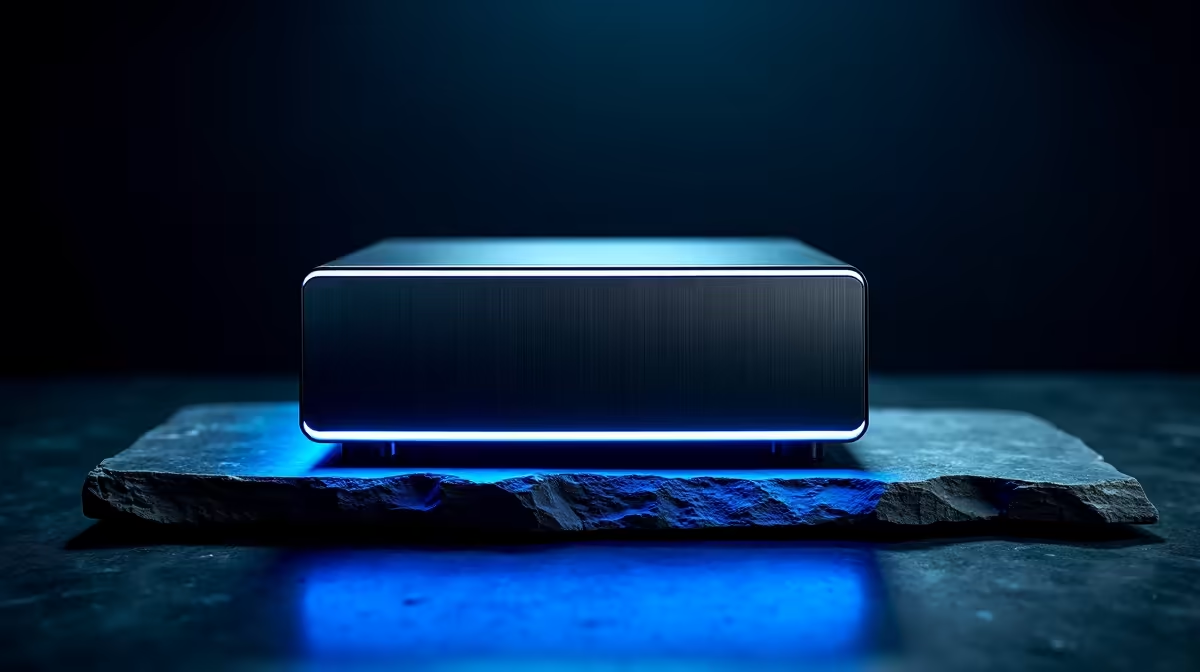
An effective battery backup strategy in South Africa in 2026 combines a correctly sized UPS for critical devices, a lithium-based home battery system for extended outages, and solar where the budget allows. With loadshedding schedules remaining unpredictable, the priority is protecting devices from voltage fluctuations first, then extending runtime, then achieving energy independence.
South Africa's power situation in 2026 has improved relative to the Stage 6 extremes of 2023 and 2024, but scheduled outages and unexpected grid faults remain a reality for most households and home offices. For PC users, gamers, and anyone working from home, a proper battery backup strategy protects expensive hardware and keeps productivity running during cuts. The local market has matured significantly - there are now far more South African-stocked options across UPS, lithium battery packs, and solar-battery systems than existed three years ago.
The first layer of any battery backup strategy is a quality UPS (Uninterruptible Power Supply) for your PC setup. A UPS does two things: it protects against power fluctuations and brief outages, and it gives you a clean shutdown window during longer cuts.
For a mid-range gaming PC drawing 300 to 500W under load, a 1000VA to 1500VA line-interactive UPS will provide 5 to 15 minutes of runtime - enough to save your work and power down safely. Pricing for this tier in South Africa ranges from approximately R2,500 to R5,000. Line-interactive models are strongly preferred over offline/standby types because they actively regulate voltage even when the grid is running, which in SA's variable grid environment makes a meaningful difference to component longevity.
For outages exceeding 30 minutes - the reality during scheduled loadshedding - a dedicated lithium battery backup system provides hours of runtime for critical devices. These systems, sold in SA from multiple local distributors, typically pair a lithium iron phosphate (LiFePO4) battery with a pure sine wave inverter.
A 100Ah 12V LiFePO4 battery (1.2kWh usable) running a gaming PC at 300W load delivers roughly 3 to 4 hours of runtime. Paired with a monitor, router, and lighting, a 200Ah system covers a full loadshedding block with headroom. LiFePO4 batteries are the preferred chemistry for home use in South Africa because of their thermal stability in our warm climate and their 2,000+ cycle lifespan.
Adding solar panels to a battery backup system converts it from a pure backup solution to a partial energy offset system. For South African homes, even a modest 2-panel (800W) rooftop installation can keep a 100Ah LiFePO4 battery topped up through a normal summer day, meaning you enter each evening with a full battery regardless of what the grid did during daylight hours.
Entry-level solar-plus-battery systems in SA start at around R25,000 installed for a basic single-room solution. This is a capital-intensive decision but one that increasingly pencils out given SA electricity tariff increases of 12% to 18% per year through Eskom's current pricing trajectory.
Q: Should I get a UPS or a lithium battery system first? A: Start with a quality line-interactive UPS for your PC. It protects against voltage spikes and gives you clean shutdown time during any outage. Then add a lithium battery system when budget allows for extended runtime through scheduled loadshedding.
Q: Is a generator still worth buying in 2026 in South Africa? A: Petrol generators remain useful for high-load devices that batteries cannot support cost-effectively, like geysers or large appliances. For PC setups and home office use, battery-based solutions are quieter, require no fuel storage, and are better for the equipment they power due to pure sine wave output.
Q: How long do LiFePO4 batteries last in South African conditions? A: Quality LiFePO4 batteries are rated for 2,000 to 4,000 charge cycles, equating to 5 to 10+ years of daily cycling even through heavy loadshedding schedules. They handle SA heat better than lead-acid alternatives and maintain capacity well over their lifespan.
Ready to Find Your Perfect Match? Protect your gaming setup - explore Evetech's range of UPS units and power protection solutions.
Battery Backup Strategy in South Africa available at Evetech.co.za with local warranty and fast delivery.
Battery Backup Strategy in South Africa - check Evetech for latest stock and SA pricing.
Depends on your use case. Battery Backup Strategy in Sou offers good value at current Rand pricing.
Headset Stock Levels in Bloemfontein: January. Current stock data & price tracking for SA buyers. See what is available and where prices are heading.
Read more
iMac for Medical Practice: Patient Management. SA-focused analysis with local pricing data, real-world insights & actionable buying advice.
Read more
RTX 5060 Fortnite Ultra Settings at 1080p: FPS. Real-world benchmark data, FPS numbers & performance analysis. What SA gamers can actually expect.
Read more
Headset Stock Levels in Cape Town: August Report. Current stock data & price tracking for SA buyers. See what is available and where prices are heading.
Read more
Eskom Load Shedding During Video Call: Solutions. SA-focused analysis with local pricing data, real-world insights & actionable buying advice.
Read more
LoL Performance on Extreme Gaming PC. Real-world benchmark data, FPS numbers & performance analysis. What SA gamers can actually expect.
Read more
Is a Ultra Short Throw Projector Good for Gaming?. Diagnosis steps, proven fixes & when to seek professional help. SA-specific support info included.

Is a Short Throw Projector Good for Gaming? Input. Diagnosis steps, proven fixes & when to seek professional help. SA-specific support info included.

Top Mouse Settings for Competitive FPS: Sensitivity picks evaluated on performance, value & SA availability with current Rand pricing from Evetech.

Top Speakers for MacBook Desk Setup picks evaluated on performance, value & SA availability with current Rand pricing from Evetech.

Is a Ergonomic Chair Better Than a Standard Office Chair for Gaming Detailed answer with SA data, expert analysis & practical recommendations for local buyers.

Use Spotlight Search Like a Pro on macOS. Step-by-step instructions with SA-specific tips, common pitfalls to avoid & expert recommendations.

wireless keyboard Fan Noise Too Loud: Quiet. Everything you need to know with SA pricing, step-by-step instructions & expert recommendations.

Connection Timeout: Troubleshooting Guide #2. Diagnosis steps, proven fixes & when to seek professional help. SA-specific support info included.
Headset Stock Levels in Bloemfontein: January. Current stock data & price tracking for SA buyers. See what is available and where prices are heading.
iMac for Medical Practice: Patient Management. SA-focused analysis with local pricing data, real-world insights & actionable buying advice.
RTX 5060 Fortnite Ultra Settings at 1080p: FPS. Real-world benchmark data, FPS numbers & performance analysis. What SA gamers can actually expect.
Headset Stock Levels in Cape Town: August Report. Current stock data & price tracking for SA buyers. See what is available and where prices are heading.