


Headset Stock Levels in Bloemfontein: January 2026 Report
Headset Stock Levels in Bloemfontein: January. Current stock data & price tracking for SA buyers. See what is available and where prices are heading.
Read moreCan't Get 1080p 360Hz: Display Setup. Clear setup instructions with SA-specific considerations, troubleshooting tips & recommended components.
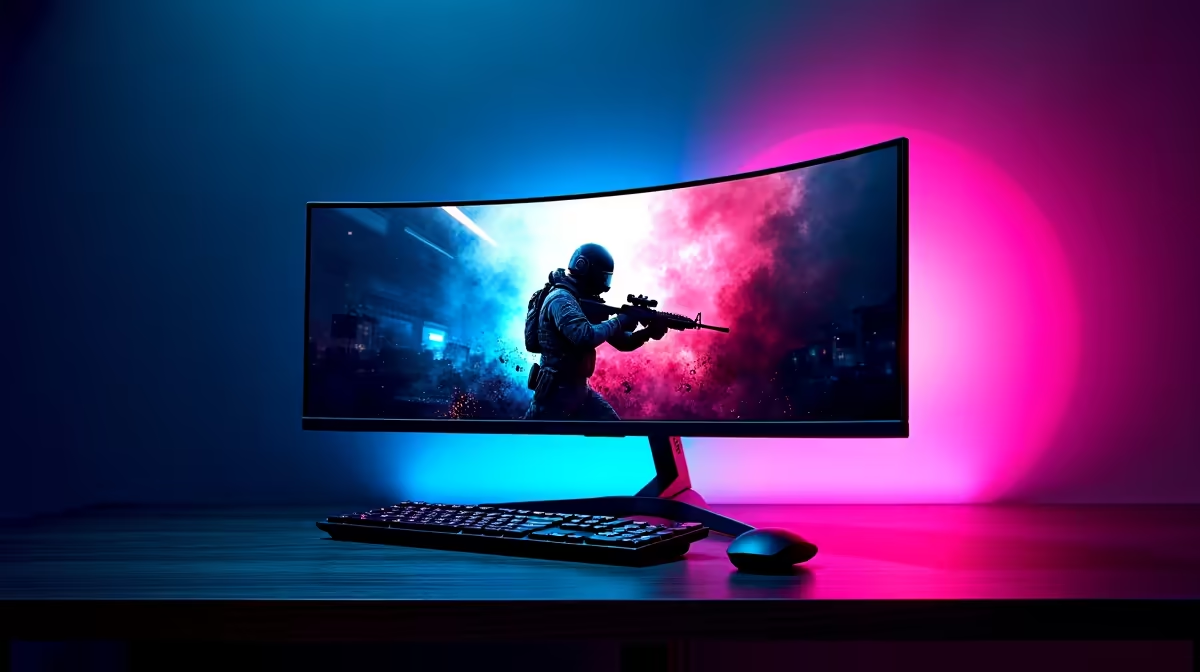
If your 1080p 360Hz panel is stuck at 60Hz or 144Hz, the fix is almost always cable, port, or driver. Use the bundled DisplayPort 1.4 cable, plug into your GPU (not the motherboard), and force 360Hz inside Nvidia or AMD Control Panel.
A 1080p 360Hz signal needs DisplayPort 1.4 minimum. HDMI 2.0 caps out at 240Hz at 1080p, and HDMI 2.1 only helps if both your monitor and GPU support it. Cheap unbranded DP cables sometimes negotiate down to 144Hz to stay stable, so always start with the cable that came in the monitor box. Plug into the GPU's DP output, never the motherboard's video port, since the iGPU bypass strips your refresh rate. Long cables over 3 metres without active boosting also drop the negotiated rate.
Right-click the desktop, choose Display Settings, scroll to Advanced Display, and set the refresh rate dropdown to 360Hz. If it's missing, open Nvidia Control Panel, Change Resolution, and tick the 360Hz option under PC. AMD users go through Radeon Software, Display, Custom Resolutions. Don't forget to confirm 360Hz inside each game's video settings too, the OS-level setting doesn't always carry over to fullscreen exclusive titles. A quick UFO test on the Blur Busters site verifies it's actually running at 360Hz.
Most 360Hz panels imported into SA via Evetech ship with the correct DP 1.4 cable, but if you've inherited a second-hand monitor, a quality replacement runs around R250 to R450 locally with same-week SA delivery. Pair the panel with at least an RTX 4070 or RX 7800 XT to actually feed those frames in modern shooters, weaker cards will leave the panel idling. A UPS keeps the monitor and PC alive through loadshedding swaps so the 360Hz handshake doesn't reset every time the lights go out.
Your cable is likely DP 1.2 or HDMI 2.0. Both standards cap below 360Hz at 1080p. Swap to a certified DP 1.4 cable and the option will appear.
Not strictly, but adaptive sync removes tearing when your FPS dips below 360. Enable it in your monitor's OSD and your GPU control panel for the cleanest experience.
The card outputs the 360Hz signal, but you'll only see those frames in lightweight esports titles like CS2 or Valorant on Low. AAA games will hover around 80 to 120 FPS.
Ready to Find Your Perfect Match? Pair the right panel with a GPU that can actually feed it. Build your high-refresh rig
Can't Get 1080p 360Hz: Display Setup available at Evetech.co.za with local warranty and fast delivery.
Can't Get 1080p 360Hz: Display Setup - check Evetech for latest stock and SA pricing.
Depends on your use case. Can't Get 1080p 360Hz: Display offers good value at current Rand pricing.
Headset Stock Levels in Bloemfontein: January. Current stock data & price tracking for SA buyers. See what is available and where prices are heading.
Read more
iMac for Medical Practice: Patient Management. SA-focused analysis with local pricing data, real-world insights & actionable buying advice.
Read more
RTX 5060 Fortnite Ultra Settings at 1080p: FPS. Real-world benchmark data, FPS numbers & performance analysis. What SA gamers can actually expect.
Read more
Headset Stock Levels in Cape Town: August Report. Current stock data & price tracking for SA buyers. See what is available and where prices are heading.
Read more
Eskom Load Shedding During Video Call: Solutions. SA-focused analysis with local pricing data, real-world insights & actionable buying advice.
Read more
LoL Performance on Extreme Gaming PC. Real-world benchmark data, FPS numbers & performance analysis. What SA gamers can actually expect.
Read more
Is a Ultra Short Throw Projector Good for Gaming?. Diagnosis steps, proven fixes & when to seek professional help. SA-specific support info included.

Is a Short Throw Projector Good for Gaming? Input. Diagnosis steps, proven fixes & when to seek professional help. SA-specific support info included.

Top Mouse Settings for Competitive FPS: Sensitivity picks evaluated on performance, value & SA availability with current Rand pricing from Evetech.

Top Speakers for MacBook Desk Setup picks evaluated on performance, value & SA availability with current Rand pricing from Evetech.

Is a Ergonomic Chair Better Than a Standard Office Chair for Gaming Detailed answer with SA data, expert analysis & practical recommendations for local buyers.

Use Spotlight Search Like a Pro on macOS. Step-by-step instructions with SA-specific tips, common pitfalls to avoid & expert recommendations.

wireless keyboard Fan Noise Too Loud: Quiet. Everything you need to know with SA pricing, step-by-step instructions & expert recommendations.

Connection Timeout: Troubleshooting Guide #2. Diagnosis steps, proven fixes & when to seek professional help. SA-specific support info included.
Headset Stock Levels in Bloemfontein: January. Current stock data & price tracking for SA buyers. See what is available and where prices are heading.
iMac for Medical Practice: Patient Management. SA-focused analysis with local pricing data, real-world insights & actionable buying advice.
RTX 5060 Fortnite Ultra Settings at 1080p: FPS. Real-world benchmark data, FPS numbers & performance analysis. What SA gamers can actually expect.
Headset Stock Levels in Cape Town: August Report. Current stock data & price tracking for SA buyers. See what is available and where prices are heading.