


Headset Stock Levels in Bloemfontein: January 2026 Report
Headset Stock Levels in Bloemfontein: January. Current stock data & price tracking for SA buyers. See what is available and where prices are heading.
Read moreCan't Get 1080p 60Hz: Display Setup. Clear setup instructions with SA-specific considerations, troubleshooting tips & recommended components.
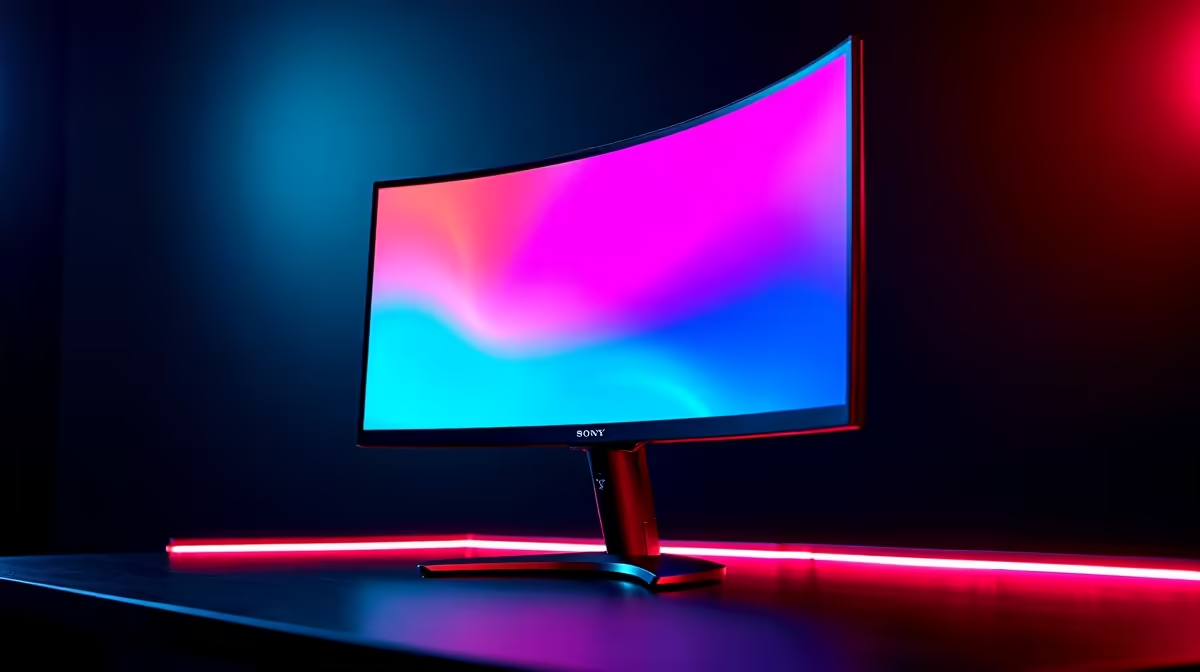
If you cannot get 1080p at 60Hz, the most common causes are an incorrect resolution in display settings, a cable that does not support 60Hz at 1080p, or a monitor or GPU output set to the wrong refresh rate. Checking and fixing each of these in order resolves most cases.
The most frequent reason a display will not reach 1080p at 60Hz is a mismatch between your output settings and what your cable or connection can carry. Not all HDMI versions are equal. HDMI 1.0 and 1.1 cables and ports support 1080p at 60Hz, but older or lower-quality cables that fail signal integrity tests can cause the system to fall back to a lower resolution or refresh rate. DisplayPort cables generally do not have this issue at 1080p, as even older versions handle this resolution and refresh rate comfortably.
Another common cause is the display resolution setting in your operating system. In Windows, right-click the desktop, open Display Settings, and scroll to the Resolution dropdown. If it is set to anything below 1920x1080, change it there. Then scroll further to Advanced Display Settings and check that the refresh rate is set to 60Hz or higher. On some monitors, a resolution lower than native may default to a lower refresh rate as a secondary effect.
For South African PC builders who assembled their rigs during a time when HDMI cables were cheap and plentiful, it is worth checking the cable quality. Passive HDMI cables sold very cheaply can fail to reliably carry the signal bandwidth needed for stable 1080p 60Hz, especially at longer cable lengths above 3 metres. Replacing with a known-good HDMI 1.4 or 2.0 cable, or switching to DisplayPort, usually resolves this immediately.
If you are connecting via a HDMI-to-DisplayPort adapter or a USB-C to HDMI cable, check that the adapter is rated for 1080p at 60Hz. Many passive adapter cables do not support 60Hz output and will cap the refresh rate at 30Hz, which produces visible input lag and a choppy feel that is often mistaken for a monitor fault.
For South African users connecting a laptop to an external monitor during loadshedding sessions while running on a UPS, verify that your laptop's HDMI or USB-C port supports the resolution. Some entry-level laptops cap their video output at lower resolutions via the HDMI port even if the laptop's own screen runs at higher specs.
If Windows Display Settings shows 1080p at 60Hz as an option but the monitor still does not display it correctly, check your GPU control panel. In AMD Adrenalin or NVIDIA Control Panel, go to Display and look for custom resolution or display configuration options. Occasionally the driver overrides Windows settings, and setting the resolution and refresh rate directly in the control panel resolves the conflict.
If 1080p 60Hz does not appear as an option at all in any settings menu, the monitor or GPU port may not be detecting the display correctly. Try a different cable, a different port on the GPU, and if possible test the monitor with a different computer to isolate whether the issue is the monitor, the cable, or the PC.
This usually happens when using a cable or adapter that does not support 60Hz bandwidth at 1080p. The most common culprits are cheap HDMI cables, passive USB-C to HDMI adapters, and connections made via lower-bandwidth ports. Switching to a quality HDMI or DisplayPort cable resolves this.
Yes. After some driver updates, display settings can reset or new bugs can affect resolution detection. Rolling back the GPU driver or reinstalling the latest clean version can resolve this. Use DDU (Display Driver Uninstaller) for a clean reinstall before installing the new driver.
This usually means Windows has not correctly detected the monitor's EDID (the signal the monitor sends describing its capabilities). Try disconnecting and reconnecting the cable, rebooting with the monitor powered on, or updating your GPU drivers. In rare cases, using a different port on the GPU (switching from HDMI to DisplayPort) forces a fresh detection.
Ready to Find Your Perfect Match? Browse monitors that deliver crisp 1080p and beyond, with reliable 60Hz or higher refresh rates out of the box. Shop Monitors at Evetech
Can't Get 1080p 60Hz: Display Setup available at Evetech.co.za with local warranty and fast delivery.
Can't Get 1080p 60Hz: Display Setup - check Evetech for latest stock and SA pricing.
Depends on your use case. Can't Get 1080p 60Hz: Display offers good value at current Rand pricing.
Headset Stock Levels in Bloemfontein: January. Current stock data & price tracking for SA buyers. See what is available and where prices are heading.
Read more
iMac for Medical Practice: Patient Management. SA-focused analysis with local pricing data, real-world insights & actionable buying advice.
Read more
RTX 5060 Fortnite Ultra Settings at 1080p: FPS. Real-world benchmark data, FPS numbers & performance analysis. What SA gamers can actually expect.
Read more
Headset Stock Levels in Cape Town: August Report. Current stock data & price tracking for SA buyers. See what is available and where prices are heading.
Read more
Eskom Load Shedding During Video Call: Solutions. SA-focused analysis with local pricing data, real-world insights & actionable buying advice.
Read more
LoL Performance on Extreme Gaming PC. Real-world benchmark data, FPS numbers & performance analysis. What SA gamers can actually expect.
Read more
Is a Ultra Short Throw Projector Good for Gaming?. Diagnosis steps, proven fixes & when to seek professional help. SA-specific support info included.

Is a Short Throw Projector Good for Gaming? Input. Diagnosis steps, proven fixes & when to seek professional help. SA-specific support info included.

Top Mouse Settings for Competitive FPS: Sensitivity picks evaluated on performance, value & SA availability with current Rand pricing from Evetech.

Top Speakers for MacBook Desk Setup picks evaluated on performance, value & SA availability with current Rand pricing from Evetech.

Is a Ergonomic Chair Better Than a Standard Office Chair for Gaming Detailed answer with SA data, expert analysis & practical recommendations for local buyers.

Use Spotlight Search Like a Pro on macOS. Step-by-step instructions with SA-specific tips, common pitfalls to avoid & expert recommendations.

wireless keyboard Fan Noise Too Loud: Quiet. Everything you need to know with SA pricing, step-by-step instructions & expert recommendations.

Connection Timeout: Troubleshooting Guide #2. Diagnosis steps, proven fixes & when to seek professional help. SA-specific support info included.
Headset Stock Levels in Bloemfontein: January. Current stock data & price tracking for SA buyers. See what is available and where prices are heading.
iMac for Medical Practice: Patient Management. SA-focused analysis with local pricing data, real-world insights & actionable buying advice.
RTX 5060 Fortnite Ultra Settings at 1080p: FPS. Real-world benchmark data, FPS numbers & performance analysis. What SA gamers can actually expect.
Headset Stock Levels in Cape Town: August Report. Current stock data & price tracking for SA buyers. See what is available and where prices are heading.