


Headset Stock Levels in Bloemfontein: January 2026 Report
Headset Stock Levels in Bloemfontein: January. Current stock data & price tracking for SA buyers. See what is available and where prices are heading.
Read moreCan't Get 720p 30Hz: Display Setup. Clear setup instructions with SA-specific considerations, troubleshooting tips & recommended components.
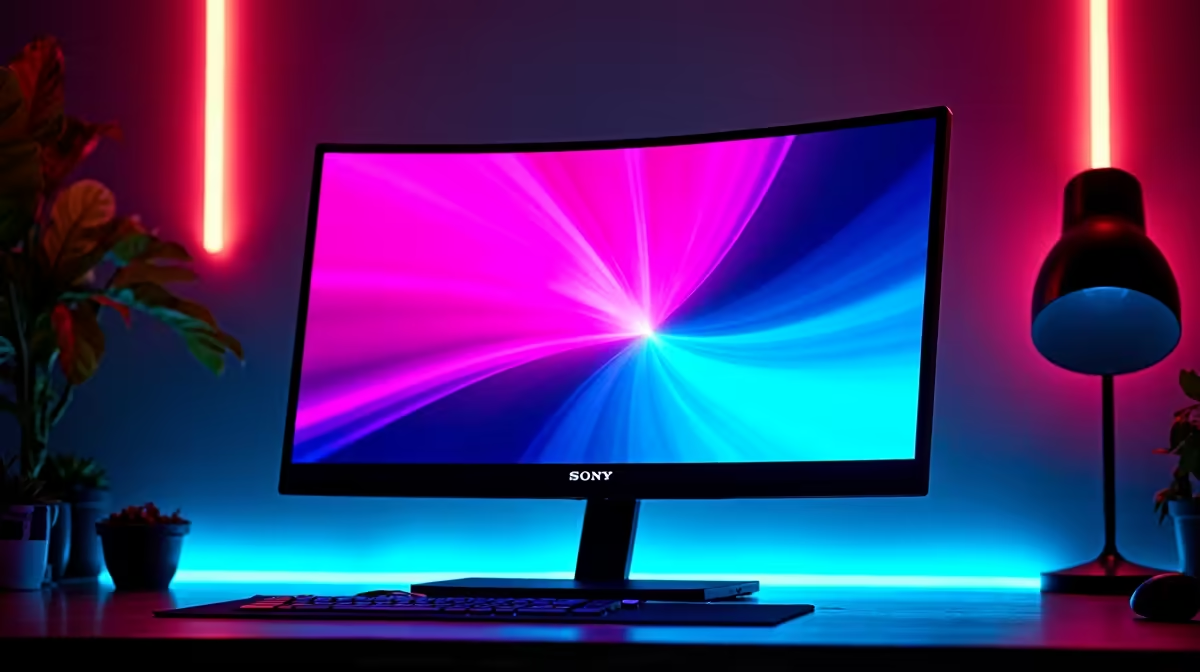
If your display is stuck at 720p 30Hz and you can't push it higher, the cause is almost always a cable limitation, wrong port selection, or a driver setting locking the resolution. Checking your cable type and display connection is the fastest first step to fix this.
The most common reason a display gets locked at 720p 30Hz is using an HDMI 1.4 cable or connecting through a port that doesn't support higher bandwidth. HDMI 1.4 caps out at 1080p 60Hz for standard use, but in some configurations - especially with adapters or older cables - the handshake between your GPU and monitor will default to the lowest stable signal, which is often 720p 30Hz. If you're using a DisplayPort-to-HDMI adapter, the adapter itself may be the bottleneck.
Another frequent cause is a corrupted or outdated GPU driver. When Windows installs a generic Microsoft Basic Display Adapter driver, it has no awareness of your monitor's full capabilities and will default to the most conservative output. South African gamers who've recently reinstalled Windows or swapped hardware often run into this exact problem.
Start by swapping your cable. Use a certified HDMI 2.0 or HDMI 2.1 cable, or a native DisplayPort cable if your monitor supports it. Avoid adapters wherever possible - they introduce compatibility limitations that no software fix can overcome.
Next, right-click your desktop, open Display Settings, and navigate to Advanced Display Settings. Under "Refresh rate" you should see options beyond 30Hz once the correct cable is in place. If the option still doesn't appear, open your GPU control panel - either AMD Software or NVIDIA Control Panel - and look for "Change resolution" under the display section. From here you can manually set a custom resolution if your monitor supports it.
If neither step works, uninstall your GPU driver completely using DDU (Display Driver Uninstaller) in safe mode, then reinstall the latest driver from your GPU manufacturer. After a clean driver install, Windows will correctly identify your monitor's capabilities.
Why does my monitor only show 720p 30Hz as an option? This usually means Windows or your GPU driver is not detecting your monitor's full capabilities. A cable swap or clean driver reinstall typically resolves it.
Does cable length affect resolution and refresh rate? Yes - very long HDMI cables, especially cheap ones over 3 meters, can degrade signal quality enough to force a lower resolution. Use a high-quality cable rated for your target resolution.
Can a bad GPU cause this issue? Rarely. If the GPU is faulty, you'd typically see no display at all rather than a stable 720p 30Hz signal. The issue is almost always the cable, port, or driver.
Ready to Find Your Perfect Match? Shop gaming PCs and display-ready builds at Evetech
Can't Get 720p 30Hz: Display Setup available at Evetech.co.za with local warranty and fast delivery.
Can't Get 720p 30Hz: Display Setup - check Evetech for latest stock and SA pricing.
Depends on your use case. Can't Get 720p 30Hz: Display S offers good value at current Rand pricing.
Headset Stock Levels in Bloemfontein: January. Current stock data & price tracking for SA buyers. See what is available and where prices are heading.
Read more
iMac for Medical Practice: Patient Management. SA-focused analysis with local pricing data, real-world insights & actionable buying advice.
Read more
RTX 5060 Fortnite Ultra Settings at 1080p: FPS. Real-world benchmark data, FPS numbers & performance analysis. What SA gamers can actually expect.
Read more
Headset Stock Levels in Cape Town: August Report. Current stock data & price tracking for SA buyers. See what is available and where prices are heading.
Read more
Eskom Load Shedding During Video Call: Solutions. SA-focused analysis with local pricing data, real-world insights & actionable buying advice.
Read more
LoL Performance on Extreme Gaming PC. Real-world benchmark data, FPS numbers & performance analysis. What SA gamers can actually expect.
Read more
Is a Ultra Short Throw Projector Good for Gaming?. Diagnosis steps, proven fixes & when to seek professional help. SA-specific support info included.

Is a Short Throw Projector Good for Gaming? Input. Diagnosis steps, proven fixes & when to seek professional help. SA-specific support info included.

Top Mouse Settings for Competitive FPS: Sensitivity picks evaluated on performance, value & SA availability with current Rand pricing from Evetech.

Top Speakers for MacBook Desk Setup picks evaluated on performance, value & SA availability with current Rand pricing from Evetech.

Is a Ergonomic Chair Better Than a Standard Office Chair for Gaming Detailed answer with SA data, expert analysis & practical recommendations for local buyers.

Use Spotlight Search Like a Pro on macOS. Step-by-step instructions with SA-specific tips, common pitfalls to avoid & expert recommendations.

wireless keyboard Fan Noise Too Loud: Quiet. Everything you need to know with SA pricing, step-by-step instructions & expert recommendations.

Connection Timeout: Troubleshooting Guide #2. Diagnosis steps, proven fixes & when to seek professional help. SA-specific support info included.
Headset Stock Levels in Bloemfontein: January. Current stock data & price tracking for SA buyers. See what is available and where prices are heading.
iMac for Medical Practice: Patient Management. SA-focused analysis with local pricing data, real-world insights & actionable buying advice.
RTX 5060 Fortnite Ultra Settings at 1080p: FPS. Real-world benchmark data, FPS numbers & performance analysis. What SA gamers can actually expect.
Headset Stock Levels in Cape Town: August Report. Current stock data & price tracking for SA buyers. See what is available and where prices are heading.