


Headset Stock Levels in Bloemfontein: January 2026 Report
Headset Stock Levels in Bloemfontein: January. Current stock data & price tracking for SA buyers. See what is available and where prices are heading.
Read moreCinebench Results Inconsistent: Why Detailed answer with SA-specific data, expert analysis & practical recommendations for local buyers.
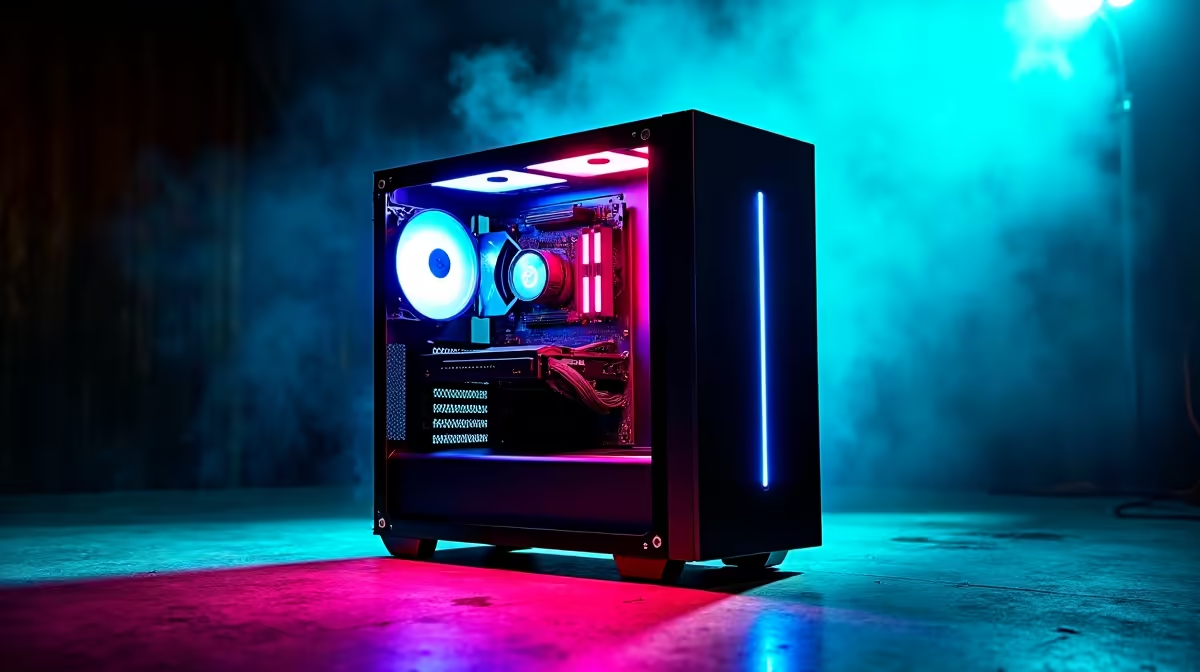
Cinebench scores varying between runs is a frustrating but common experience - and almost always explainable. Whether you're seeing a 10% swing between consecutive passes or noticing scores drop after the first test, the causes are rooted in how modern CPUs manage thermals, power limits, and boost clocks. Understanding why helps you interpret results accurately and spot real problems.
Cinebench results are inconsistent primarily due to CPU thermal throttling, boost clock variability, background processes, and power limit behaviours that differ between the first and subsequent runs.
Thermal throttling: The leading cause of declining scores between runs. Cinebench R23 and R24 sustain heavy multi-threaded loads for several minutes. If your cooler can't keep pace, CPU temperature climbs past its junction limit (95°C for Ryzen, 100°C for Intel Core) and the chip reduces clock speeds to protect itself. The first run may complete before thermals fully saturate; the second starts warm and scores lower.
Boost clock variability: Modern CPUs constantly adjust per-core boost clocks based on temperature, power budget, and workload. Two identical runs may draw different boost states, causing 2–5% variance even on a well-cooled system. This is normal behaviour.
Background processes: Windows updates, antivirus scans, and background telemetry compete for CPU cycles mid-benchmark. Even a brief background service spike measurably reduces scores. Run Cinebench with only essential applications active.
Warm up first. Run a short Cinebench pass before your benchmark session and discard that result. This stabilises thermals and clock behaviour so subsequent runs start from a consistent baseline.
Monitor temperatures live. Use HWiNFO64 alongside Cinebench to watch CPU temperatures in real time. If temps hit 90°C+ and scores drop on subsequent runs, the cooler is the bottleneck - not the CPU.
Check BIOS power limits. Some motherboards ship with unlimited power limits or aggressive AMD PBO enabled. This causes the CPU to burst high then throttle. More conservative power limits produce lower peak scores but better run-to-run consistency.
If scores are consistently 20%+ below expected results at stock settings, dig deeper. Confirm RAM is running at its rated XMP/EXPO speed - underclocked memory significantly limits CPU performance in Cinebench. Verify thermal paste hasn't dried out on an older system, and check that the cooler is mounted with even pressure across the IHS.
FAQ
Q: How much Cinebench variance is normal? A: A 3–7% variance between back-to-back runs on a well-cooled system is typical. Beyond 10% warrants investigation - thermals and background processes first.
Q: Does ambient temperature affect Cinebench scores? A: Yes. Benchmarking in a hot room (30°C+) leaves your cooler less headroom, causing earlier throttling and lower scores compared to a cooler environment.
Q: Should I run Cinebench multiple times? A: Yes - run at least three consecutive passes and use the middle or highest result. The first pass establishes thermal conditions; subsequent passes reveal sustained performance.
Evetech stocks Graphics Card Deals and Evetech Best Sellers — shop online with fast delivery across South Africa.
Ready to Find Your Perfect Match? Explore relevant Evetech options, compare current South African pricing, and choose hardware that fits your setup. Shop now
Cinebench Results Inconsistent: Why available at Evetech.co.za with local warranty and fast delivery.
Cinebench Results Inconsistent: Why - check Evetech for latest stock and SA pricing.
Depends on your use case. Cinebench Results Inconsistent offers good value at current Rand pricing.
Headset Stock Levels in Bloemfontein: January. Current stock data & price tracking for SA buyers. See what is available and where prices are heading.
Read more
iMac for Medical Practice: Patient Management. SA-focused analysis with local pricing data, real-world insights & actionable buying advice.
Read more
RTX 5060 Fortnite Ultra Settings at 1080p: FPS. Real-world benchmark data, FPS numbers & performance analysis. What SA gamers can actually expect.
Read more
Headset Stock Levels in Cape Town: August Report. Current stock data & price tracking for SA buyers. See what is available and where prices are heading.
Read more
Eskom Load Shedding During Video Call: Solutions. SA-focused analysis with local pricing data, real-world insights & actionable buying advice.
Read more
LoL Performance on Extreme Gaming PC. Real-world benchmark data, FPS numbers & performance analysis. What SA gamers can actually expect.
Read more
Is a Ultra Short Throw Projector Good for Gaming?. Diagnosis steps, proven fixes & when to seek professional help. SA-specific support info included.

Is a Short Throw Projector Good for Gaming? Input. Diagnosis steps, proven fixes & when to seek professional help. SA-specific support info included.

Top Mouse Settings for Competitive FPS: Sensitivity picks evaluated on performance, value & SA availability with current Rand pricing from Evetech.

Top Speakers for MacBook Desk Setup picks evaluated on performance, value & SA availability with current Rand pricing from Evetech.

Is a Ergonomic Chair Better Than a Standard Office Chair for Gaming Detailed answer with SA data, expert analysis & practical recommendations for local buyers.

Use Spotlight Search Like a Pro on macOS. Step-by-step instructions with SA-specific tips, common pitfalls to avoid & expert recommendations.

wireless keyboard Fan Noise Too Loud: Quiet. Everything you need to know with SA pricing, step-by-step instructions & expert recommendations.

Connection Timeout: Troubleshooting Guide #2. Diagnosis steps, proven fixes & when to seek professional help. SA-specific support info included.
Headset Stock Levels in Bloemfontein: January. Current stock data & price tracking for SA buyers. See what is available and where prices are heading.
iMac for Medical Practice: Patient Management. SA-focused analysis with local pricing data, real-world insights & actionable buying advice.
RTX 5060 Fortnite Ultra Settings at 1080p: FPS. Real-world benchmark data, FPS numbers & performance analysis. What SA gamers can actually expect.
Headset Stock Levels in Cape Town: August Report. Current stock data & price tracking for SA buyers. See what is available and where prices are heading.