


Headset Stock Levels in Bloemfontein: January 2026 Report
Headset Stock Levels in Bloemfontein: January. Current stock data & price tracking for SA buyers. See what is available and where prices are heading.
Read moreCore Ultra 7 265K All Cores Not Used in Gaming. Is buying used worth it in SA? What to inspect, fair pricing & reliable sources to consider.
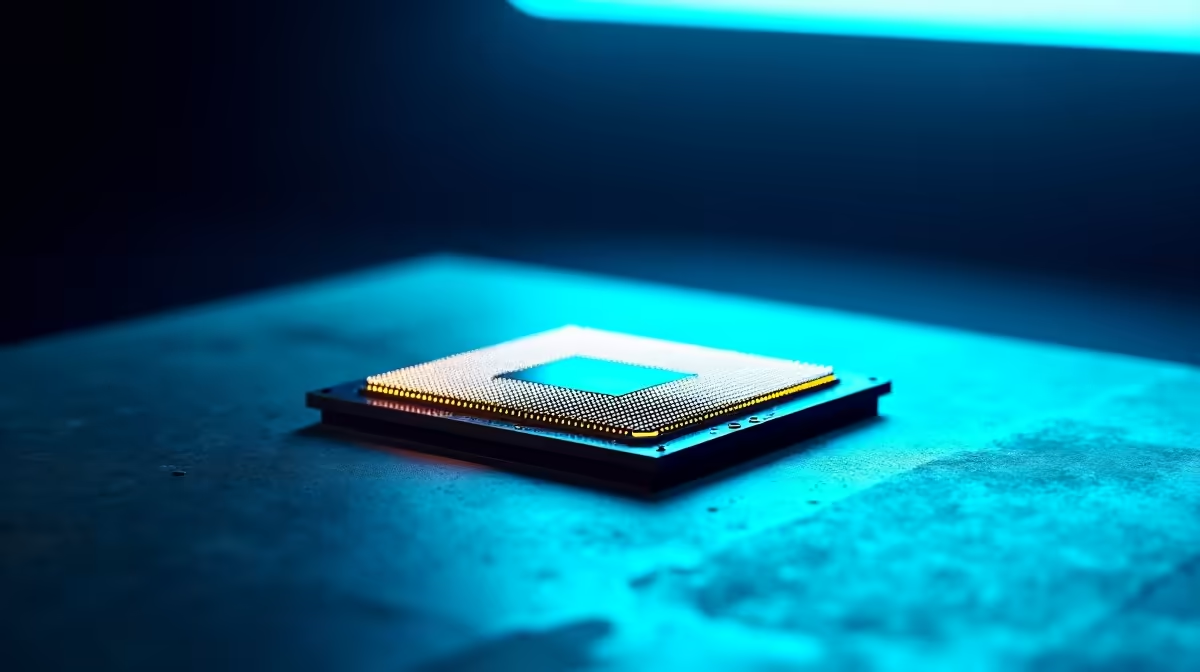
The Intel Core Ultra 7 265K not using all cores in gaming is normal behaviour - the hybrid architecture uses performance and efficiency cores differently, and Windows task scheduling determines core allocation dynamically. Fixes include updating chipset drivers, enabling Intel Thread Director, and ensuring your BIOS is on the latest version.
If you've opened Task Manager or a monitoring tool while gaming on the Core Ultra 7 265K and noticed that several cores appear to be sitting idle or barely used, you're not alone - and in most cases you're not actually losing performance. The Core Ultra 7 265K features Intel's Arrow Lake hybrid architecture with performance cores and efficiency cores that don't all fire simultaneously for every workload. Understanding why this happens and when it's actually a problem worth fixing will save you from unnecessary troubleshooting.
The Core Ultra 7 265K has a mix of performance cores (P-cores) and efficiency cores (E-cores). Gaming workloads are typically handled primarily by the P-cores, while E-cores manage background tasks and lighter threads. This is by design - Intel Thread Director, working with Windows 11's scheduler, dynamically assigns threads to the most appropriate core type. Monitoring tools like HWiNFO64 or Task Manager may show E-cores as lightly loaded during gaming, which is expected. The total core count appearing in monitoring software often overstates active usage because games are not built to scale across 20+ threads simultaneously. Most titles are optimised for 8-16 threads at most.
First, confirm you're running Windows 11 with all updates applied - Intel Thread Director requires Windows 11 for full functionality and performs poorly on Windows 10. Update your Z890 or B860 motherboard BIOS to the latest version, as early firmware had scheduling bugs that affected core utilisation. Install the latest Intel chipset drivers directly from Intel's support page rather than relying on Windows Update. In your BIOS, ensure that E-cores are enabled rather than disabled, as some users turn them off expecting better performance but lose thread throughput for workloads that benefit from them. Finally, set Windows power plan to Balanced or High Performance - the power plan directly affects how aggressively the CPU boosts.
If you're seeing frame rates significantly below what benchmarks suggest and your P-cores are sitting at low clock speeds during gameplay, you may have a thermal or power delivery issue. Check that your CPU cooler is seated correctly and that your motherboard's power limits are not artificially capped. Some budget B860 boards apply strict power limits that prevent the 265K from maintaining boost clocks across all P-cores simultaneously. Raising the power limit in BIOS (PL1 and PL2 settings) can resolve this. If a specific game is performing poorly, check whether it has a process affinity bug that pins all threads to a single core group - this can be corrected manually through Task Manager.
Q: Should I disable efficiency cores on the Core Ultra 7 265K for gaming? A: Generally no. While some older games showed minor improvements with E-cores disabled, in 2026 most titles benefit from having E-cores handle background processes, freeing P-cores for game threads. Test your specific games before making this a permanent change.
Q: What monitoring tool should I use to check Core Ultra 7 265K core usage? A: HWiNFO64 is the most detailed option and correctly displays P-core and E-core utilisation separately. Task Manager gives a rough overview but doesn't distinguish core types clearly.
Q: Does the BIOS version affect Core Ultra 7 265K gaming performance? A: Yes significantly. Early BIOS releases for Z890 and B860 boards had scheduling and power delivery issues that reduced performance. Always update to the latest stable BIOS before diagnosing gaming performance problems.
Ready to Find Your Perfect Match? Browse gaming PC builds featuring Intel Core Ultra processors at Evetech's best deals.
Core Ultra 7 265K All Cores Not Used in available at Evetech.co.za with local warranty and fast delivery.
Core Ultra 7 265K All Cores Not Used in - check Evetech for latest stock and SA pricing.
Depends on your use case. Core Ultra 7 265K All Cores No offers good value at current Rand pricing.
Headset Stock Levels in Bloemfontein: January. Current stock data & price tracking for SA buyers. See what is available and where prices are heading.
Read more
iMac for Medical Practice: Patient Management. SA-focused analysis with local pricing data, real-world insights & actionable buying advice.
Read more
RTX 5060 Fortnite Ultra Settings at 1080p: FPS. Real-world benchmark data, FPS numbers & performance analysis. What SA gamers can actually expect.
Read more
Headset Stock Levels in Cape Town: August Report. Current stock data & price tracking for SA buyers. See what is available and where prices are heading.
Read more
Eskom Load Shedding During Video Call: Solutions. SA-focused analysis with local pricing data, real-world insights & actionable buying advice.
Read more
LoL Performance on Extreme Gaming PC. Real-world benchmark data, FPS numbers & performance analysis. What SA gamers can actually expect.
Read more
Is a Ultra Short Throw Projector Good for Gaming?. Diagnosis steps, proven fixes & when to seek professional help. SA-specific support info included.

Is a Short Throw Projector Good for Gaming? Input. Diagnosis steps, proven fixes & when to seek professional help. SA-specific support info included.

Top Mouse Settings for Competitive FPS: Sensitivity picks evaluated on performance, value & SA availability with current Rand pricing from Evetech.

Top Speakers for MacBook Desk Setup picks evaluated on performance, value & SA availability with current Rand pricing from Evetech.

Is a Ergonomic Chair Better Than a Standard Office Chair for Gaming Detailed answer with SA data, expert analysis & practical recommendations for local buyers.

Use Spotlight Search Like a Pro on macOS. Step-by-step instructions with SA-specific tips, common pitfalls to avoid & expert recommendations.

wireless keyboard Fan Noise Too Loud: Quiet. Everything you need to know with SA pricing, step-by-step instructions & expert recommendations.

Connection Timeout: Troubleshooting Guide #2. Diagnosis steps, proven fixes & when to seek professional help. SA-specific support info included.
Headset Stock Levels in Bloemfontein: January. Current stock data & price tracking for SA buyers. See what is available and where prices are heading.
iMac for Medical Practice: Patient Management. SA-focused analysis with local pricing data, real-world insights & actionable buying advice.
RTX 5060 Fortnite Ultra Settings at 1080p: FPS. Real-world benchmark data, FPS numbers & performance analysis. What SA gamers can actually expect.
Headset Stock Levels in Cape Town: August Report. Current stock data & price tracking for SA buyers. See what is available and where prices are heading.