


Headset Stock Levels in Bloemfontein: January 2026 Report
Headset Stock Levels in Bloemfontein: January. Current stock data & price tracking for SA buyers. See what is available and where prices are heading.
Read moreCrackling Sound During Gaming: Audio Fix. SA-focused analysis with local pricing data, real-world insights & actionable buying advice.
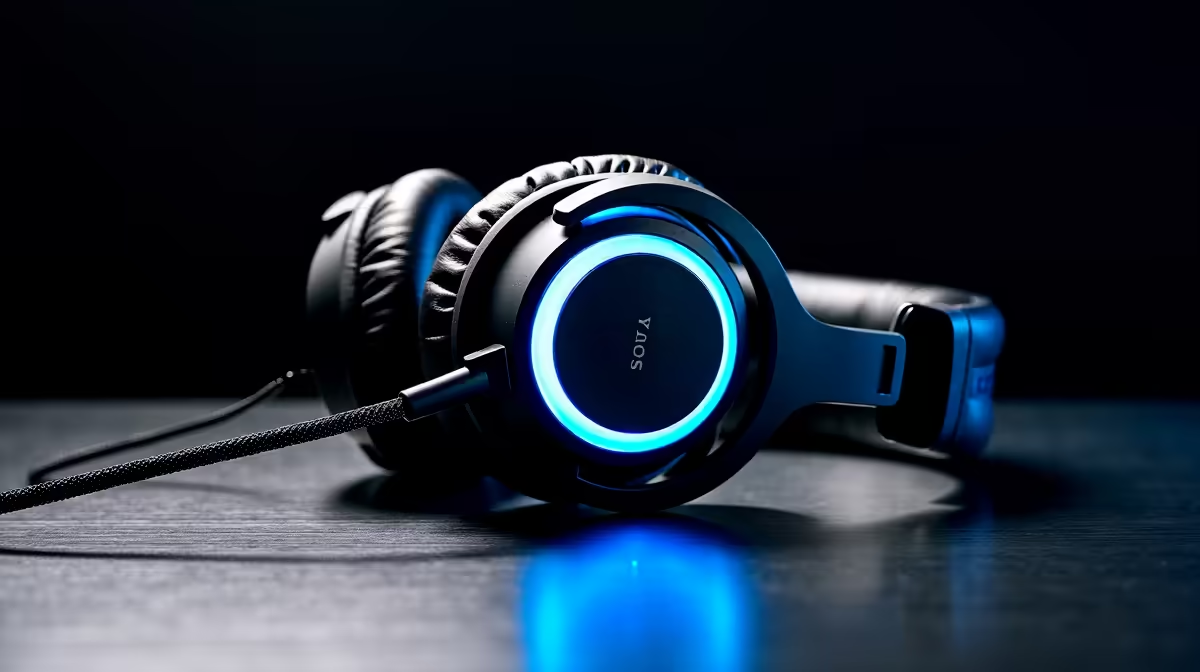
Crackling sound during gaming is almost always caused by one of four things: incorrect audio sample rate settings, a USB power delivery conflict, an outdated or corrupted audio driver, or interference from background software. The fix takes under 10 minutes in most cases and does not require new hardware.
Before changing any settings, pinpoint the source. Crackling that only happens in-game (not in Windows audio or music) usually points to software conflicts or in-game audio settings. Crackling that happens everywhere - Windows sounds, YouTube, Discord - points to a driver, sample rate, or hardware issue. Crackling that comes and goes with USB activity (plugging in devices, charging a phone) is almost certainly a USB power conflict affecting your headset or DAC.
If you are in South Africa and have recently had loadshedding, power surge events can corrupt audio driver state or introduce ground loop noise through cheap extension cords. A full driver uninstall and reinstall often resolves post-loadshedding audio issues immediately.
The most common cause of crackling is a mismatch between the sample rate your audio device is set to in Windows and the rate your game or application is sending. Go to Control Panel - Sound - Playback - right-click your headset or speakers - Properties - Advanced. Set the sample rate to 48000 Hz, 16 bit (or 24 bit if your device supports it). Apply and test.
Then check your game's audio settings. Most games default to 48 kHz, but some older titles default to 44.1 kHz. If your Windows device is set to 48 kHz and the game sends 44.1 kHz, Windows has to resample in real time, which causes crackling under CPU load. Setting both to match eliminates this. If you use OBS for streaming or recording, ensure its audio output matches too.
Generic Windows audio drivers are functional but often lack the optimization needed for gaming workloads. Download the latest audio driver directly from your motherboard manufacturer's support page (for built-in audio) or your headset/soundcard manufacturer's site. Do not rely on Windows Update for audio drivers - it frequently installs outdated versions.
To clean-install: use DDU (Display Driver Uninstaller) or simply go to Device Manager - Sound, Video and Game Controllers - right-click your audio device - Uninstall Device - check 'Delete the driver software for this device' - restart - then install the fresh driver. This removes corrupted driver state that Windows Update cannot fix.
Why does my headset crackle only when I move my mouse fast in games? This is a classic USB bandwidth conflict. High-polling-rate gaming mice (1000Hz+) generate significant USB data, and if your headset shares the same USB controller as your mouse, the audio stream gets interrupted. Move your headset USB to a port on a different USB controller - usually the rear panel ports use a different controller than front panel ports.
Can a cheap power strip cause audio crackling in SA? Yes. Ground loop interference from ungrounded or poorly-shielded power strips introduces a 50Hz hum and crackling into audio systems in South Africa. Use a quality surge-protected power strip with proper earthing, especially if your gaming setup is powered through extension cords.
Does RAM speed affect audio crackling? Rarely, but yes. Unstable overclocked RAM can cause system instability that manifests as audio interruptions. If you are overclocking, test at stock speeds and see if the crackling stops.
Ready to Find Your Perfect Match? Shop gaming PCs and audio upgrades at Evetech
Crackling Sound During Gaming: Audio Fix available at Evetech.co.za with local warranty and fast delivery.
Crackling Sound During Gaming: Audio Fix - check Evetech for latest stock and SA pricing.
Depends on your use case. Crackling Sound During Gaming: offers good value at current Rand pricing.
Headset Stock Levels in Bloemfontein: January. Current stock data & price tracking for SA buyers. See what is available and where prices are heading.
Read more
iMac for Medical Practice: Patient Management. SA-focused analysis with local pricing data, real-world insights & actionable buying advice.
Read more
RTX 5060 Fortnite Ultra Settings at 1080p: FPS. Real-world benchmark data, FPS numbers & performance analysis. What SA gamers can actually expect.
Read more
Headset Stock Levels in Cape Town: August Report. Current stock data & price tracking for SA buyers. See what is available and where prices are heading.
Read more
Eskom Load Shedding During Video Call: Solutions. SA-focused analysis with local pricing data, real-world insights & actionable buying advice.
Read more
LoL Performance on Extreme Gaming PC. Real-world benchmark data, FPS numbers & performance analysis. What SA gamers can actually expect.
Read more
Is a Ultra Short Throw Projector Good for Gaming?. Diagnosis steps, proven fixes & when to seek professional help. SA-specific support info included.

Is a Short Throw Projector Good for Gaming? Input. Diagnosis steps, proven fixes & when to seek professional help. SA-specific support info included.

Top Mouse Settings for Competitive FPS: Sensitivity picks evaluated on performance, value & SA availability with current Rand pricing from Evetech.

Top Speakers for MacBook Desk Setup picks evaluated on performance, value & SA availability with current Rand pricing from Evetech.

Is a Ergonomic Chair Better Than a Standard Office Chair for Gaming Detailed answer with SA data, expert analysis & practical recommendations for local buyers.

Use Spotlight Search Like a Pro on macOS. Step-by-step instructions with SA-specific tips, common pitfalls to avoid & expert recommendations.

wireless keyboard Fan Noise Too Loud: Quiet. Everything you need to know with SA pricing, step-by-step instructions & expert recommendations.

Connection Timeout: Troubleshooting Guide #2. Diagnosis steps, proven fixes & when to seek professional help. SA-specific support info included.
Headset Stock Levels in Bloemfontein: January. Current stock data & price tracking for SA buyers. See what is available and where prices are heading.
iMac for Medical Practice: Patient Management. SA-focused analysis with local pricing data, real-world insights & actionable buying advice.
RTX 5060 Fortnite Ultra Settings at 1080p: FPS. Real-world benchmark data, FPS numbers & performance analysis. What SA gamers can actually expect.
Headset Stock Levels in Cape Town: August Report. Current stock data & price tracking for SA buyers. See what is available and where prices are heading.