


Headset Stock Levels in Bloemfontein: January 2026 Report
Headset Stock Levels in Bloemfontein: January. Current stock data & price tracking for SA buyers. See what is available and where prices are heading.
Read moreCyberpunk 2077 1080p Max: Performance Issues. Diagnosis steps, proven fixes & when to seek professional help. SA-specific support info included.
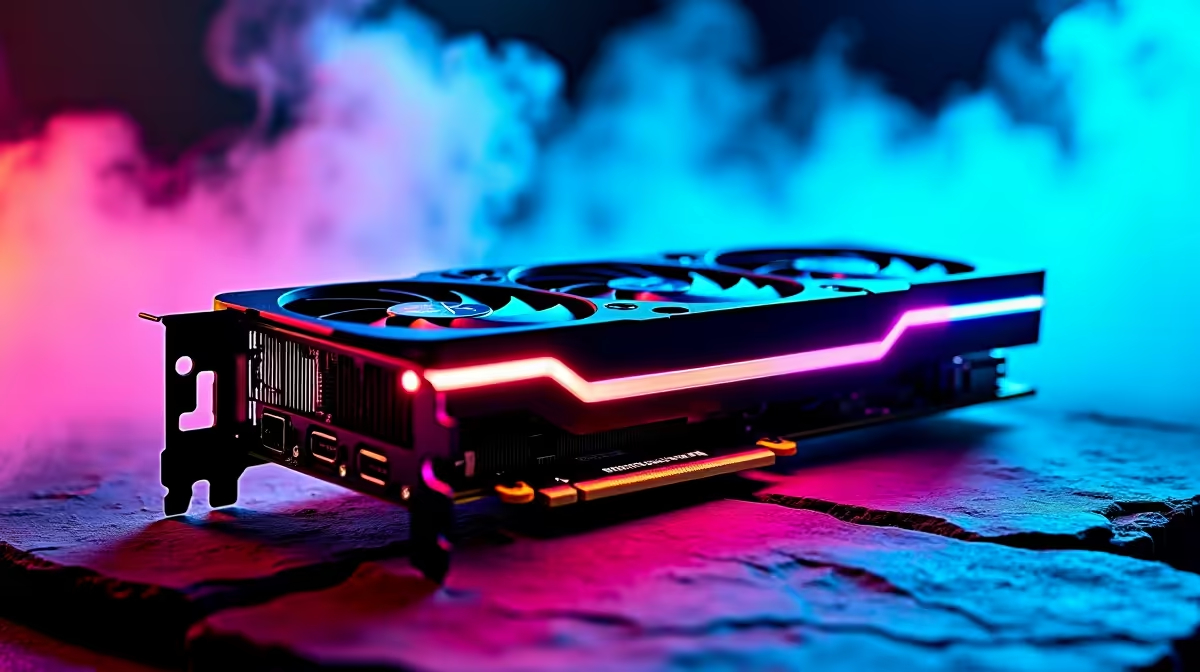
Cyberpunk 2077 at 1080p max settings is one of the most demanding scenarios in PC gaming. Performance issues typically stem from insufficient VRAM, CPU bottlenecks at 1080p, or ray tracing settings exceeding what the GPU can sustain. Identifying which is the limiting factor determines the correct fix.
Cyberpunk 2077 remains one of the most graphically demanding games in 2026 even at 1080p when pushed to maximum settings including psycho ray tracing. If you are running into stutters, frame drops, or performance that seems far below what your hardware should deliver, the cause is usually identifiable and fixable. Here is how to diagnose and address the most common issues.
At 1080p with everything maxed including ultra ray tracing, Cyberpunk 2077 can push 10-12GB of VRAM usage. Cards with 8GB or less will encounter VRAM overflow - the game begins pulling assets from system RAM, which is dramatically slower and causes the irregular stuttering that many players describe as "hitching" rather than consistent low frame rates.
Check your VRAM usage via MSI Afterburner or GPU-Z's overlay while in Night City. If you are consistently at or above your card's VRAM ceiling, the solution is either dropping texture quality one step, disabling crowd density, or turning ray tracing down from Psycho to Ultra - that setting alone reduces VRAM pressure substantially.
1080p gaming increases CPU load relative to higher resolutions because the GPU finishes frames faster and waits for the CPU to feed it draw calls. In open-world Night City with dense NPC crowds and vehicle traffic, even modern 8-core CPUs can struggle to maintain consistent frame pacing.
If GPU usage sits below 90% while you are experiencing frame drops, the CPU is likely the constraint. Disabling crowd density in settings reduces CPU load significantly and is often invisible in gameplay experience. Background processes also compound this - close browser tabs, Discord video, and anything consuming CPU cycles while gaming.
The ray tracing tiers in Cyberpunk 2077 span a massive performance range. Moving from Psycho RT down to Ultra RT typically recovers 20-30% more frames with minimal visible quality difference in motion. Path tracing (the highest tier) is essentially a benchmark mode on anything below an RTX 4080 or RTX 5070 level card at 1080p without DLSS.
For most players, the optimal configuration at 1080p max is to set rasterization to Ultra, enable DLSS Quality or Balanced, and set ray tracing to the highest tier your card handles above 60fps. This approach delivers near-max visuals at playable frame rates on mid-range to high-end hardware.
Q: Why does Cyberpunk 2077 stutter even on a high-end PC at 1080p max? A: The most common cause of stutter specifically (rather than low average FPS) is shader compilation on first run or VRAM overflow. Ensure you allow the game to complete shader compilation after updates, and check VRAM usage with an overlay to identify overflow.
Q: Does enabling DLSS help performance in Cyberpunk 2077? A: Yes, significantly. DLSS Quality mode at 1080p output (rendering at 720p internally and upscaling) typically adds 40-70% more frames while maintaining visuals that are difficult to distinguish from native resolution in motion. It is one of the most effective performance tools in the game.
Q: What settings have the biggest performance impact in Cyberpunk 2077? A: In order of performance impact: Ray Tracing quality level, Crowd Density, Screen Space Reflections, and Volumetric Fog. Dropping any of these from maximum delivers meaningful frame rate gains. Texture quality only impacts VRAM, not frame rate directly.
Ready to Find Your Perfect Match? Find a gaming PC built to handle Cyberpunk 2077 at max settings
Cyberpunk 2077 1080p Max: Performance Is available at Evetech.co.za with local warranty and fast delivery.
Cyberpunk 2077 1080p Max: Performance Is - check Evetech for latest stock and SA pricing.
Depends on your use case. Cyberpunk 2077 1080p Max: Perf offers good value at current Rand pricing.
Headset Stock Levels in Bloemfontein: January. Current stock data & price tracking for SA buyers. See what is available and where prices are heading.
Read more
iMac for Medical Practice: Patient Management. SA-focused analysis with local pricing data, real-world insights & actionable buying advice.
Read more
RTX 5060 Fortnite Ultra Settings at 1080p: FPS. Real-world benchmark data, FPS numbers & performance analysis. What SA gamers can actually expect.
Read more
Headset Stock Levels in Cape Town: August Report. Current stock data & price tracking for SA buyers. See what is available and where prices are heading.
Read more
Eskom Load Shedding During Video Call: Solutions. SA-focused analysis with local pricing data, real-world insights & actionable buying advice.
Read more
LoL Performance on Extreme Gaming PC. Real-world benchmark data, FPS numbers & performance analysis. What SA gamers can actually expect.
Read more
Is a Ultra Short Throw Projector Good for Gaming?. Diagnosis steps, proven fixes & when to seek professional help. SA-specific support info included.

Is a Short Throw Projector Good for Gaming? Input. Diagnosis steps, proven fixes & when to seek professional help. SA-specific support info included.

Top Mouse Settings for Competitive FPS: Sensitivity picks evaluated on performance, value & SA availability with current Rand pricing from Evetech.

Top Speakers for MacBook Desk Setup picks evaluated on performance, value & SA availability with current Rand pricing from Evetech.

Is a Ergonomic Chair Better Than a Standard Office Chair for Gaming Detailed answer with SA data, expert analysis & practical recommendations for local buyers.

Use Spotlight Search Like a Pro on macOS. Step-by-step instructions with SA-specific tips, common pitfalls to avoid & expert recommendations.

wireless keyboard Fan Noise Too Loud: Quiet. Everything you need to know with SA pricing, step-by-step instructions & expert recommendations.

Connection Timeout: Troubleshooting Guide #2. Diagnosis steps, proven fixes & when to seek professional help. SA-specific support info included.
Headset Stock Levels in Bloemfontein: January. Current stock data & price tracking for SA buyers. See what is available and where prices are heading.
iMac for Medical Practice: Patient Management. SA-focused analysis with local pricing data, real-world insights & actionable buying advice.
RTX 5060 Fortnite Ultra Settings at 1080p: FPS. Real-world benchmark data, FPS numbers & performance analysis. What SA gamers can actually expect.
Headset Stock Levels in Cape Town: August Report. Current stock data & price tracking for SA buyers. See what is available and where prices are heading.