


Headset Stock Levels in Bloemfontein: January 2026 Report
Headset Stock Levels in Bloemfontein: January. Current stock data & price tracking for SA buyers. See what is available and where prices are heading.
Read moreFocus Assist Disabled: Gaming Performance. Real-world benchmark data, FPS numbers & performance analysis. What SA gamers can actually expect.
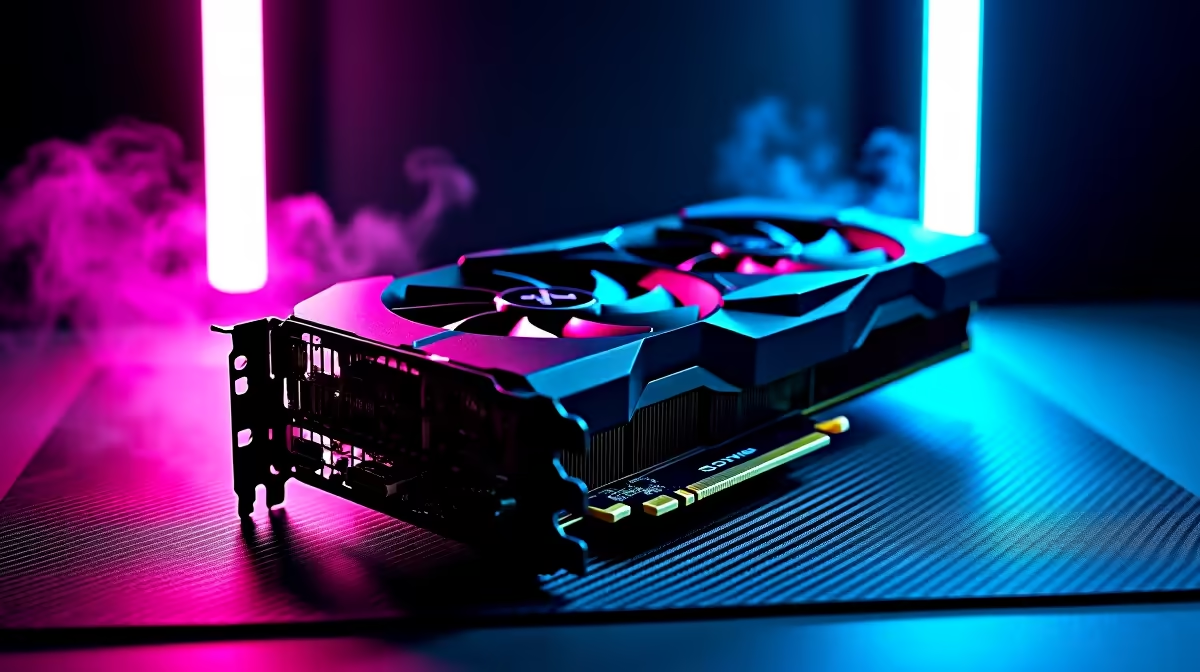
Disabling Focus Assist in Windows 11 removes the feature that suppresses notifications and background app alerts during gaming sessions, which can introduce minor CPU overhead from notification processing but has no meaningful impact on gaming frame rates or GPU performance for the vast majority of users. If you are troubleshooting performance issues, Focus Assist is not the cause.
Focus Assist, now called Do Not Disturb in Windows 11 22H2 and later, controls whether Windows delivers notifications to your screen and taskbar during designated activities including gaming. When enabled in gaming mode, it suppresses toast notifications, app badge updates, and some background app refresh cycles associated with notification delivery. When disabled, all these notification events process normally. The CPU cost of notification processing is measured in single-digit milliseconds and affects background Windows services rather than GPU rendering or game thread scheduling. Independent benchmarks consistently show zero statistically significant frame rate difference between gaming with Focus Assist enabled versus disabled when GPU-limited or CPU-limited in a game workload. The setting is a quality-of-life control for your desktop experience, not a performance lever. ## When Notification Processing Can Indirectly Affect Gaming
There are edge cases where disabling Focus Assist correlates with minor gaming disruptions. If a background app triggers a heavy notification batch (a large update notification from a system app, or a messaging app syncing a large conversation history), the resulting disk and CPU activity may cause a brief frame time spike in CPU-sensitive games. This is not Focus Assist causing the spike but rather the underlying app activity that Focus Assist would have deferred. In games that run near the CPU performance limit such as strategy titles with large unit counts, city simulators, or older titles not optimised for modern multi-core architectures, unexpected background spikes from notification-related app activity are slightly more likely to cause noticeable stutters. For GPU-limited gaming at high graphics settings, which covers most modern SA gamers running titles like Fortnite, Valorant, COD, or FIFA on mid-range to high-end hardware, the difference is genuinely immeasurable. ## Better Performance Optimisations to Pursue Instead
If you are chasing gaming performance improvements on your Windows PC, time spent on these settings produces real measurable gains compared to Focus Assist adjustments. Enable Windows Game Mode in Settings, which allocates more CPU threads and GPU priority to the active game process. Set your power plan to High Performance or Balanced rather than Power Saver, which throttles both CPU and GPU clock speeds. Update your GPU drivers to the latest stable release since NVIDIA and AMD driver updates frequently include game-specific performance patches. Close background applications that actively use GPU resources: browsers with hardware acceleration, video players, and streaming software all consume GPU memory and processing bandwidth that would otherwise go to your game. For South African gamers dealing with loadshedding, ensure your UPS or inverter provides stable voltage since power fluctuations cause performance inconsistency that no Windows setting can compensate for. ### FAQ
Ready to Find Your Perfect Match? Upgrade your gaming rig with quality components from Evetech and game at the performance your hardware deserves. Browse Gaming PC Deals at Evetech
Focus Assist Disabled: Gaming Performanc available at Evetech.co.za with local warranty and fast delivery.
Focus Assist Disabled: Gaming Performanc - check Evetech for latest stock and SA pricing.
Depends on your use case. Focus Assist Disabled: Gaming offers good value at current Rand pricing.
Headset Stock Levels in Bloemfontein: January. Current stock data & price tracking for SA buyers. See what is available and where prices are heading.
Read more
iMac for Medical Practice: Patient Management. SA-focused analysis with local pricing data, real-world insights & actionable buying advice.
Read more
RTX 5060 Fortnite Ultra Settings at 1080p: FPS. Real-world benchmark data, FPS numbers & performance analysis. What SA gamers can actually expect.
Read more
Headset Stock Levels in Cape Town: August Report. Current stock data & price tracking for SA buyers. See what is available and where prices are heading.
Read more
Eskom Load Shedding During Video Call: Solutions. SA-focused analysis with local pricing data, real-world insights & actionable buying advice.
Read more
LoL Performance on Extreme Gaming PC. Real-world benchmark data, FPS numbers & performance analysis. What SA gamers can actually expect.
Read more
Is a Ultra Short Throw Projector Good for Gaming?. Diagnosis steps, proven fixes & when to seek professional help. SA-specific support info included.

Is a Short Throw Projector Good for Gaming? Input. Diagnosis steps, proven fixes & when to seek professional help. SA-specific support info included.

Top Mouse Settings for Competitive FPS: Sensitivity picks evaluated on performance, value & SA availability with current Rand pricing from Evetech.

Top Speakers for MacBook Desk Setup picks evaluated on performance, value & SA availability with current Rand pricing from Evetech.

Is a Ergonomic Chair Better Than a Standard Office Chair for Gaming Detailed answer with SA data, expert analysis & practical recommendations for local buyers.

Use Spotlight Search Like a Pro on macOS. Step-by-step instructions with SA-specific tips, common pitfalls to avoid & expert recommendations.

wireless keyboard Fan Noise Too Loud: Quiet. Everything you need to know with SA pricing, step-by-step instructions & expert recommendations.

Connection Timeout: Troubleshooting Guide #2. Diagnosis steps, proven fixes & when to seek professional help. SA-specific support info included.
Headset Stock Levels in Bloemfontein: January. Current stock data & price tracking for SA buyers. See what is available and where prices are heading.
iMac for Medical Practice: Patient Management. SA-focused analysis with local pricing data, real-world insights & actionable buying advice.
RTX 5060 Fortnite Ultra Settings at 1080p: FPS. Real-world benchmark data, FPS numbers & performance analysis. What SA gamers can actually expect.
Headset Stock Levels in Cape Town: August Report. Current stock data & price tracking for SA buyers. See what is available and where prices are heading.