


Headset Stock Levels in Bloemfontein: January 2026 Report
Headset Stock Levels in Bloemfontein: January. Current stock data & price tracking for SA buyers. See what is available and where prices are heading.
Read moreGPU Temperature at 70C: Cooling Needed Detailed answer with SA data, expert analysis & practical recommendations for local buyers.
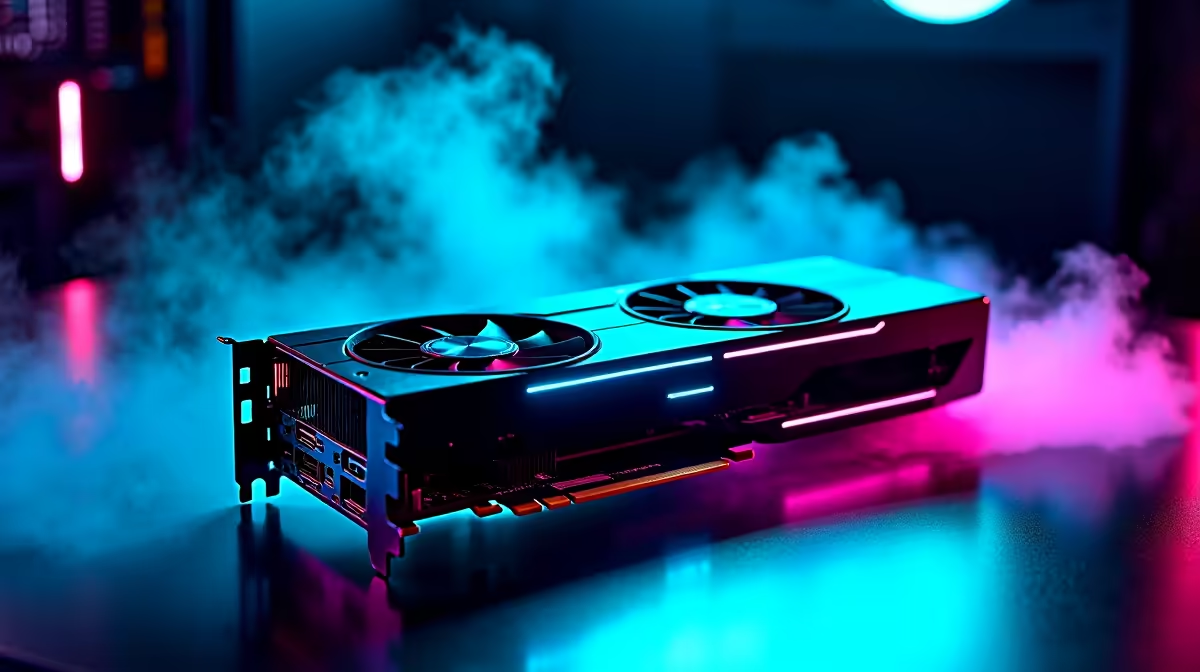
South African summers push ambient temperatures well above what most international benchmarks assume, which means your GPU thermals may look different to what you read in overseas reviews. Seeing 70°C on your graphics card during a gaming session can trigger concern, but context matters enormously. Whether that reading is fine or a warning sign depends on several factors worth understanding.
A GPU temperature of 70°C is completely normal and safe for the vast majority of graphics cards. Most modern GPUs are designed to run safely up to 85–95°C under load, depending on the manufacturer. At 70°C you have significant thermal headroom, and additional cooling is generally not required unless your card is thermal throttling, your fans are running at maximum speed constantly, or your case airflow is poor.
Every GPU has a thermal design specification set by the chip manufacturer. NVIDIA's RTX 40-series cards typically throttle around 83–87°C; AMD's RDNA 3 cards operate similarly. Running at 70°C means you are 13–17°C below the throttle point, leaving plenty of margin. Junction temperatures (reported separately on AMD cards as "hotspot") can legitimately read 15–25°C higher than the average die temperature, so a 70°C average with a 90°C junction on an AMD GPU is still within spec.
The temperature number alone is rarely the issue - the behaviour around it matters more. If your GPU fans are running at 90–100% speed to maintain 70°C, that suggests poor airflow in your case rather than a card that needs a cooler upgrade. Similarly, if you are hitting 70°C in a light game that should not stress the card, your case may be trapping heat. Check that your PC case has adequate intake and exhaust fans, and that cables are not blocking airflow. A quality CPU cooler that keeps your processor temperatures in check also contributes to a healthier internal environment, since hot air from the CPU zone can raise GPU inlet temperatures.
If you want to bring temperatures down regardless, start with case airflow before spending on hardware. Ensure at least two intake fans at the front and one exhaust at the rear. Clean your GPU heatsink fins and fans of dust - this alone can drop temperatures by 5–10°C. Custom fan curves via software like MSI Afterburner let you ramp cooling earlier, reducing peak temperatures at the cost of slightly more noise. Reapplying thermal paste to an older card (two-plus years) can also recover 5–8°C if the original paste has dried out.
Q: Is 70°C too hot for a GPU while gaming? A: No. 70°C is a healthy operating temperature for gaming. Most GPUs are rated for continuous operation up to 83–95°C.
Q: At what GPU temperature should I start worrying? A: Sustained temperatures above 85°C for extended periods warrant investigation, particularly if the card is throttling (dropping clock speeds). Above 90°C consistently suggests a cooling or airflow problem.
Q: Does ambient temperature affect GPU temps in SA? A: Yes. On a 35°C summer day your GPU will run 10–15°C hotter than the same card in a 20°C room. Factor ambient temperature into your thermal expectations during hot months.
Evetech stocks All Graphics Cards and Graphics Card Deals — browse current SA pricing and availability online.
Ready to Find Your Perfect Match? Shop CPU Coolers and Cooling Solutions at Evetech
GPU Temperature at 70C: Cooling Needed available at Evetech.co.za with local warranty and fast delivery.
GPU Temperature at 70C: Cooling Needed - check Evetech for latest stock and SA pricing.
Depends on your use case. GPU Temperature at 70C: Coolin offers good value at current Rand pricing.
Headset Stock Levels in Bloemfontein: January. Current stock data & price tracking for SA buyers. See what is available and where prices are heading.
Read more
iMac for Medical Practice: Patient Management. SA-focused analysis with local pricing data, real-world insights & actionable buying advice.
Read more
RTX 5060 Fortnite Ultra Settings at 1080p: FPS. Real-world benchmark data, FPS numbers & performance analysis. What SA gamers can actually expect.
Read more
Headset Stock Levels in Cape Town: August Report. Current stock data & price tracking for SA buyers. See what is available and where prices are heading.
Read more
Eskom Load Shedding During Video Call: Solutions. SA-focused analysis with local pricing data, real-world insights & actionable buying advice.
Read more
LoL Performance on Extreme Gaming PC. Real-world benchmark data, FPS numbers & performance analysis. What SA gamers can actually expect.
Read more
Is a Ultra Short Throw Projector Good for Gaming?. Diagnosis steps, proven fixes & when to seek professional help. SA-specific support info included.

Is a Short Throw Projector Good for Gaming? Input. Diagnosis steps, proven fixes & when to seek professional help. SA-specific support info included.

Top Mouse Settings for Competitive FPS: Sensitivity picks evaluated on performance, value & SA availability with current Rand pricing from Evetech.

Top Speakers for MacBook Desk Setup picks evaluated on performance, value & SA availability with current Rand pricing from Evetech.

Is a Ergonomic Chair Better Than a Standard Office Chair for Gaming Detailed answer with SA data, expert analysis & practical recommendations for local buyers.

Use Spotlight Search Like a Pro on macOS. Step-by-step instructions with SA-specific tips, common pitfalls to avoid & expert recommendations.

wireless keyboard Fan Noise Too Loud: Quiet. Everything you need to know with SA pricing, step-by-step instructions & expert recommendations.

Connection Timeout: Troubleshooting Guide #2. Diagnosis steps, proven fixes & when to seek professional help. SA-specific support info included.
Headset Stock Levels in Bloemfontein: January. Current stock data & price tracking for SA buyers. See what is available and where prices are heading.
iMac for Medical Practice: Patient Management. SA-focused analysis with local pricing data, real-world insights & actionable buying advice.
RTX 5060 Fortnite Ultra Settings at 1080p: FPS. Real-world benchmark data, FPS numbers & performance analysis. What SA gamers can actually expect.
Headset Stock Levels in Cape Town: August Report. Current stock data & price tracking for SA buyers. See what is available and where prices are heading.