


Headset Stock Levels in Bloemfontein: January 2026 Report
Headset Stock Levels in Bloemfontein: January. Current stock data & price tracking for SA buyers. See what is available and where prices are heading.
Read moreGTA 6 720p Ultra: Performance Issues. Diagnosis steps, proven fixes & when to seek professional help. SA-specific support info included.
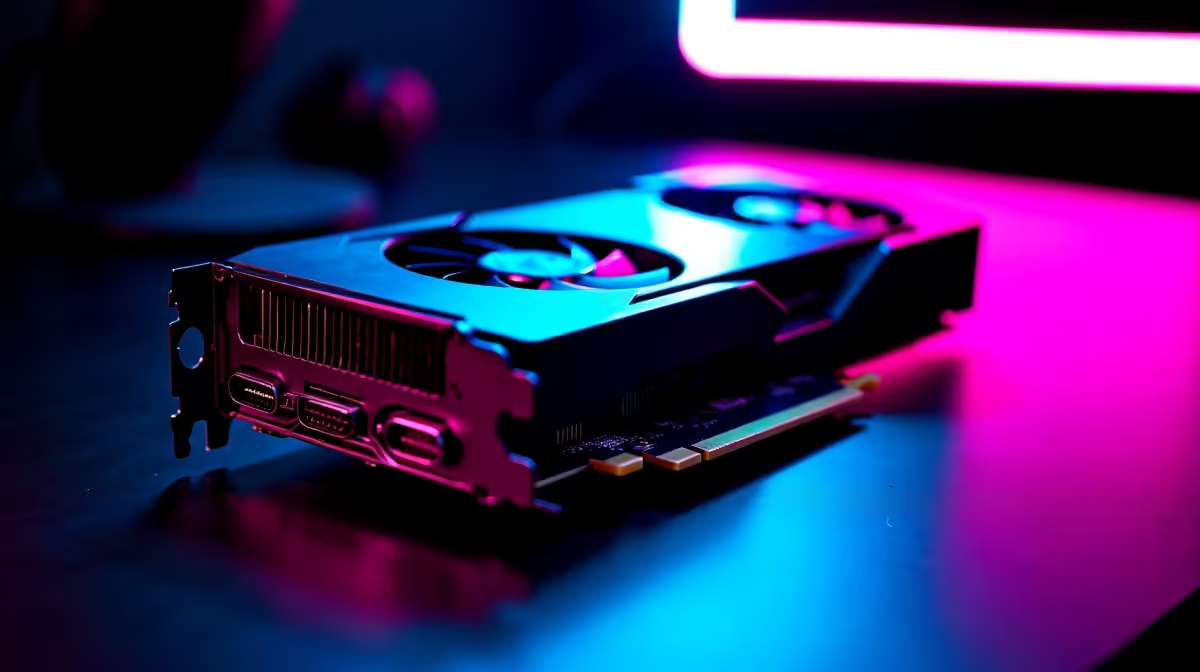
Running GTA 6 at 720p on Ultra settings still causes performance issues because Ultra presets push GPU memory and draw calls far beyond what 720p resolution savings can offset. Lowering individual settings like shadows, reflections, and extended distance scaling makes a far bigger difference than resolution alone. South African players on mid-range hardware should treat Ultra as a ceiling to tune down from, not a starting point.
GTA 6 is one of the most demanding open-world titles ever shipped, and the assumption that dropping to 720p will fix Ultra-setting performance problems is one of the most common mistakes SA gamers make when first launching the game. The reality is that resolution affects pixel fill rate, but Ultra settings hammer your VRAM, geometry budgets, and shader complexity regardless of output resolution - and that is where the real bottleneck sits.
Ultra presets in GTA 6 enable volumetric cloud layers, ray-traced reflections on wet surfaces, maximum pedestrian and traffic density, and extended geometry streaming distances. None of these scale with resolution. A GPU rendering at 720p Ultra is still processing the same scene complexity as 1080p Ultra - it just outputs fewer pixels at the end. If your card has 8GB VRAM or less, Ultra textures alone will push you into VRAM overflow, causing stutters and frame time spikes that 720p cannot resolve. The fix is not the resolution slider - it is the individual quality presets.
Four settings account for the majority of performance loss at Ultra: extended shadow distance, which doubles geometry pass costs; volumetric effects quality, which is heavily GPU compute bound; reflection quality when ray tracing is enabled; and texture streaming quality, which determines VRAM pressure. Dropping each of these one step from Ultra to High typically recovers 20 to 35 percent frame rate without a visible image quality change at 720p output. Traffic and pedestrian density are CPU-side and worth reducing separately if you see CPU frame times over 12ms in the built-in benchmark.
For SA players running cards in the RTX 3060 to RTX 4060 range, the most stable 720p configuration keeps textures at High, shadows at High, reflections on rasterised Medium, volumetrics at Medium, and everything else at Ultra. This captures most of the visual fidelity while keeping VRAM usage under 7GB and GPU load at a manageable level. If you are on an older card like a GTX 1080 or RX 580, drop textures to Medium as well and disable ray tracing entirely - the rasterised path is still very good looking and runs significantly faster on those architectures.
Q: Does lowering resolution in GTA 6 always improve performance? A: Not when GPU memory and compute are the bottleneck rather than pixel fill rate. At Ultra settings, VRAM pressure and shader workload dominate - resolution reduction helps, but you need to lower quality presets too.
Q: What is the single biggest performance gain setting in GTA 6? A: Extended shadow distance followed by volumetric quality. Dropping either one from Ultra to High can recover 10 to 20 FPS on its own without dramatically changing what the game looks like.
Q: Should I use the in-game benchmark before changing settings? A: Yes - GTA 6's benchmark reports GPU time, CPU time, and VRAM usage separately. Use it to identify your specific bottleneck before changing anything, so you target the right setting rather than guessing.
Ready to Find Your Perfect Match? Find a gaming PC with the GPU headroom to handle GTA 6 Ultra settings at smooth frame rates.
GTA 6 720p Ultra: Performance Issues available at Evetech.co.za with local warranty and fast delivery.
GTA 6 720p Ultra: Performance Issues - check Evetech for latest stock and SA pricing.
Depends on your use case. GTA 6 720p Ultra: Performance offers good value at current Rand pricing.
Headset Stock Levels in Bloemfontein: January. Current stock data & price tracking for SA buyers. See what is available and where prices are heading.
Read more
iMac for Medical Practice: Patient Management. SA-focused analysis with local pricing data, real-world insights & actionable buying advice.
Read more
RTX 5060 Fortnite Ultra Settings at 1080p: FPS. Real-world benchmark data, FPS numbers & performance analysis. What SA gamers can actually expect.
Read more
Headset Stock Levels in Cape Town: August Report. Current stock data & price tracking for SA buyers. See what is available and where prices are heading.
Read more
Eskom Load Shedding During Video Call: Solutions. SA-focused analysis with local pricing data, real-world insights & actionable buying advice.
Read more
LoL Performance on Extreme Gaming PC. Real-world benchmark data, FPS numbers & performance analysis. What SA gamers can actually expect.
Read more
Is a Ultra Short Throw Projector Good for Gaming?. Diagnosis steps, proven fixes & when to seek professional help. SA-specific support info included.

Is a Short Throw Projector Good for Gaming? Input. Diagnosis steps, proven fixes & when to seek professional help. SA-specific support info included.

Top Mouse Settings for Competitive FPS: Sensitivity picks evaluated on performance, value & SA availability with current Rand pricing from Evetech.

Top Speakers for MacBook Desk Setup picks evaluated on performance, value & SA availability with current Rand pricing from Evetech.

Is a Ergonomic Chair Better Than a Standard Office Chair for Gaming Detailed answer with SA data, expert analysis & practical recommendations for local buyers.

Use Spotlight Search Like a Pro on macOS. Step-by-step instructions with SA-specific tips, common pitfalls to avoid & expert recommendations.

wireless keyboard Fan Noise Too Loud: Quiet. Everything you need to know with SA pricing, step-by-step instructions & expert recommendations.

Connection Timeout: Troubleshooting Guide #2. Diagnosis steps, proven fixes & when to seek professional help. SA-specific support info included.
Headset Stock Levels in Bloemfontein: January. Current stock data & price tracking for SA buyers. See what is available and where prices are heading.
iMac for Medical Practice: Patient Management. SA-focused analysis with local pricing data, real-world insights & actionable buying advice.
RTX 5060 Fortnite Ultra Settings at 1080p: FPS. Real-world benchmark data, FPS numbers & performance analysis. What SA gamers can actually expect.
Headset Stock Levels in Cape Town: August Report. Current stock data & price tracking for SA buyers. See what is available and where prices are heading.