


Headset Stock Levels in Bloemfontein: January 2026 Report
Headset Stock Levels in Bloemfontein: January. Current stock data & price tracking for SA buyers. See what is available and where prices are heading.
Read moreHardware Acceleration Disabled: Gaming Performance. Real-world benchmark data, FPS numbers & performance analysis. What SA gamers can actually expect.
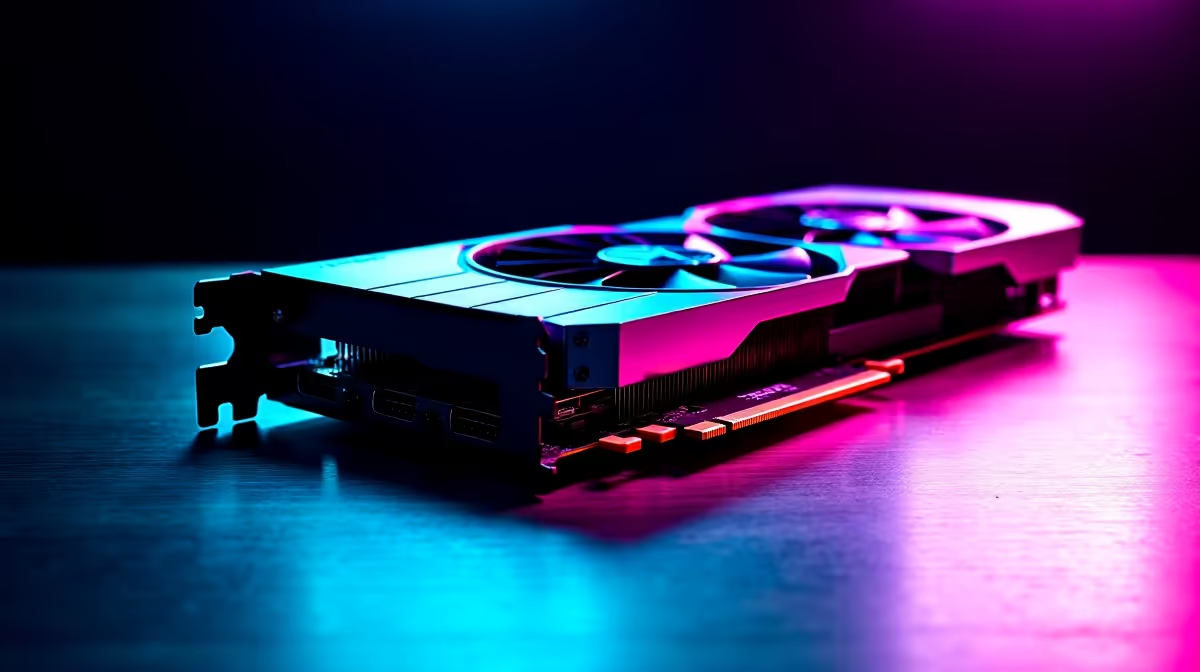
Disabling hardware acceleration in applications like Chrome, Discord, or streaming software generally reduces GPU load but can lower gaming performance indirectly by shifting rendering tasks to the CPU, which may already be under heavy load. For most SA gamers, keeping hardware acceleration enabled delivers better overall system performance.
Hardware acceleration is a setting that allows applications to offload rendering and processing tasks to your GPU rather than handling everything on the CPU. Browsers, video players, Discord overlays, and streaming software all use hardware acceleration when enabled. In a gaming context, this becomes relevant because your GPU is simultaneously serving two masters: the game engine demanding maximum frames, and background applications competing for GPU resources via hardware acceleration.
On high-end systems with an RTX 4080 or RX 7900 XT, this dual demand is rarely noticeable. The GPU has enough headroom to handle both. On mid-range and budget systems, which represent the majority of gaming PCs in South Africa, the competition for GPU resources becomes real. A Chrome tab playing a YouTube video with hardware acceleration enabled while you game can pull two to four percent of your GPU's compute budget, which translates to frame drops in demanding scenes.
Disabling hardware acceleration in background applications makes sense in specific scenarios. If you run Chrome with multiple tabs open while gaming, turning off Chrome's hardware acceleration shifts video decoding back to the CPU. If your CPU has spare headroom (common on Ryzen 7 and Core i7 chips with light gaming titles), this frees GPU resources for your game without causing CPU-side stutters.
Discord's hardware acceleration is another common culprit. Discord does not need GPU acceleration to function well, and disabling it in Discord's settings (Appearance > Hardware Acceleration) costs you nothing perceptible in the app itself while freeing a small but consistent slice of GPU compute for your game. SA gamers on voice calls during Valorant or Apex matches benefit most from this tweak.
Leave hardware acceleration enabled within the game itself and in your GPU driver settings. Game engines are designed to exploit hardware acceleration at every level: geometry processing, shader execution, ray tracing, and AI upscaling all rely on it. Disabling hardware acceleration at the driver or game level collapses performance catastrophically in any modern title.
Also keep hardware acceleration enabled if your streaming software (OBS or similar) is configured to use NVENC or AMF encoding. These hardware encoders use dedicated silicon on your GPU rather than the shader cores that games use, meaning they add almost no performance overhead. Software encoding (x264) on the CPU is the alternative, which is only sensible on CPUs with many free threads during gaming.
Will disabling hardware acceleration in Chrome improve my FPS in games? Potentially by one to three percent on mid-range systems with demanding titles running. It is a low-risk tweak worth testing: disable it, benchmark your game for ten minutes, then compare. If you see no difference, re-enable it for better browser video performance.
Does hardware acceleration affect games during loadshedding on a UPS? When gaming on UPS power during loadshedding in South Africa, reducing overall system power draw extends your battery runtime. Disabling hardware acceleration in background apps slightly reduces GPU power consumption, which is a marginal but real benefit if you are trying to stretch a 600VA UPS through a two-hour outage.
Is hardware acceleration the same as GPU overclocking? No. Hardware acceleration refers to routing software tasks to the GPU's dedicated hardware instead of the CPU. Overclocking increases the GPU's operating clock speed above its factory specification. These are completely independent settings that can be combined or used separately.
Hardware Acceleration Disabled: Gaming P available at Evetech.co.za with local warranty and fast delivery.
Hardware Acceleration Disabled: Gaming P - check Evetech for latest stock and SA pricing.
Depends on your use case. Hardware Acceleration Disabled offers good value at current Rand pricing.
Headset Stock Levels in Bloemfontein: January. Current stock data & price tracking for SA buyers. See what is available and where prices are heading.
Read more
iMac for Medical Practice: Patient Management. SA-focused analysis with local pricing data, real-world insights & actionable buying advice.
Read more
RTX 5060 Fortnite Ultra Settings at 1080p: FPS. Real-world benchmark data, FPS numbers & performance analysis. What SA gamers can actually expect.
Read more
Headset Stock Levels in Cape Town: August Report. Current stock data & price tracking for SA buyers. See what is available and where prices are heading.
Read more
Eskom Load Shedding During Video Call: Solutions. SA-focused analysis with local pricing data, real-world insights & actionable buying advice.
Read more
LoL Performance on Extreme Gaming PC. Real-world benchmark data, FPS numbers & performance analysis. What SA gamers can actually expect.
Read more
Is a Ultra Short Throw Projector Good for Gaming?. Diagnosis steps, proven fixes & when to seek professional help. SA-specific support info included.

Is a Short Throw Projector Good for Gaming? Input. Diagnosis steps, proven fixes & when to seek professional help. SA-specific support info included.

Top Mouse Settings for Competitive FPS: Sensitivity picks evaluated on performance, value & SA availability with current Rand pricing from Evetech.

Top Speakers for MacBook Desk Setup picks evaluated on performance, value & SA availability with current Rand pricing from Evetech.

Is a Ergonomic Chair Better Than a Standard Office Chair for Gaming Detailed answer with SA data, expert analysis & practical recommendations for local buyers.

Use Spotlight Search Like a Pro on macOS. Step-by-step instructions with SA-specific tips, common pitfalls to avoid & expert recommendations.

wireless keyboard Fan Noise Too Loud: Quiet. Everything you need to know with SA pricing, step-by-step instructions & expert recommendations.

Connection Timeout: Troubleshooting Guide #2. Diagnosis steps, proven fixes & when to seek professional help. SA-specific support info included.
Headset Stock Levels in Bloemfontein: January. Current stock data & price tracking for SA buyers. See what is available and where prices are heading.
iMac for Medical Practice: Patient Management. SA-focused analysis with local pricing data, real-world insights & actionable buying advice.
RTX 5060 Fortnite Ultra Settings at 1080p: FPS. Real-world benchmark data, FPS numbers & performance analysis. What SA gamers can actually expect.
Headset Stock Levels in Cape Town: August Report. Current stock data & price tracking for SA buyers. See what is available and where prices are heading.