Quick Answer
Yes, Minecraft is widely considered beneficial for children. It encourages creativity, problem-solving, spatial reasoning, and collaborative play. For South African families, it is one of the most accessible and educationally relevant games available, with versions that run on a wide range of devices including budget laptops and tablets.
What Minecraft Teaches Children
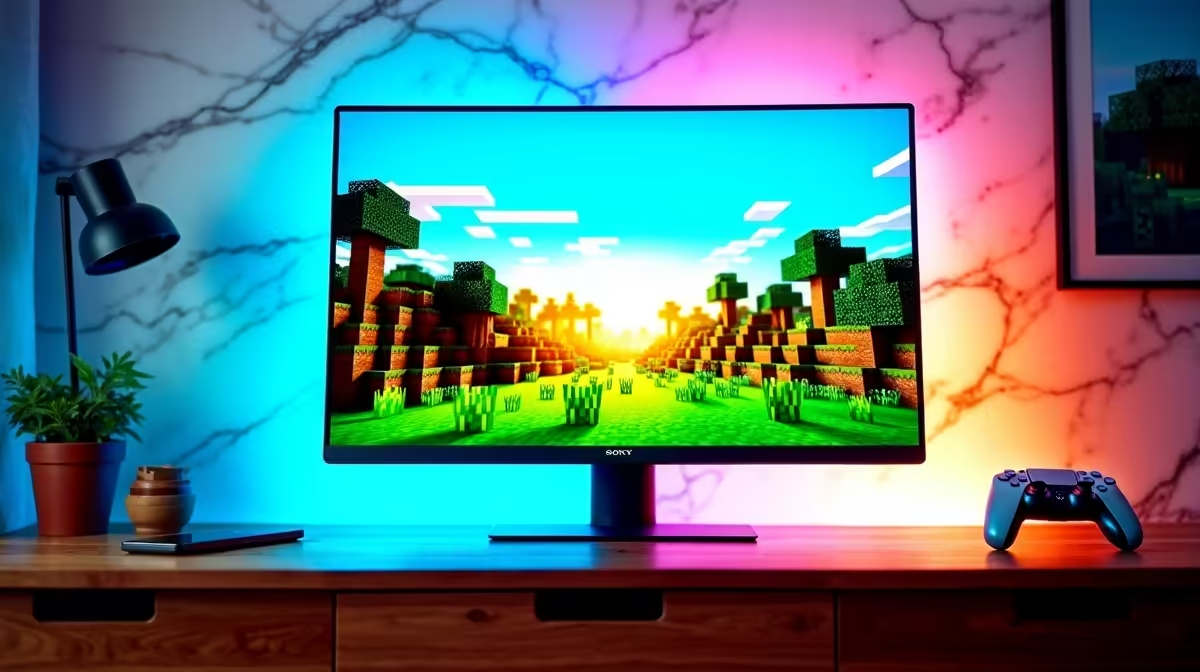
Minecraft's core loop of gathering resources, building structures, and surviving environmental challenges maps directly onto skills valued in education. Children practice spatial reasoning as they plan structures in a three-dimensional world. Survival mode introduces resource management, where children must plan ahead and make decisions about priorities, a foundational life skill. Creative mode gives children an open canvas for self-expression, which develops artistic thinking and confidence in creative decision-making.
Many SA schools have integrated Minecraft Education Edition into classroom activities for exactly these reasons. Minecraft Education Edition is a separate version of the game designed for structured learning, with built-in lessons covering subjects from mathematics and science to history and coding. For SA families where children attend schools using this program, a Minecraft-capable laptop or PC also becomes a legitimate school tool.
Social Benefits and Multiplayer Learning
Multiplayer Minecraft, whether on a local network or online server, teaches children collaboration, communication, and conflict resolution. Children negotiate roles, divide tasks, and work toward shared goals in ways that parallel real-world teamwork. SA families who set up a shared local multiplayer session across devices give siblings and friends a structured social environment with creative goals, which research consistently supports as more developmentally beneficial than passive media consumption.
Parent involvement matters too. Playing alongside your child or reviewing their Minecraft builds creates conversation starters about planning, creativity, and problem-solving. For parents in South Africa managing screen time across periods of loadshedding, Minecraft's offline survival mode works without internet access, making it a reliable option during load-shedding hours when online gaming is not possible.
Hardware for Minecraft in South African Homes
Minecraft Java Edition runs on relatively modest hardware. A laptop with 8GB RAM and an entry-level dedicated GPU or strong integrated graphics handles the game comfortably at 60fps on standard settings. This puts Minecraft-capable hardware within reach for SA families browsing back-to-school laptop options in the R8,000 to R12,000 range. Minecraft Bedrock Edition on Windows similarly runs well on mid-range laptops.
For families where NSFAS covers a student's tech spend, pairing a Minecraft-capable student laptop with a home-use Minecraft account gives the whole household access to both the educational and entertainment value of the game.
FAQ
Is Minecraft safe for young children?
Minecraft's default single-player mode is safe and age-appropriate. Online multiplayer servers have varying content and community standards. Parents should enable family settings or restrict children to curated servers until older.
What age is Minecraft suitable for?
Most developmental experts consider Minecraft appropriate from around age 7 upwards. Younger children enjoy Creative mode; older children engage more with Survival and Redstone engineering challenges.
Does Minecraft have educational value for older teenagers?
Yes. Older players engage with Minecraft's Redstone system, which functions as in-game circuitry and logic gates, providing an accessible introduction to programming logic and electronics concepts.
Ready to Find Your Perfect Match? Find a GPU upgrade that makes Minecraft and all your family's games run smoother. Shop Graphics Cards