


Headset Stock Levels in Bloemfontein: January 2026 Report
Headset Stock Levels in Bloemfontein: January. Current stock data & price tracking for SA buyers. See what is available and where prices are heading.
Read moreLoad Shedding Automation for Gamers in South Africa. Comprehensive coverage with SA insights, Rand pricing, and practical recommendations.
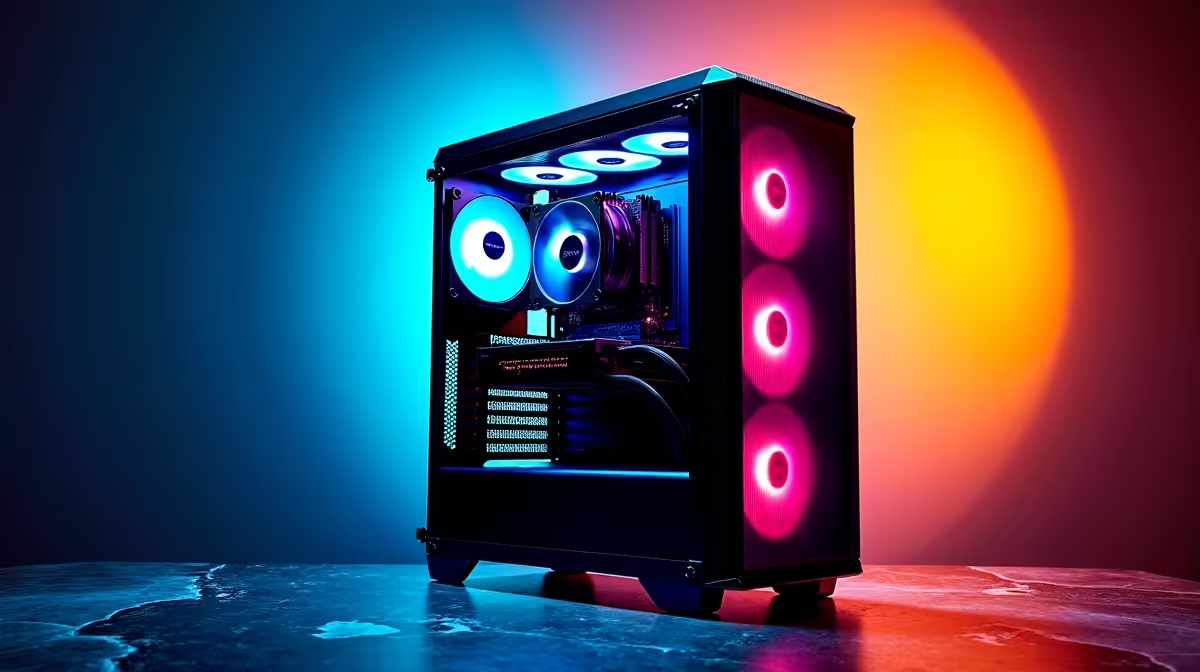
South African gamers can automate loadshedding protection using a UPS (uninterruptible power supply) with auto-switchover, smart plugs with power monitoring, and software tools that detect grid failure and can trigger graceful shutdowns or game saves. The ideal setup combines a UPS to bridge short outages with a backup power solution for longer stages.
Loadshedding remains one of the defining realities of gaming in South Africa, and sitting through a stage 4 outage with a half-finished game session is infuriating. The good news is that a properly automated setup can protect your progress, your hardware, and your ranked rating with minimal manual intervention. This guide covers practical automation strategies that SA gamers are actually using in 2026.
A UPS (uninterruptible power supply) is the non-negotiable starting point. When the grid drops, a UPS switches to battery power in milliseconds - fast enough that your gaming PC never sees the power interruption. For a mid-range gaming desktop drawing 300 to 500W, a 1000VA to 1500VA UPS provides roughly 10 to 20 minutes of runtime. That window is enough to save your game and shut down cleanly, or to bridge the brief gaps that characterise stage 1 and 2 loadshedding. Key automation features to look for: USB communication with the PC (so software can monitor battery status and trigger an auto-shutdown when runtime drops below a threshold), automatic voltage regulation (AVR) to handle voltage spikes and sags without burning battery, and pure sine wave output for sensitive electronics. Most gaming PCs with modern PSUs work fine on modified sine wave UPS units, but pure sine is the safer choice.
Most UPS units ship with software (APC's PowerChute, CyberPower's PowerPanel, Eaton's Intelligent Power Manager) that monitors battery status via USB and can automate responses. Configure these to: trigger a Windows shutdown command after X minutes on battery, send a desktop notification when grid power drops, and log power events for tracking your local loadshedding schedule. For gaming-specific automation, NUT (Network UPS Tools) is a free open-source option with scripting support - you can write a script that detects the UPS switching to battery and automatically saves game progress in titles that support save triggers, or sends a message to your phone via a notification service. Windows Task Scheduler can also be configured to run scripts when a power event occurs.
EskomSePush (ESP) is the go-to loadshedding schedule app in SA and its API is available for automation projects. You can use ESP's schedule data to set timers: automatically pause downloads before a scheduled outage, wake your PC when power returns, or trigger your smart home automation platform (Home Assistant, for example) to manage gaming peripherals. Smart plugs with energy monitoring can also help - pair them with your gaming setup to get alerts on your phone the moment power drops to your home area, even before your UPS needs to kick in.
Q: What size UPS do I need for a gaming PC during loadshedding? A: Measure your system's actual draw with a power meter if possible, then add 20 to 30 percent headroom. A mid-range gaming PC (GPU around RTX 3070 tier) typically draws 350 to 450W under load. A 1500VA UPS rated at 900W real power handles this comfortably and gives 10 to 15 minutes of runtime for a graceful shutdown.
Q: Can a UPS protect my gaming PC from power surges when electricity comes back on? A: Yes - quality UPS units with AVR protect against the voltage spikes that often occur when the grid reconnects after loadshedding. This is one of the most damaging events for PC hardware and a good reason to invest in a UPS with AVR rather than just a surge protector.
Q: Will a UPS keep my internet running during loadshedding too? A: If you connect your router and fibre ONT to the UPS alongside your PC, yes. These devices typically draw under 30W, so adding them has minimal impact on battery runtime and keeps your connection alive during short outages.
Ready to Find Your Perfect Match? Browse Evetech's UPS and power solutions to keep your gaming setup running through loadshedding
Load Shedding Automation for Gamers in S available at Evetech.co.za with local warranty.
Load Shedding Automation for Gamers in S - check Evetech for latest stock.
Depends on use case. Load Shedding Automation for G good value at current Rand pricing.
Headset Stock Levels in Bloemfontein: January. Current stock data & price tracking for SA buyers. See what is available and where prices are heading.
Read more
iMac for Medical Practice: Patient Management. SA-focused analysis with local pricing data, real-world insights & actionable buying advice.
Read more
RTX 5060 Fortnite Ultra Settings at 1080p: FPS. Real-world benchmark data, FPS numbers & performance analysis. What SA gamers can actually expect.
Read more
Headset Stock Levels in Cape Town: August Report. Current stock data & price tracking for SA buyers. See what is available and where prices are heading.
Read more
Eskom Load Shedding During Video Call: Solutions. SA-focused analysis with local pricing data, real-world insights & actionable buying advice.
Read more
LoL Performance on Extreme Gaming PC. Real-world benchmark data, FPS numbers & performance analysis. What SA gamers can actually expect.
Read more
Is a Ultra Short Throw Projector Good for Gaming?. Diagnosis steps, proven fixes & when to seek professional help. SA-specific support info included.

Is a Short Throw Projector Good for Gaming? Input. Diagnosis steps, proven fixes & when to seek professional help. SA-specific support info included.

Top Mouse Settings for Competitive FPS: Sensitivity picks evaluated on performance, value & SA availability with current Rand pricing from Evetech.

Top Speakers for MacBook Desk Setup picks evaluated on performance, value & SA availability with current Rand pricing from Evetech.

Is a Ergonomic Chair Better Than a Standard Office Chair for Gaming Detailed answer with SA data, expert analysis & practical recommendations for local buyers.

Use Spotlight Search Like a Pro on macOS. Step-by-step instructions with SA-specific tips, common pitfalls to avoid & expert recommendations.

wireless keyboard Fan Noise Too Loud: Quiet. Everything you need to know with SA pricing, step-by-step instructions & expert recommendations.

Connection Timeout: Troubleshooting Guide #2. Diagnosis steps, proven fixes & when to seek professional help. SA-specific support info included.
Headset Stock Levels in Bloemfontein: January. Current stock data & price tracking for SA buyers. See what is available and where prices are heading.
iMac for Medical Practice: Patient Management. SA-focused analysis with local pricing data, real-world insights & actionable buying advice.
RTX 5060 Fortnite Ultra Settings at 1080p: FPS. Real-world benchmark data, FPS numbers & performance analysis. What SA gamers can actually expect.
Headset Stock Levels in Cape Town: August Report. Current stock data & price tracking for SA buyers. See what is available and where prices are heading.