Quick Answer
South Africa has formal e-waste recycling infrastructure for motherboards and other electronics, though it is less developed than in many other countries. Responsible disposal involves using certified e-waste collectors, manufacturer take-back programmes, and registered recycling facilities rather than general waste bins.
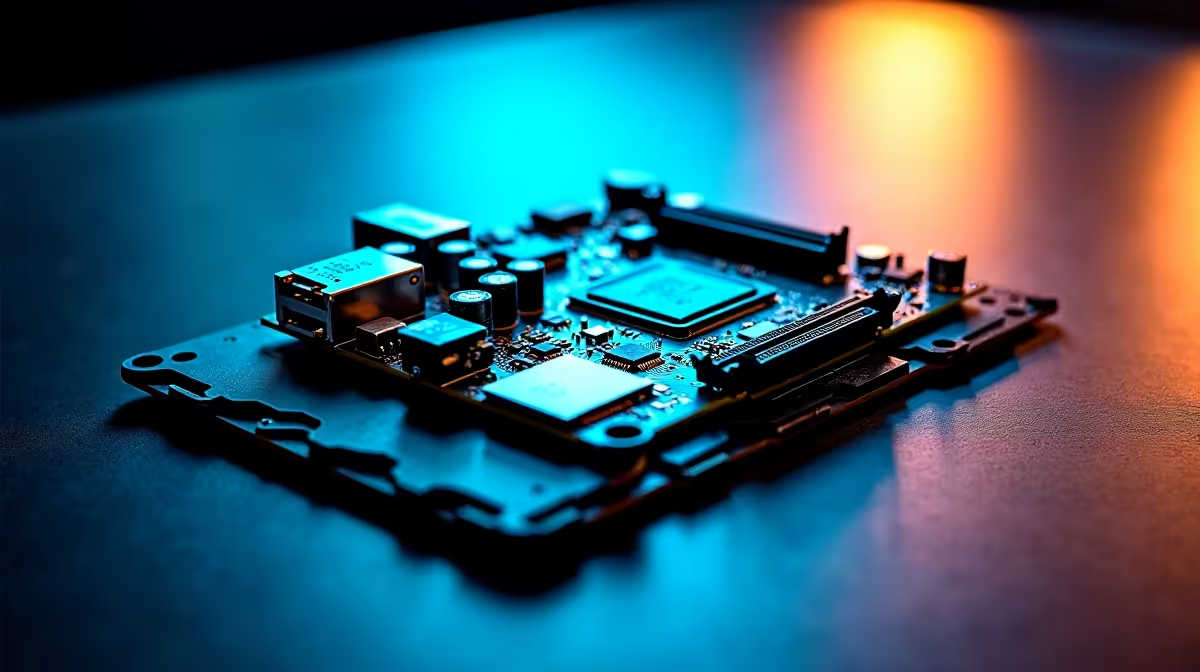
Motherboards contain a mix of valuable materials - gold, copper, and rare earth elements - alongside hazardous components including lead solder, beryllium, and brominated flame retardants. Disposing of a dead or replaced motherboard in general household waste is both wasteful and environmentally harmful. South Africa has regulations governing e-waste, and options for responsible recycling are growing.
South Africa''s E-Waste Landscape
South Africa generates a significant volume of electronic waste annually, and the regulatory framework has been evolving. The Extended Producer Responsibility (EPR) regulations that came into effect require electronics manufacturers and importers to take responsibility for the end-of-life management of their products. This has driven the growth of formal e-waste collection networks, with producer responsibility organisations (PROs) managing collection points and certified recyclers across major urban centres.
For motherboards specifically, the materials recovery process involves shredding and chemical separation to recover metals. Certified recyclers ensure that hazardous materials are handled safely rather than leaching into soil or groundwater - a real risk when electronics end up in general landfill.
How to Recycle a Motherboard in SA
The most accessible option for individual consumers and PC builders is to use a local e-waste drop-off point. Many hardware retailers, office parks, and municipal facilities in Johannesburg, Cape Town, Durban, and Pretoria operate e-waste bins or scheduled collection events. Some manufacturers participate in take-back schemes - check whether your motherboard''s brand has a local EPR partner. Tech refurbishers and repair shops occasionally accept non-functional boards for component harvesting, which extends the useful life of working parts before final recycling.
Do not strip the motherboard yourself before recycling unless you are specifically donating components for repair or refurbishment. Partial disassembly can complicate the recycling process and may contaminate sorted material streams.
Data Security Before Disposal
A motherboard itself does not store personal data - that is the function of storage devices. However, if you are disposing of a full system or motherboard with an attached SSD or HDD, ensure storage devices are securely wiped or physically destroyed before handover. Motherboard BIOS settings and stored Wi-Fi passwords (in some enterprise boards) are not a meaningful data security risk for most consumers, but clearing CMOS before disposal is a good habit.
Frequently Asked Questions
Q: Can I put a dead motherboard in the recycling bin at home? A: No. Standard household recycling (paper, plastic, glass) does not process e-waste. Motherboards must go to dedicated e-waste facilities to be handled safely.
Q: Are there fees for recycling motherboards in South Africa? A: Most consumer e-waste drop-off points accept motherboards at no charge. Some services offer collection at a fee for bulk quantities.
Q: Can a non-functional motherboard be repaired instead of recycled? A: Sometimes. Capacitor replacement and component-level repair is possible for some faults. SA-based electronics repair specialists and hobbyist communities can assess whether repair is viable before recycling.
Ready to Find Your Perfect Match? Shop gaming PC deals at Evetech - South Africa''s leading gaming and tech retailer.