


Headset Stock Levels in Bloemfontein: January 2026 Report
Headset Stock Levels in Bloemfontein: January. Current stock data & price tracking for SA buyers. See what is available and where prices are heading.
Read moreNVIDIA Headset: Value. SA-focused analysis with local pricing data, real-world insights & actionable buying advice.
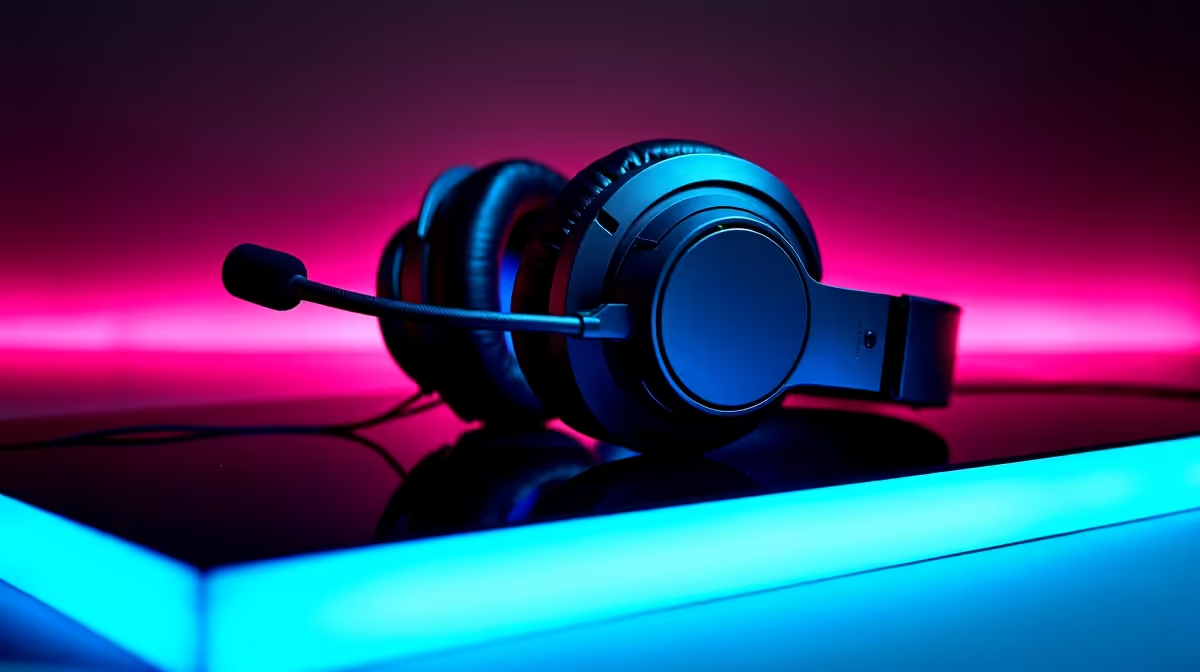
NVIDIA''s audio headset offering targets gamers who want tight integration with NVIDIA''s software ecosystem, including RTX Voice noise cancellation features. For South African buyers, value assessment depends on how heavily you use NVIDIA''s audio AI tools and whether the headset''s build quality and sound profile justify its Rand price relative to other gaming headsets at similar price points.
NVIDIA is best known for its graphics hardware, but the company has expanded into gaming peripherals including audio products designed to work closely with its GPU ecosystem. For South African gamers evaluating audio options in 2026, understanding what makes an NVIDIA-branded headset distinct - and whether that distinction is worth the cost - is a practical buying question.
NVIDIA''s advantage in the headset space centres on software integration rather than hardware audio engineering alone. RTX Voice - NVIDIA''s AI-powered noise cancellation - can suppress background noise from your microphone and incoming audio streams using the tensor cores on compatible RTX GPUs. When paired with a supported headset, this creates a communication experience that removes keyboard noise, loadshedding generator hum (a genuine SA-specific concern), household background noise, and other audio pollution from voice chat. This is a meaningful practical benefit for South African gamers who often game in environments with variable background noise. The effectiveness of RTX Voice is well-regarded across the gaming community.
Beyond software features, a gaming headset lives and dies by its physical build and its sound profile for both playback and microphone clarity. NVIDIA''s headsets are designed for comfort during extended sessions, with attention to ear cup padding and headband pressure distribution. Audio tuning for gaming prioritises positional accuracy - being able to hear footsteps, environmental cues, and directional audio in games - alongside enough bass weight to make cinematic moments impactful. For communication-heavy gaming (online multiplayer, team-based shooters popular in the SA gaming scene), microphone clarity is often as important as playback quality, and NVIDIA''s AI noise suppression is a genuine differentiator here.
In South Africa in 2026, gaming headset options span a wide price range in Rands. NVIDIA-branded headsets are positioned in the premium tier, reflecting both the brand and the software integration story. At that price point, SA buyers should compare the total package - audio quality, build, microphone performance, and software features - against other premium gaming headsets. If you own an RTX GPU and actively use voice communication in gaming, the software synergy adds real value. If you primarily use your headset for single-player gaming with no voice chat, the NVIDIA ecosystem features matter less, and alternative headsets may offer better value at similar price points.
Q: Do I need an NVIDIA GPU to use NVIDIA RTX Voice features? A: RTX Voice''s full AI-powered noise cancellation requires a compatible NVIDIA RTX GPU. Some noise suppression functionality may be available without an RTX card, but the most effective processing relies on RTX tensor cores.
Q: Is the NVIDIA headset compatible with consoles? A: Compatibility depends on the specific model and connection type. USB-only headsets are limited to PC; models with a 3.5mm connection have broader compatibility. Check the specific model''s compatibility before purchasing for console use.
Q: Is RTX Voice useful for South African gamers dealing with loadshedding generator noise? A: Yes. RTX Voice is effective at suppressing consistent background noise like generator hum, which is a very relevant use case for South African gamers who game during loadshedding on generator or UPS power.
Ready to Find Your Perfect Match? Explore gaming headsets and audio peripherals at Evetech.
NVIDIA Headset: Value in South Africa available at Evetech.co.za with local warranty and fast delivery.
NVIDIA Headset: Value in South Africa - check Evetech for latest stock and SA pricing.
Depends on your use case. NVIDIA Headset: Value in South offers good value at current Rand pricing.
Headset Stock Levels in Bloemfontein: January. Current stock data & price tracking for SA buyers. See what is available and where prices are heading.
Read more
iMac for Medical Practice: Patient Management. SA-focused analysis with local pricing data, real-world insights & actionable buying advice.
Read more
RTX 5060 Fortnite Ultra Settings at 1080p: FPS. Real-world benchmark data, FPS numbers & performance analysis. What SA gamers can actually expect.
Read more
Headset Stock Levels in Cape Town: August Report. Current stock data & price tracking for SA buyers. See what is available and where prices are heading.
Read more
Eskom Load Shedding During Video Call: Solutions. SA-focused analysis with local pricing data, real-world insights & actionable buying advice.
Read more
LoL Performance on Extreme Gaming PC. Real-world benchmark data, FPS numbers & performance analysis. What SA gamers can actually expect.
Read more
Is a Ultra Short Throw Projector Good for Gaming?. Diagnosis steps, proven fixes & when to seek professional help. SA-specific support info included.

Is a Short Throw Projector Good for Gaming? Input. Diagnosis steps, proven fixes & when to seek professional help. SA-specific support info included.

Top Mouse Settings for Competitive FPS: Sensitivity picks evaluated on performance, value & SA availability with current Rand pricing from Evetech.

Top Speakers for MacBook Desk Setup picks evaluated on performance, value & SA availability with current Rand pricing from Evetech.

Is a Ergonomic Chair Better Than a Standard Office Chair for Gaming Detailed answer with SA data, expert analysis & practical recommendations for local buyers.

Use Spotlight Search Like a Pro on macOS. Step-by-step instructions with SA-specific tips, common pitfalls to avoid & expert recommendations.

wireless keyboard Fan Noise Too Loud: Quiet. Everything you need to know with SA pricing, step-by-step instructions & expert recommendations.

Connection Timeout: Troubleshooting Guide #2. Diagnosis steps, proven fixes & when to seek professional help. SA-specific support info included.
Headset Stock Levels in Bloemfontein: January. Current stock data & price tracking for SA buyers. See what is available and where prices are heading.
iMac for Medical Practice: Patient Management. SA-focused analysis with local pricing data, real-world insights & actionable buying advice.
RTX 5060 Fortnite Ultra Settings at 1080p: FPS. Real-world benchmark data, FPS numbers & performance analysis. What SA gamers can actually expect.
Headset Stock Levels in Cape Town: August Report. Current stock data & price tracking for SA buyers. See what is available and where prices are heading.