


Headset Stock Levels in Bloemfontein: January 2026 Report
Headset Stock Levels in Bloemfontein: January. Current stock data & price tracking for SA buyers. See what is available and where prices are heading.
Read moreRMA Process: Getting Your Component Replaced. What SA warranty coverage actually looks like, how to claim & common pitfalls to avoid.
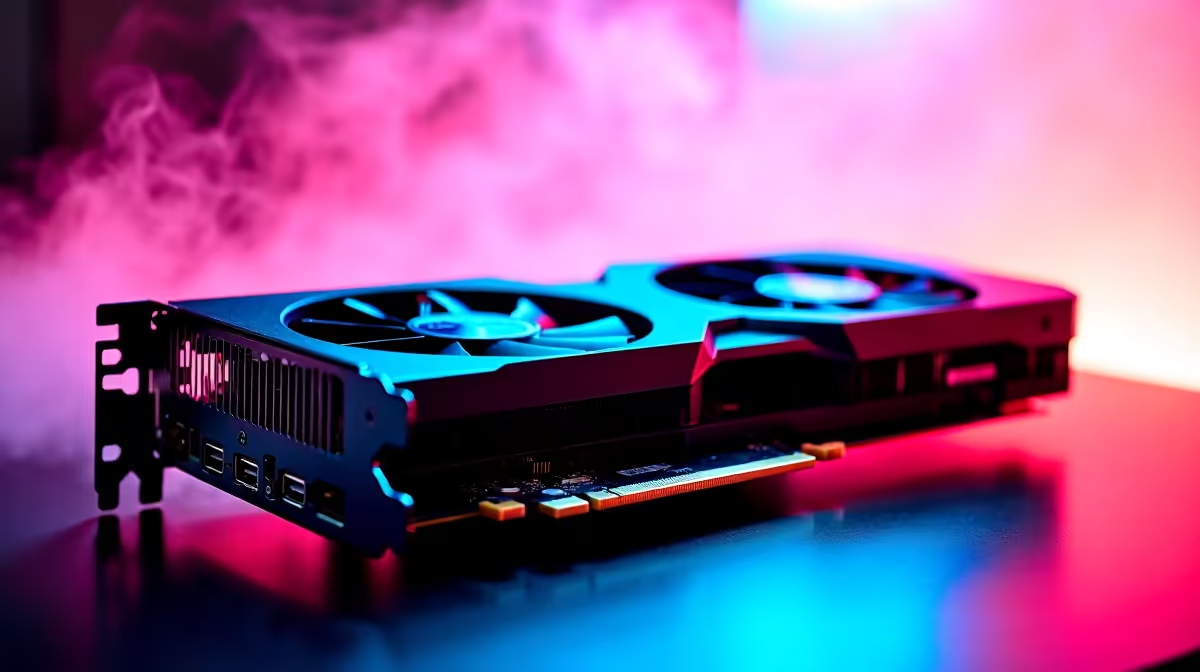
RMA Process: Getting Your Component Replaced needs a practical answer: identify the current limitation, check compatibility, daily workload, support, and choose the route that delivers better daily performance, cleaner compatibility, and fewer unused extras. If RMA Process: Getting Your Component Replaced does not change daily use, it is not worth overpaying for.
RMA Process: Getting Your Component Replaced is useful when it turns RMA Process: Getting Your Component Replaced into a decision the reader can act on. For South African gamers, RMA Process: Getting Your Component Replaced means checking compatibility, daily workload, and support before chasing a headline feature.
The practical test is whether RMA Process: Getting Your Component Replaced improves better daily performance, cleaner compatibility, and fewer unused extras. If the answer to RMA Process: Getting Your Component Replaced is not visible in main use case or current limitation, the topic is probably a lower priority than fixing the current bottleneck.
The support check for RMA Process: Getting Your Component Replaced is simple: current South African availability, clear warranty handling, and a path that still makes sense if the first-choice item sells out. For RMA Process: Getting Your Component Replaced, use AOC Monitors as the category anchor, then compare substitutes by the same requirement.
Compatibility matters because RMA Process: Getting Your Component Replaced can fail in small details: generic buying, missing accessories, or weak warranty. Before buying for RMA Process: Getting Your Component Replaced, confirm fit and upgrade path so the article leads to a usable setup, not a return.
For RMA Process: Getting Your Component Replaced, the most important factor is whether the choice improves better daily performance, cleaner compatibility, and fewer unused extras. Start RMA Process: Getting Your Component Replaced with compatibility, daily workload, and support, then compare live availability and support before deciding.
To avoid the wrong buy for RMA Process: Getting Your Component Replaced, define the workload first and reject options that create generic buying, missing accessories, or unnecessary extra purchases. For RMA Process: Getting Your Component Replaced, value means the whole setup works better, not just that the sticker price is lower.
For RMA Process: Getting Your Component Replaced, compare the closest matching Evetech category and then verify the exact model, substitute options, warranty cover, and delivery timing. Live stock and specials for RMA Process: Getting Your Component Replaced can change, so the final check should happen before checkout.
RMA Process: Getting Your Component Replaced is ready to publish only when it helps the reader make a decision they can act on. Use RMA Process: Getting Your Component Replaced as the filter: choose the option that improves better daily performance, cleaner compatibility, and fewer unused extras, verify the live Evetech category that matches the need, and avoid any recommendation that depends on unverified stock, private data, or unsupported benchmark claims.
Compare Current Setup Options Start with Upgrade Kits on Special, then check AOC Monitors, All NVIDIA Gaming PCs. For RMA Process: Getting Your Component Replaced, confirm live South African stock, warranty cover, and the full setup cost before you decide.
RMA Process: Getting Your Component Repl available at Evetech.co.za with local warranty and fast delivery.
RMA Process: Getting Your Component Repl - check Evetech for latest stock and SA pricing.
Depends on your use case. RMA Process: Getting Your Comp offers good value at current Rand pricing.
Headset Stock Levels in Bloemfontein: January. Current stock data & price tracking for SA buyers. See what is available and where prices are heading.
Read more
iMac for Medical Practice: Patient Management. SA-focused analysis with local pricing data, real-world insights & actionable buying advice.
Read more
RTX 5060 Fortnite Ultra Settings at 1080p: FPS. Real-world benchmark data, FPS numbers & performance analysis. What SA gamers can actually expect.
Read more
Headset Stock Levels in Cape Town: August Report. Current stock data & price tracking for SA buyers. See what is available and where prices are heading.
Read more
Eskom Load Shedding During Video Call: Solutions. SA-focused analysis with local pricing data, real-world insights & actionable buying advice.
Read more
LoL Performance on Extreme Gaming PC. Real-world benchmark data, FPS numbers & performance analysis. What SA gamers can actually expect.
Read more
Is a Ultra Short Throw Projector Good for Gaming?. Diagnosis steps, proven fixes & when to seek professional help. SA-specific support info included.

Is a Short Throw Projector Good for Gaming? Input. Diagnosis steps, proven fixes & when to seek professional help. SA-specific support info included.

Top Mouse Settings for Competitive FPS: Sensitivity picks evaluated on performance, value & SA availability with current Rand pricing from Evetech.

Top Speakers for MacBook Desk Setup picks evaluated on performance, value & SA availability with current Rand pricing from Evetech.

Is a Ergonomic Chair Better Than a Standard Office Chair for Gaming Detailed answer with SA data, expert analysis & practical recommendations for local buyers.

Use Spotlight Search Like a Pro on macOS. Step-by-step instructions with SA-specific tips, common pitfalls to avoid & expert recommendations.

wireless keyboard Fan Noise Too Loud: Quiet. Everything you need to know with SA pricing, step-by-step instructions & expert recommendations.

Connection Timeout: Troubleshooting Guide #2. Diagnosis steps, proven fixes & when to seek professional help. SA-specific support info included.
Headset Stock Levels in Bloemfontein: January. Current stock data & price tracking for SA buyers. See what is available and where prices are heading.
iMac for Medical Practice: Patient Management. SA-focused analysis with local pricing data, real-world insights & actionable buying advice.
RTX 5060 Fortnite Ultra Settings at 1080p: FPS. Real-world benchmark data, FPS numbers & performance analysis. What SA gamers can actually expect.
Headset Stock Levels in Cape Town: August Report. Current stock data & price tracking for SA buyers. See what is available and where prices are heading.