


Headset Stock Levels in Bloemfontein: January 2026 Report
Headset Stock Levels in Bloemfontein: January. Current stock data & price tracking for SA buyers. See what is available and where prices are heading.
Read moreRTX 5060 Driver Rolling Back on Restart: Solution. SA-focused analysis with local pricing data, real-world insights & actionable buying advice.
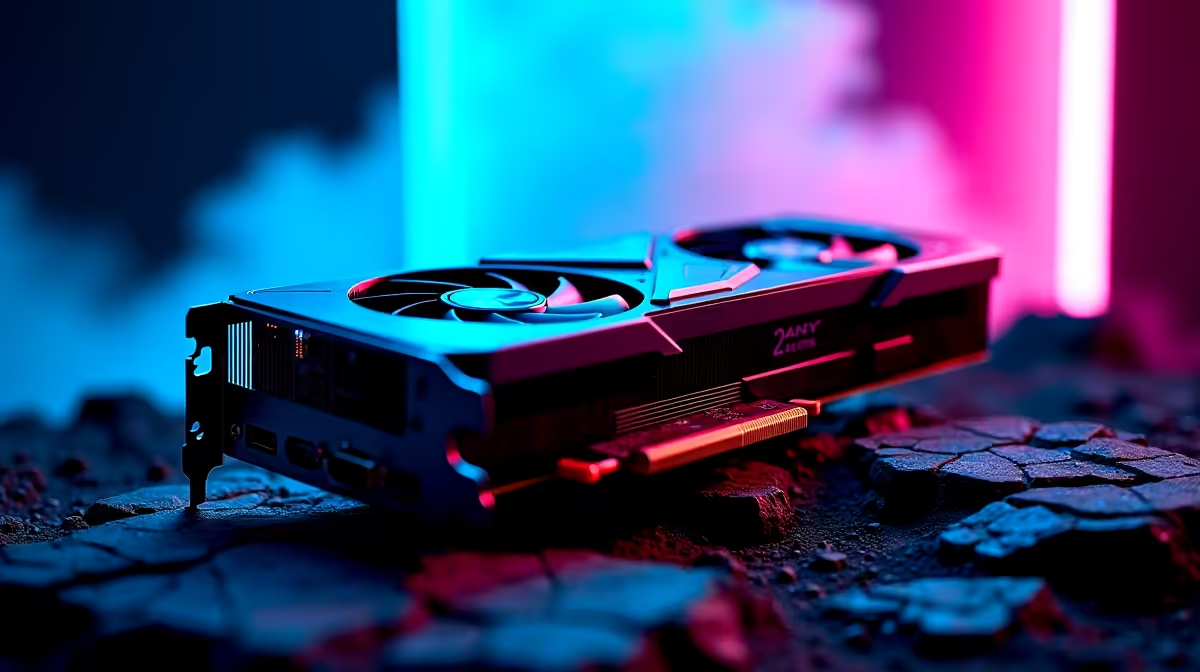
If your RTX 5060 driver rolls back to a previous version every time Windows restarts, the most common causes are a corrupted driver installation, a Windows Update conflict, or a power management setting forcing a rollback. The fix involves a clean driver reinstall using DDU (Display Driver Uninstaller) in Safe Mode followed by a fresh install from the NVIDIA driver archive.
Driver rollback on restart is one of the more frustrating RTX 5060 issues because the system appears to work after each manual update - until you reboot and find yourself back on an older driver version. This tends to happen shortly after a Windows update cycle or after an interrupted driver installation. South African users on slower connections who experience installation timeouts are particularly susceptible to the corrupted install scenario. Here is how to fix it cleanly.
Windows has a built-in driver rollback mechanism that activates when it detects instability associated with a recently installed driver. If a driver installation was incomplete (power cut, connection drop, or forced restart during install), Windows may flag it as faulty and revert silently on the next boot. A second common cause is Windows Update: Microsoft periodically pushes Generic Display Driver updates via Windows Update that can overwrite your NVIDIA driver or conflict with it, causing NVIDIA's driver to flag itself as unstable. Finally, NVIDIA's own installer can leave registry entries from a previous version that confuse the version detection logic, triggering apparent rollbacks even when the driver itself is intact.
Start by downloading DDU (Display Driver Uninstaller) and the specific NVIDIA driver version you want to use from the NVIDIA website before doing anything else. Boot into Safe Mode (hold Shift while clicking Restart, then navigate to Troubleshoot - Advanced Options - Startup Settings). In Safe Mode, run DDU and select Clean and Restart. This removes all driver traces from the registry and filesystem. After Windows restarts normally, immediately install your downloaded NVIDIA driver before connecting to the internet if possible, to prevent Windows Update from interfering. During the NVIDIA installer, choose Custom Installation and tick the Clean Installation checkbox. Restart once more and verify the driver version in Device Manager or NVIDIA Control Panel. Next, go to Windows Update settings and pause updates for seven days, then manually check which optional updates are available - if a display adapter update appears, right-click it and hide it to prevent automatic installation.
To stop Windows Update from overwriting your NVIDIA driver going forward, open Group Policy Editor (gpedit.msc), navigate to Computer Configuration - Administrative Templates - Windows Components - Windows Update, and enable the setting that prevents Windows from automatically installing device driver updates from Windows Update. Alternatively, use the Show or Hide Updates troubleshooter from Microsoft to permanently block specific driver updates. Keeping your NVIDIA driver install files local means you can reinstall quickly after any future Windows Update conflict without waiting on a large download.
Q: Why does my RTX 5060 driver roll back specifically after Windows updates? A: Windows Update sometimes pushes display driver packages that conflict with NVIDIA drivers. Windows interprets the conflict as driver instability and reverts to what it considers a stable version.
Q: Is DDU safe to use on Windows 11 with an RTX 5060? A: Yes. DDU is widely used and recommended by NVIDIA support staff for clean driver removal. Always run it in Safe Mode as directed to avoid leaving residual files.
Q: Will a factory reset fix the driver rollback problem? A: A reset often fixes it but is unnecessary if you follow the clean DDU reinstall process. Save the reset as a last resort if multiple clean reinstalls fail to resolve the issue.
Ready to Find Your Perfect Match? Explore RTX 5060 graphics cards and gaming PC builds available now at Evetech.
RTX 5060 Driver Rolling Back on Restart: available at Evetech.co.za with local warranty and fast delivery.
RTX 5060 Driver Rolling Back on Restart: - check Evetech for latest stock and SA pricing.
Depends on your use case. RTX 5060 Driver Rolling Back o offers good value at current Rand pricing.
Headset Stock Levels in Bloemfontein: January. Current stock data & price tracking for SA buyers. See what is available and where prices are heading.
Read more
iMac for Medical Practice: Patient Management. SA-focused analysis with local pricing data, real-world insights & actionable buying advice.
Read more
RTX 5060 Fortnite Ultra Settings at 1080p: FPS. Real-world benchmark data, FPS numbers & performance analysis. What SA gamers can actually expect.
Read more
Headset Stock Levels in Cape Town: August Report. Current stock data & price tracking for SA buyers. See what is available and where prices are heading.
Read more
Eskom Load Shedding During Video Call: Solutions. SA-focused analysis with local pricing data, real-world insights & actionable buying advice.
Read more
LoL Performance on Extreme Gaming PC. Real-world benchmark data, FPS numbers & performance analysis. What SA gamers can actually expect.
Read more
Is a Ultra Short Throw Projector Good for Gaming?. Diagnosis steps, proven fixes & when to seek professional help. SA-specific support info included.

Is a Short Throw Projector Good for Gaming? Input. Diagnosis steps, proven fixes & when to seek professional help. SA-specific support info included.

Top Mouse Settings for Competitive FPS: Sensitivity picks evaluated on performance, value & SA availability with current Rand pricing from Evetech.

Top Speakers for MacBook Desk Setup picks evaluated on performance, value & SA availability with current Rand pricing from Evetech.

Is a Ergonomic Chair Better Than a Standard Office Chair for Gaming Detailed answer with SA data, expert analysis & practical recommendations for local buyers.

Use Spotlight Search Like a Pro on macOS. Step-by-step instructions with SA-specific tips, common pitfalls to avoid & expert recommendations.

wireless keyboard Fan Noise Too Loud: Quiet. Everything you need to know with SA pricing, step-by-step instructions & expert recommendations.

Connection Timeout: Troubleshooting Guide #2. Diagnosis steps, proven fixes & when to seek professional help. SA-specific support info included.
Headset Stock Levels in Bloemfontein: January. Current stock data & price tracking for SA buyers. See what is available and where prices are heading.
iMac for Medical Practice: Patient Management. SA-focused analysis with local pricing data, real-world insights & actionable buying advice.
RTX 5060 Fortnite Ultra Settings at 1080p: FPS. Real-world benchmark data, FPS numbers & performance analysis. What SA gamers can actually expect.
Headset Stock Levels in Cape Town: August Report. Current stock data & price tracking for SA buyers. See what is available and where prices are heading.