


Headset Stock Levels in Bloemfontein: January 2026 Report
Headset Stock Levels in Bloemfontein: January. Current stock data & price tracking for SA buyers. See what is available and where prices are heading.
Read moreRTX 5060 The Witcher 4 High Settings at 1440p. Real-world benchmark data, FPS numbers & performance analysis. What SA gamers can actually expect.
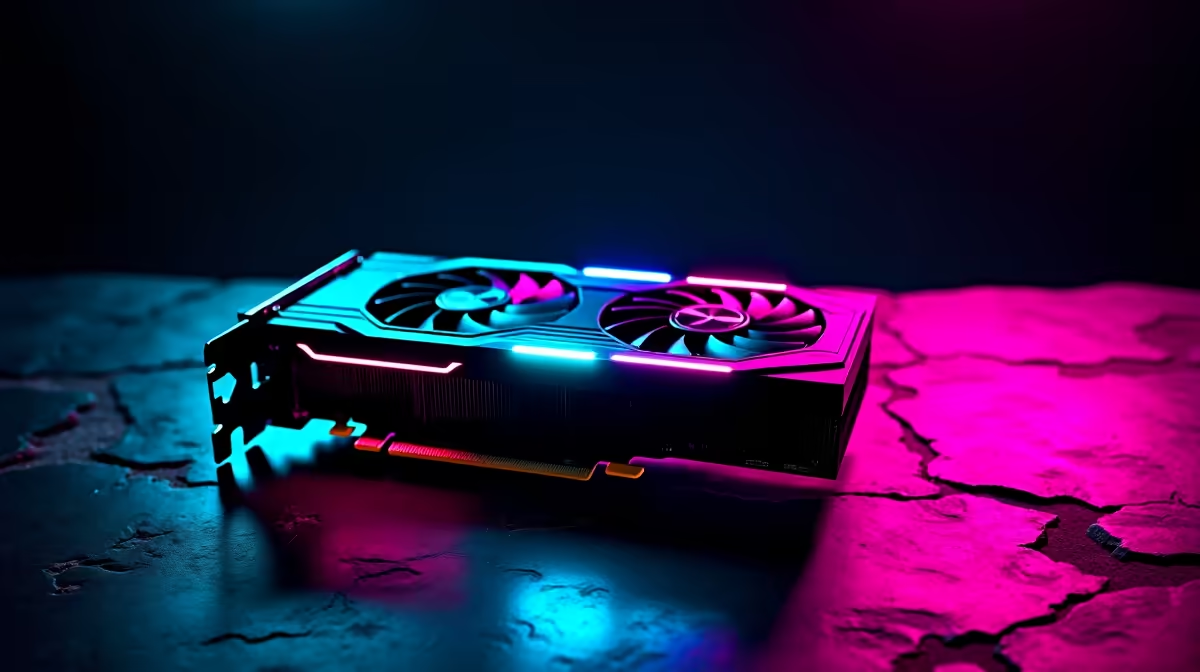
The RTX 5060 runs The Witcher 4 at 1440p high settings at frame rates that vary by scene complexity, typically ranging from the high 50s to around 80fps at native resolution in 2026. With DLSS Quality mode active, that range climbs to a consistent 80 to 110fps, making high settings at 1440p very playable on this card.
The RTX 5060 is NVIDIA's mainstream Blackwell card, sitting below the 5060 Ti in the stack. It carries GDDR7 memory and updated tensor and RT cores from the Blackwell generation. The Witcher 4, built on Unreal Engine 5 and using Lumen global illumination by default, is a demanding rasterization workload even before ray tracing is considered.
At 1440p high settings with Lumen enabled and ray tracing off, the RTX 5060 produces frame rates that make the experience smooth for a single-player RPG. The native performance without any upscaling sits between 55fps and 80fps depending on the area, with dense forest and city environments hitting the lower end. Open plains and interiors push toward the upper range.
The card's DLSS 4 Multi Frame Generation capability is where 2026 performance gains become significant. Using DLSS Quality mode, which renders internally at around 960p and upscales to 1440p, frame rates move into the 85 to 115fps range across most of the game. For South African gamers playing The Witcher 4 on a 1440p 144Hz monitor, this is a genuinely comfortable experience.
Stepping from high to ultra in The Witcher 4 primarily increases shadow quality, vegetation density, and texture streaming resolution. The performance cost between high and ultra on this card at 1440p is roughly 15 to 20 percent, which drops native frame rates into the 48 to 65fps range at ultra. That range is manageable with DLSS but becomes inconsistent in the most demanding sequences.
High settings is the recommended preset for the RTX 5060 at 1440p if you want a consistent experience without relying on aggressive upscaling. The visual difference between high and ultra in The Witcher 4 is subtle during gameplay, as Lumen lighting is the dominant visual quality driver and it runs at both presets.
South African gamers buying this card in 2026 at around R7,000 to R9,000 locally should treat 1440p high with DLSS Quality as the target configuration. That delivers a great-looking, smooth RPG experience without the cost of a higher-tier card.
At 4K high settings, the RTX 5060 native frame rates drop to around 30 to 45fps, which is below smooth for an open-world RPG. DLSS Performance mode at 4K (rendering at 1080p internally) pushes this into the 55 to 75fps range, which is playable but shows more upscaling artefacts at close inspection. The 5060 Ti or higher tier cards are better suited to 4K targets in this engine.
Yes. The Witcher 4 shipped with full DLSS 4 support including Multi Frame Generation. NVIDIA's Blackwell cards including the RTX 5060 can use all DLSS 4 features from launch.
The Witcher 4 uses Lumen as its primary global illumination system, which is a software-based solution rather than hardware ray tracing. Traditional hardware ray tracing options add further quality but at significant performance cost. On the RTX 5060 at 1440p, sticking with Lumen defaults without hardware RT gives the best performance-to-quality balance.
The 5060 Ti typically delivers 15 to 25 percent more native frame rate performance and carries more VRAM, which helps with Unreal Engine 5 texture streaming. At 1440p the difference is meaningful if you want ultra settings or more DLSS headroom.
Ready to Find Your Perfect Match? Find the RTX 5060 and the full NVIDIA Blackwell range available now with South African delivery. Shop NVIDIA Graphics Cards
RTX 5060 The Witcher 4 High Settings at available at Evetech.co.za with local warranty and fast delivery.
RTX 5060 The Witcher 4 High Settings at - check Evetech for latest stock and SA pricing.
Depends on your use case. RTX 5060 The Witcher 4 High Se offers good value at current Rand pricing.
Headset Stock Levels in Bloemfontein: January. Current stock data & price tracking for SA buyers. See what is available and where prices are heading.
Read more
iMac for Medical Practice: Patient Management. SA-focused analysis with local pricing data, real-world insights & actionable buying advice.
Read more
RTX 5060 Fortnite Ultra Settings at 1080p: FPS. Real-world benchmark data, FPS numbers & performance analysis. What SA gamers can actually expect.
Read more
Headset Stock Levels in Cape Town: August Report. Current stock data & price tracking for SA buyers. See what is available and where prices are heading.
Read more
Eskom Load Shedding During Video Call: Solutions. SA-focused analysis with local pricing data, real-world insights & actionable buying advice.
Read more
LoL Performance on Extreme Gaming PC. Real-world benchmark data, FPS numbers & performance analysis. What SA gamers can actually expect.
Read more
Is a Ultra Short Throw Projector Good for Gaming?. Diagnosis steps, proven fixes & when to seek professional help. SA-specific support info included.

Is a Short Throw Projector Good for Gaming? Input. Diagnosis steps, proven fixes & when to seek professional help. SA-specific support info included.

Top Mouse Settings for Competitive FPS: Sensitivity picks evaluated on performance, value & SA availability with current Rand pricing from Evetech.

Top Speakers for MacBook Desk Setup picks evaluated on performance, value & SA availability with current Rand pricing from Evetech.

Is a Ergonomic Chair Better Than a Standard Office Chair for Gaming Detailed answer with SA data, expert analysis & practical recommendations for local buyers.

Use Spotlight Search Like a Pro on macOS. Step-by-step instructions with SA-specific tips, common pitfalls to avoid & expert recommendations.

wireless keyboard Fan Noise Too Loud: Quiet. Everything you need to know with SA pricing, step-by-step instructions & expert recommendations.

Connection Timeout: Troubleshooting Guide #2. Diagnosis steps, proven fixes & when to seek professional help. SA-specific support info included.
Headset Stock Levels in Bloemfontein: January. Current stock data & price tracking for SA buyers. See what is available and where prices are heading.
iMac for Medical Practice: Patient Management. SA-focused analysis with local pricing data, real-world insights & actionable buying advice.
RTX 5060 Fortnite Ultra Settings at 1080p: FPS. Real-world benchmark data, FPS numbers & performance analysis. What SA gamers can actually expect.
Headset Stock Levels in Cape Town: August Report. Current stock data & price tracking for SA buyers. See what is available and where prices are heading.