


Headset Stock Levels in Bloemfontein: January 2026 Report
Headset Stock Levels in Bloemfontein: January. Current stock data & price tracking for SA buyers. See what is available and where prices are heading.
Read moreRTX 5060 Ti Ray Tracing Performance: Which Games. Real-world benchmark data, FPS numbers & performance analysis. What SA gamers can actually expect.
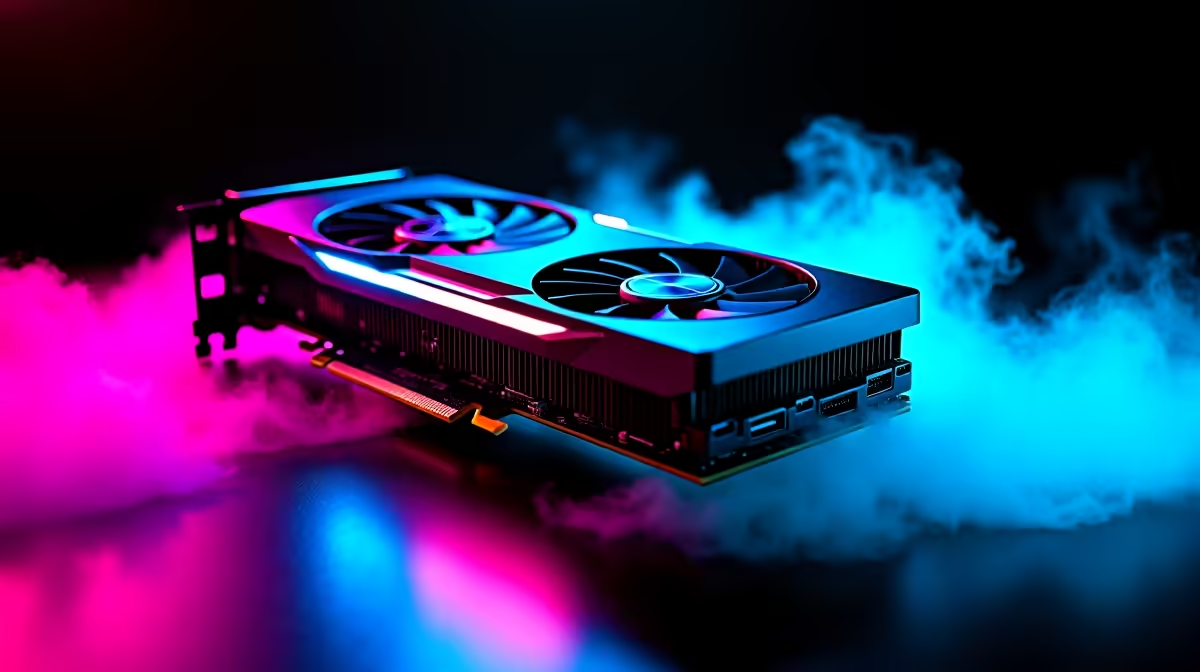
The RTX 5060 Ti brings NVIDIA''s fifth-generation ray tracing hardware to a mid-range price point, offering strong ray tracing performance at 1080p and capable results at 1440p when paired with DLSS 4 Multi Frame Generation. SA gamers in this GPU tier will find ray tracing much more accessible than on previous mid-range cards.
NVIDIA''s RTX 5060 Ti represents a significant moment for South African gamers: it is the first time the company''s most advanced ray tracing hardware has landed at a mid-range price point accessible to a broad part of the local market. Understanding what this actually means for in-game performance - beyond the specification sheet - helps you make an informed decision when budgeting for a GPU upgrade in 2026.
The RTX 5060 Ti is built on NVIDIA''s Blackwell architecture, which carries fifth-generation RT (ray tracing) cores. These dedicated hardware units handle the BVH traversal and ray-triangle intersection calculations that would otherwise crush shader performance. Compared to the RTX 4060 Ti''s fourth-gen RT cores, the new generation offers higher throughput per core, which means more rays can be traced per frame. In practice, this improvement is most visible in titles with complex ray traced lighting - path tracing scenes with many light bounces show the clearest gains. For titles using simpler RT effects like ray-traced shadows or reflections, the improvement is measurable but less dramatic.
At 1080p with ray tracing enabled, the RTX 5060 Ti performs confidently. Most current ray-traced titles at high RT settings will run at 60fps or above at 1080p natively, and with DLSS 4 Quality mode, you gain additional headroom that can push many titles well above that threshold. At 1440p, native ray tracing performance is more variable - lighter RT implementations (ambient occlusion, shadows) remain smooth, while heavier workloads like full path tracing will benefit significantly from DLSS upscaling. DLSS 4 Multi Frame Generation, available on Blackwell cards, can multiply the effective frame rate substantially in supported titles, making 1440p with demanding ray tracing configurations genuinely playable on the RTX 5060 Ti in a way that was not realistic on the 4060 Ti without similar assistance.
For the South African market, where loadshedding considerations make desktop gaming sessions valuable and deliberate, getting the most out of your GPU time matters. Ray tracing adds the greatest visual impact in single-player story-driven games - horror titles, RPGs, and open-world games where lighting and atmospheric effects dramatically improve immersion. Competitive multiplayer titles benefit very little from ray tracing and often have it disabled by default for performance reasons. SA gamers who primarily play competitive titles should not weight ray tracing performance heavily in their purchasing decision, while those who invest in narrative single-player experiences will find the RTX 5060 Ti''s RT capabilities a genuine upgrade.
Q: Can the RTX 5060 Ti run path tracing in Cyberpunk 2077 at 1080p? A: Yes, with DLSS 4 Quality or Balanced mode enabled, path tracing in Cyberpunk 2077 at 1080p is a practical configuration on the RTX 5060 Ti.
Q: How does DLSS 4 Multi Frame Generation work with ray tracing? A: Multi Frame Generation uses AI to generate additional frames between rendered frames, multiplying the displayed frame rate. It works alongside ray tracing to make demanding RT workloads feel smooth even when the native GPU frame rate is lower.
Q: Is the RTX 5060 Ti worth it over the RTX 4060 Ti for ray tracing in SA? A: For gamers who regularly play ray traced titles, yes - the fifth-gen RT cores and DLSS 4 Multi Frame Generation support represent a meaningful generational step for ray tracing specifically.
Ready to Find Your Perfect Match? Shop gaming PCs with RTX 5060 Ti and other NVIDIA GPUs at Evetech.
RTX 5060 Ti Ray Tracing Performance: Whi available at Evetech.co.za with local warranty and fast delivery.
RTX 5060 Ti Ray Tracing Performance: Whi - check Evetech for latest stock and SA pricing.
Depends on your use case. RTX 5060 Ti Ray Tracing Perfor offers good value at current Rand pricing.
Headset Stock Levels in Bloemfontein: January. Current stock data & price tracking for SA buyers. See what is available and where prices are heading.
Read more
iMac for Medical Practice: Patient Management. SA-focused analysis with local pricing data, real-world insights & actionable buying advice.
Read more
RTX 5060 Fortnite Ultra Settings at 1080p: FPS. Real-world benchmark data, FPS numbers & performance analysis. What SA gamers can actually expect.
Read more
Headset Stock Levels in Cape Town: August Report. Current stock data & price tracking for SA buyers. See what is available and where prices are heading.
Read more
Eskom Load Shedding During Video Call: Solutions. SA-focused analysis with local pricing data, real-world insights & actionable buying advice.
Read more
LoL Performance on Extreme Gaming PC. Real-world benchmark data, FPS numbers & performance analysis. What SA gamers can actually expect.
Read more
Is a Ultra Short Throw Projector Good for Gaming?. Diagnosis steps, proven fixes & when to seek professional help. SA-specific support info included.

Is a Short Throw Projector Good for Gaming? Input. Diagnosis steps, proven fixes & when to seek professional help. SA-specific support info included.

Top Mouse Settings for Competitive FPS: Sensitivity picks evaluated on performance, value & SA availability with current Rand pricing from Evetech.

Top Speakers for MacBook Desk Setup picks evaluated on performance, value & SA availability with current Rand pricing from Evetech.

Is a Ergonomic Chair Better Than a Standard Office Chair for Gaming Detailed answer with SA data, expert analysis & practical recommendations for local buyers.

Use Spotlight Search Like a Pro on macOS. Step-by-step instructions with SA-specific tips, common pitfalls to avoid & expert recommendations.

wireless keyboard Fan Noise Too Loud: Quiet. Everything you need to know with SA pricing, step-by-step instructions & expert recommendations.

Connection Timeout: Troubleshooting Guide #2. Diagnosis steps, proven fixes & when to seek professional help. SA-specific support info included.
Headset Stock Levels in Bloemfontein: January. Current stock data & price tracking for SA buyers. See what is available and where prices are heading.
iMac for Medical Practice: Patient Management. SA-focused analysis with local pricing data, real-world insights & actionable buying advice.
RTX 5060 Fortnite Ultra Settings at 1080p: FPS. Real-world benchmark data, FPS numbers & performance analysis. What SA gamers can actually expect.
Headset Stock Levels in Cape Town: August Report. Current stock data & price tracking for SA buyers. See what is available and where prices are heading.