


Headset Stock Levels in Bloemfontein: January 2026 Report
Headset Stock Levels in Bloemfontein: January. Current stock data & price tracking for SA buyers. See what is available and where prices are heading.
Read moreRyzen 5 9600X for 3D Rendering: Performance. Real-world benchmark data, FPS numbers & performance analysis. What SA gamers can actually expect.
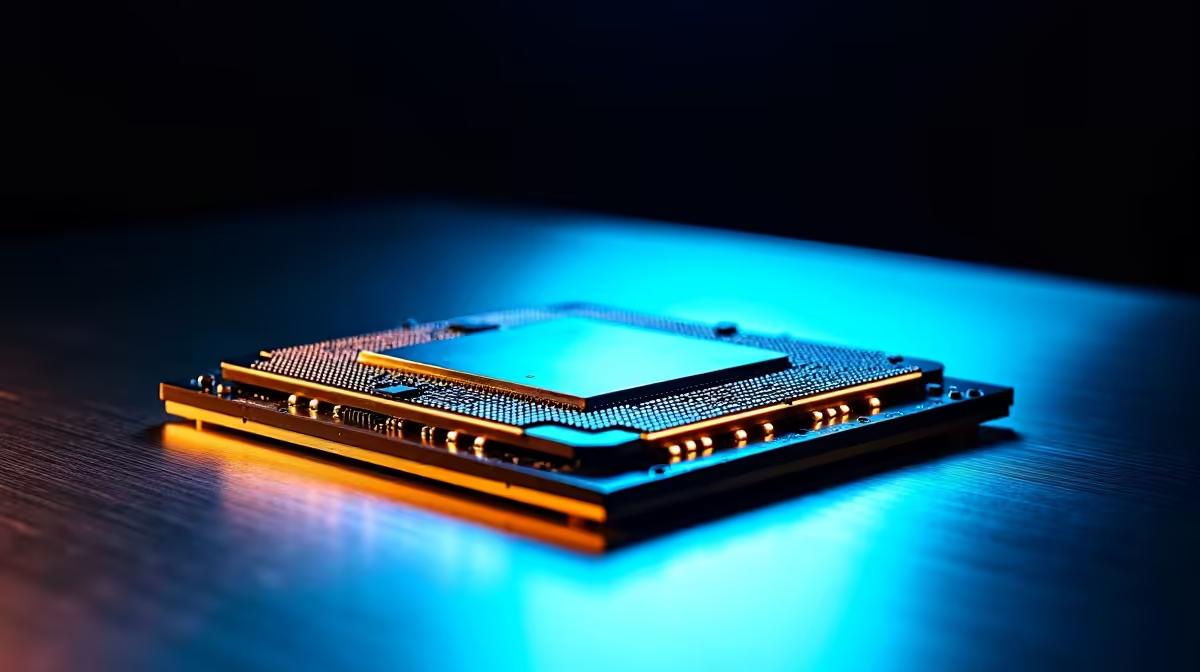
The Ryzen 5 9600X is a capable 6-core processor for entry-level to mid-range 3D rendering workloads. It handles scene rendering and viewport performance well for hobbyists and students, but professionals with complex scenes will benefit from moving to an 8-core or higher option. In South Africa, it represents strong value for the price.
The Ryzen 5 9600X is based on AMD''s Zen 5 architecture, which brings meaningful IPC improvements over previous generations. For 3D artists in South Africa wondering if it fits their pipeline, understanding where the 9600X excels and where it reaches its limits matters before committing your Rands.
CPU rendering in applications like Blender uses all available cores and threads. The 9600X''s 6 cores and 12 threads perform competitively for simple to moderately complex scenes - product visualisation, character modelling, and architectural walk-throughs at moderate polygon counts all run at acceptable speeds. The Zen 5 architecture''s improved IPC means each core does more work per clock cycle than its Zen 4 equivalent, partially compensating for the lower core count compared to higher-tier Ryzen 9 chips. For students learning 3D modelling tools, working through online courses, or producing renders for a personal portfolio, the 9600X is more than adequate. For a professional studio producing complex scenes with dense geometry and high-resolution outputs under client deadlines, the render times on a 6-core chip will create frustrating bottlenecks.
Beyond raw rendering, 3D work involves constant viewport navigation, sculpting, and simulation previews. Here the 9600X''s high single-core clock speeds are an asset - viewport responsiveness in Blender, Cinema 4D, and similar applications feels snappy. Multithreaded simulation tasks like cloth, fluid, and particle effects scale with core count, so complex simulations will be slower than on a 12-core processor. Pairing the 9600X with a capable GPU dramatically improves GPU-accelerated render performance (using CUDA or ROCm), and for most SA 3D artists, optimising the GPU side of the workflow is the higher-impact upgrade path than moving to a higher core-count CPU.
Q: Is the Ryzen 5 9600X good enough for Blender rendering? A: Yes for hobbyists, students, and mid-level work. Complex professional scenes with high polygon counts and demanding materials will render noticeably slower than on 8-core or 12-core alternatives.
Q: Should I prioritise more CPU cores or a better GPU for 3D rendering? A: It depends on your renderer. GPU-accelerated rendering (Cycles in GPU mode, Redshift, Octane) benefits enormously from GPU investment. CPU-only rendering scales directly with core count. Most modern workflows benefit from a balanced approach.
Q: Is the Ryzen 5 9600X good value for 3D work in South Africa? A: Yes - it delivers Zen 5 architecture at a mid-range price point. For the SA market where high core count CPUs carry significant Rand premiums, the 9600X is a practical entry into Zen 5-based content creation.
Ready to Find Your Perfect Match? Shop AMD Ryzen processors and PC components at Evetech.
Ryzen 5 9600X for 3D Rendering: Performa available at Evetech.co.za with local warranty and fast delivery.
Ryzen 5 9600X for 3D Rendering: Performa - check Evetech for latest stock and SA pricing.
Depends on your use case. Ryzen 5 9600X for 3D Rendering offers good value at current Rand pricing.
Headset Stock Levels in Bloemfontein: January. Current stock data & price tracking for SA buyers. See what is available and where prices are heading.
Read more
iMac for Medical Practice: Patient Management. SA-focused analysis with local pricing data, real-world insights & actionable buying advice.
Read more
RTX 5060 Fortnite Ultra Settings at 1080p: FPS. Real-world benchmark data, FPS numbers & performance analysis. What SA gamers can actually expect.
Read more
Headset Stock Levels in Cape Town: August Report. Current stock data & price tracking for SA buyers. See what is available and where prices are heading.
Read more
Eskom Load Shedding During Video Call: Solutions. SA-focused analysis with local pricing data, real-world insights & actionable buying advice.
Read more
LoL Performance on Extreme Gaming PC. Real-world benchmark data, FPS numbers & performance analysis. What SA gamers can actually expect.
Read more
Is a Ultra Short Throw Projector Good for Gaming?. Diagnosis steps, proven fixes & when to seek professional help. SA-specific support info included.

Is a Short Throw Projector Good for Gaming? Input. Diagnosis steps, proven fixes & when to seek professional help. SA-specific support info included.

Top Mouse Settings for Competitive FPS: Sensitivity picks evaluated on performance, value & SA availability with current Rand pricing from Evetech.

Top Speakers for MacBook Desk Setup picks evaluated on performance, value & SA availability with current Rand pricing from Evetech.

Is a Ergonomic Chair Better Than a Standard Office Chair for Gaming Detailed answer with SA data, expert analysis & practical recommendations for local buyers.

Use Spotlight Search Like a Pro on macOS. Step-by-step instructions with SA-specific tips, common pitfalls to avoid & expert recommendations.

wireless keyboard Fan Noise Too Loud: Quiet. Everything you need to know with SA pricing, step-by-step instructions & expert recommendations.

Connection Timeout: Troubleshooting Guide #2. Diagnosis steps, proven fixes & when to seek professional help. SA-specific support info included.
Headset Stock Levels in Bloemfontein: January. Current stock data & price tracking for SA buyers. See what is available and where prices are heading.
iMac for Medical Practice: Patient Management. SA-focused analysis with local pricing data, real-world insights & actionable buying advice.
RTX 5060 Fortnite Ultra Settings at 1080p: FPS. Real-world benchmark data, FPS numbers & performance analysis. What SA gamers can actually expect.
Headset Stock Levels in Cape Town: August Report. Current stock data & price tracking for SA buyers. See what is available and where prices are heading.