


Headset Stock Levels in Bloemfontein: January 2026 Report
Headset Stock Levels in Bloemfontein: January. Current stock data & price tracking for SA buyers. See what is available and where prices are heading.
Read moreLeague of Legends Tournament Market Data: March. SA market intelligence with local buyer data, pricing shifts & actionable insights for smart purchasing.
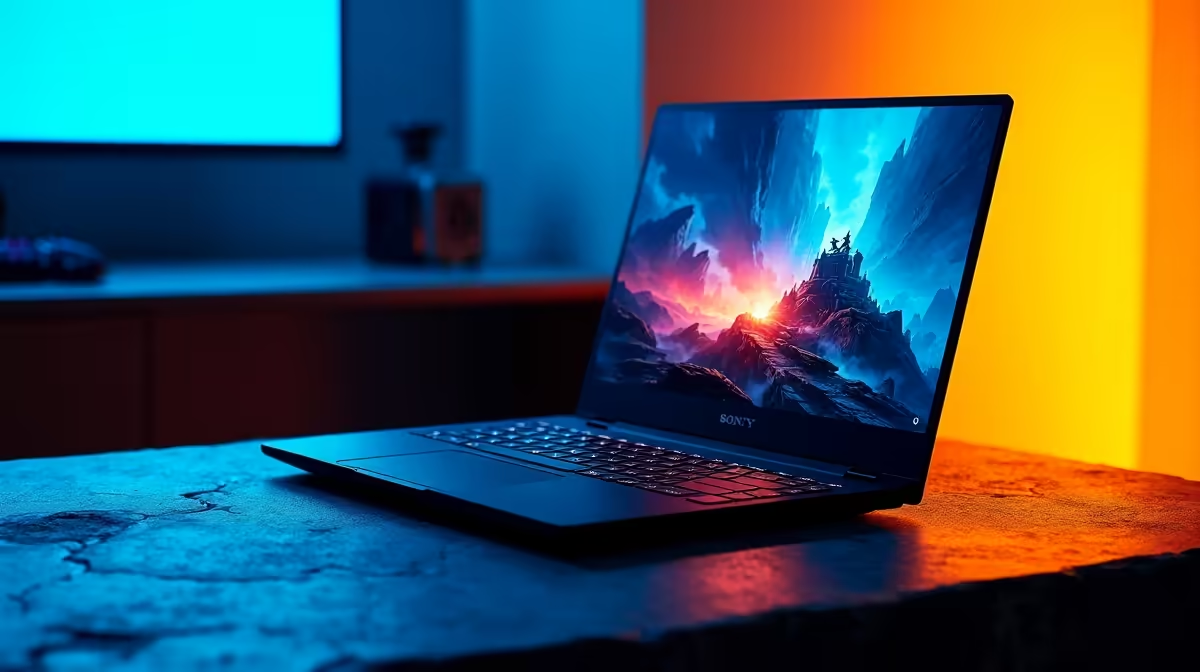
The South African League of Legends tournament scene in March 2026 showed continued growth in organised amateur competition, with Johannesburg and Cape Town remaining the primary hubs for LAN events and online qualifier activity peaking during the first university semester.
March 2026 marked an active period for the South African League of Legends community, coinciding with the first full month of the university academic calendar. Student esports clubs at institutions in Johannesburg, Pretoria, Cape Town, and Durban contributed a noticeable increase in organised team registrations for online qualifier ladders. The university calendar alignment is a consistent driver of participation spikes in SA amateur esports - as students settle into semester routines, organised gaming activity increases alongside it.
Johannesburg continued to serve as the most active hub for in-person LAN events, benefiting from the highest concentration of gaming cafes and venues with dedicated esports infrastructure in the country. The load shedding schedule during March 2026 had some impact on LAN event scheduling, with organisers increasingly relying on venues equipped with generator or solar backup to guarantee uninterrupted match play. This has become a standard logistical consideration for South African esports event planning.
Market data from March 2026 reflects the hardware preferences of South African competitive League of Legends players, a community that prioritises high refresh rate monitors and responsive peripherals over raw GPU horsepower given the game's modest system requirements. League of Legends runs well on mid-range hardware, meaning that serious SA competitors invest their hardware budget disproportionately in monitors (144Hz being the minimum serious players accept), gaming mice with precise optical sensors, and mechanical keyboards with fast linear switches.
The 24-inch 1080p 144Hz monitor remains the dominant form factor in the competitive SA LoL segment, striking the ideal balance between pixel density, refresh rate, response time, and price. Players who have upgraded report that consistent 144fps gameplay translates to noticeably sharper tracking of fast-moving champions during teamfights. A small but growing segment of players has moved to 240Hz panels, following the trend from professional esports internationally where 240Hz has become the broadcast standard.
The South African League of Legends community has historically operated without the prize pool infrastructure of international markets, but March 2026 data shows community-funded tournaments with modest prize distributions are increasingly common. Discord-organised leagues with round-robin formats and small buy-in structures have proven a sustainable model for keeping intermediate-skill players engaged between major organised events.
Online format remains dominant due to the geographic distribution of the South African player base - competitors from Durban, Cape Town, and Bloemfontein cannot realistically attend Gauteng LAN events regularly. Stable fibre connectivity has improved the quality of online competitive play significantly in major SA metros, though players in smaller cities and towns continue to face connectivity disadvantages in online competitive formats. Network latency to the Riot Games servers used by South African players remains a topic of community discussion, with players regularly monitoring their ping and preferring off-peak scheduling to reduce congestion-related spikes.
A: Johannesburg and the broader Gauteng region host the largest share of in-person League of Legends events in South Africa, with Cape Town second. Online qualifier formats serve the broader national player base that cannot attend LAN events regularly.
A: Competitive SA LoL players prioritise 144Hz to 240Hz monitors, precise optical gaming mice, and mechanical keyboards with linear switches. The game itself runs on mid-range PC hardware, so hardware investment is focused on input devices and display performance rather than GPU upgrades.
A: Load shedding is a significant logistical factor for in-person SA esports events. Organisers increasingly require venues with generator or inverter backup as a baseline, and online tournament scheduling is sometimes adjusted around published load shedding schedules to prevent match interruptions affecting competitors on home connections without UPS backup.
Also at Evetech: All Graphics Cards | Graphics Card Deals
Ready to Find Your Perfect Match? Shop at Evetech
SA League of Legends Tournament Market D available at Evetech.co.za with local warranty and fast delivery.
SA League of Legends Tournament Market D - check Evetech for latest stock and SA pricing.
Depends on your use case. SA League of Legends Tournamen offers good value at current Rand pricing.
Headset Stock Levels in Bloemfontein: January. Current stock data & price tracking for SA buyers. See what is available and where prices are heading.
Read more
iMac for Medical Practice: Patient Management. SA-focused analysis with local pricing data, real-world insights & actionable buying advice.
Read more
RTX 5060 Fortnite Ultra Settings at 1080p: FPS. Real-world benchmark data, FPS numbers & performance analysis. What SA gamers can actually expect.
Read more
Headset Stock Levels in Cape Town: August Report. Current stock data & price tracking for SA buyers. See what is available and where prices are heading.
Read more
Eskom Load Shedding During Video Call: Solutions. SA-focused analysis with local pricing data, real-world insights & actionable buying advice.
Read more
LoL Performance on Extreme Gaming PC. Real-world benchmark data, FPS numbers & performance analysis. What SA gamers can actually expect.
Read more
Is a Ultra Short Throw Projector Good for Gaming?. Diagnosis steps, proven fixes & when to seek professional help. SA-specific support info included.

Is a Short Throw Projector Good for Gaming? Input. Diagnosis steps, proven fixes & when to seek professional help. SA-specific support info included.

Top Mouse Settings for Competitive FPS: Sensitivity picks evaluated on performance, value & SA availability with current Rand pricing from Evetech.

Top Speakers for MacBook Desk Setup picks evaluated on performance, value & SA availability with current Rand pricing from Evetech.

Is a Ergonomic Chair Better Than a Standard Office Chair for Gaming Detailed answer with SA data, expert analysis & practical recommendations for local buyers.

Use Spotlight Search Like a Pro on macOS. Step-by-step instructions with SA-specific tips, common pitfalls to avoid & expert recommendations.

wireless keyboard Fan Noise Too Loud: Quiet. Everything you need to know with SA pricing, step-by-step instructions & expert recommendations.

Connection Timeout: Troubleshooting Guide #2. Diagnosis steps, proven fixes & when to seek professional help. SA-specific support info included.
Headset Stock Levels in Bloemfontein: January. Current stock data & price tracking for SA buyers. See what is available and where prices are heading.
iMac for Medical Practice: Patient Management. SA-focused analysis with local pricing data, real-world insights & actionable buying advice.
RTX 5060 Fortnite Ultra Settings at 1080p: FPS. Real-world benchmark data, FPS numbers & performance analysis. What SA gamers can actually expect.
Headset Stock Levels in Cape Town: August Report. Current stock data & price tracking for SA buyers. See what is available and where prices are heading.