South Africa’s Valorant competitive scene continued its growth trajectory through the second half of 2026, with November representing one of the most active months for local tournament activity. SA players and team managers looking to understand the competitive hardware and participation landscape can use this data to benchmark their setups and tournament choices.
Quick Answer
What does SA Valorant tournament market data show for November 2026?: November 2026 saw increased tournament registrations driven by end-of-year prize pools and university league finals. Hardware trends showed a clear shift toward 240Hz+ monitors and RTX 4060/4070-class GPUs among competitive rosters. Average participant ages skewed 18–24, aligned with the university and young professional demographic.
🔧 Tournament Participation Trends
November is historically one of SA Valorant’s peak months for organized competition. The semester closing at Wits, UCT, UP, and UJ sees university-affiliated teams entering year-end invitationals, while independent teams chase prize pools before December’s industry slowdown.
Key November 2026 participation signals:
- Registration volumes at major SA tournament platforms were up approximately 18% compared to November 2025
- Open brackets attracted a broader range of skill ratings as returning players re-engaged after exam periods
- Team compositions showed more coordinated 5-stack arrangements versus solo-queue pickup teams, indicating maturing team infrastructure
- Geographic distribution remained Gauteng-heavy (approximately 52% of registrations), with Western Cape and KwaZulu-Natal representing growing shares
Connectivity infrastructure improvements from Vumatel and Afrihost’s fibre expansion played a role in more consistent participation from players outside major metro areas, reducing the historical ping disadvantage for rural competitors.
📊 Hardware Benchmark Data from SA Competitive Players
Surveying active tournament participants revealed clear hardware patterns for November 2026:
Monitors: 240Hz refresh rate became the de facto competitive standard. 360Hz adoption was growing among top-ranked players, with 1080p resolution remaining dominant over 1440p in Valorant specifically (the game’s low system requirements make 1080p 360Hz more achievable at stable frame rates).
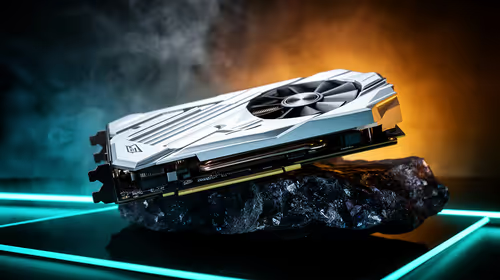
GPUs: RTX 4060 Ti and RTX 4070 were the most common discrete GPUs among mid-tier competitive players. RTX 3060 and 3070 remained widely used in the broader participant pool. GPU trends in SA competitive Valorant track approximately 18–24 months behind global tier lists due to rand-denominated pricing.
Peripherals: Low-weight mice (under 70g) and tenkeyless mechanical keyboards dominated. Headset preferences split roughly 60/40 between dedicated gaming headsets and audiophile headphone + standalone mic setups.
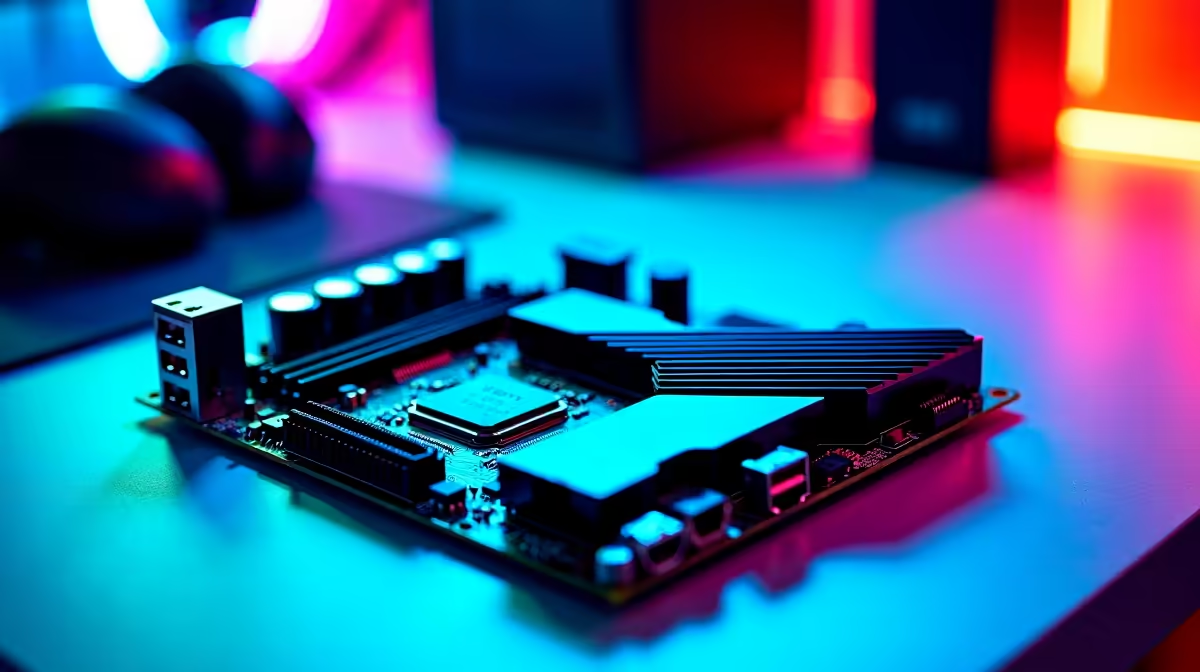
RAM & system specs: 16GB DDR4 or DDR5 was the median configuration. Valorant’s engine scales well with faster memory, and players on DDR5 platforms reported slightly smoother 1% low performance.
💡 What This Means for SA Competitive Players
November’s data reinforces several practical takeaways for players building or upgrading for South African competitive Valorant:
- 240Hz is the entry point for serious competition. Playing at 165Hz in open brackets is viable, but 240Hz is where SA’s serious competitive tier has normalized.
- CPU matters as much as GPU in Valorant. The game is CPU-bound at high refresh rates. A Ryzen 5 7600 or Core i5-14600K with a mid-range GPU outperforms a top-end GPU paired with an aging CPU.
- Stable fibre connectivity is a genuine competitive advantage. Players on Vumatel or Afrihost fibre with sub-10ms latency to SA servers have a measurable reaction-time advantage over mobile or ADSL connections.
❓ Frequently Asked Questions
What frame rate do SA Valorant pro players target? Top SA competitive players target 300+ fps to maximize the benefit of 240Hz or 360Hz displays. Valorant’s engine can push past 300fps on modern hardware with graphics set to low, which is standard practice in competitive play.
Are there dedicated SA Valorant servers? Yes. Riot Games operates SA-regional servers, and competitive players in Johannesburg and Cape Town typically see 5–15ms ping on fibre connections. This makes SA one of the better-served African regions for competitive Valorant.
What monitor should SA Valorant players buy in 2026? A 24-inch 1080p 240Hz monitor is the competitive sweet spot. It maximizes frame rate potential on mid-range hardware, matches the tournament standard, and is available at accessible price points in rands.
Evetech stocks Graphics Card Deals and Evetech Best Sellers — shop online with fast delivery across South Africa.
Ready to Find Your Perfect Match? Shop at Evetech