Tshwane University of Technology students in Q4 2026 are showing clear and consistent tech preferences shaped by academic demands, budget constraints around the NSFAS R5,200 laptop allowance, and a growing interest in gaming and content creation alongside academic work. This report summarises the key findings from the quarter.
Quick Answer
What are TUT student tech preferences in Q4 2026?: TUT students in Q4 2026 prioritise affordable laptops in the R5,000 to R8,000 range that handle Office 365 and CAD software, favour wireless earbuds over full-size headsets, and show increasing interest in gaming peripherals for after-hours use. Budget management around NSFAS funding shapes most purchasing decisions.
🔧 Laptop Preferences at TUT in Q4 2026
The NSFAS laptop allowance of R5,200 remains the defining budget bracket for a significant portion of TUT students. This funding level covers entry-level to lower mid-range laptops - units with Intel Core i5 or AMD Ryzen 5 processors, 8GB RAM, and 256GB to 512GB SSD storage.
Students in engineering and built environment faculties face heavier software demands. AutoCAD, Revit, and SolidWorks require more than entry-level specifications, pushing students in these programmes toward supplementing NSFAS funding with savings or family contributions to reach the R7,000 to R9,000 range where more capable machines live.
For ICT and business students, the NSFAS bracket is adequate. Microsoft 365 apps, coding environments like Visual Studio Code, and general web-based platforms run acceptably on a well-chosen R5,200 machine, provided the SSD storage is sufficient and RAM can be upgraded down the line if needed.
Battery life is a consistently high priority at TUT. Campus infrastructure, while improving, does not always guarantee convenient charging access throughout a full day. Students report prioritising laptops claiming five hours or more of real-world battery over raw performance specs when the choice arises.
📊 Peripheral and Accessory Trends
Wireless earbuds: The dominant audio choice in Q4 2026. Students prefer compact wireless earbuds over traditional wired earphones or over-ear headsets for campus use due to portability and ease of use in lecture environments.
Laptop bags and sleeves: Demand for protective carry solutions is high, with students showing preference for bags that carry a 15.6-inch laptop alongside the other items carried to campus daily.
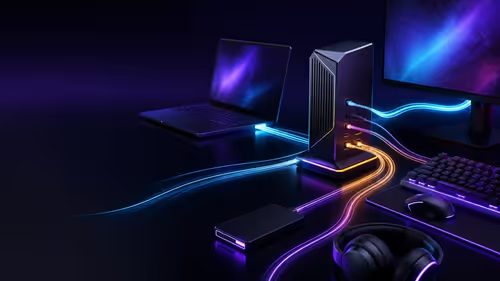
External storage: USB flash drives have largely given way to compact portable SSDs for students handling large project files. The shift is most pronounced in graphic design, multimedia, and architecture programmes where project file sizes exceed what email or cloud storage handles comfortably.
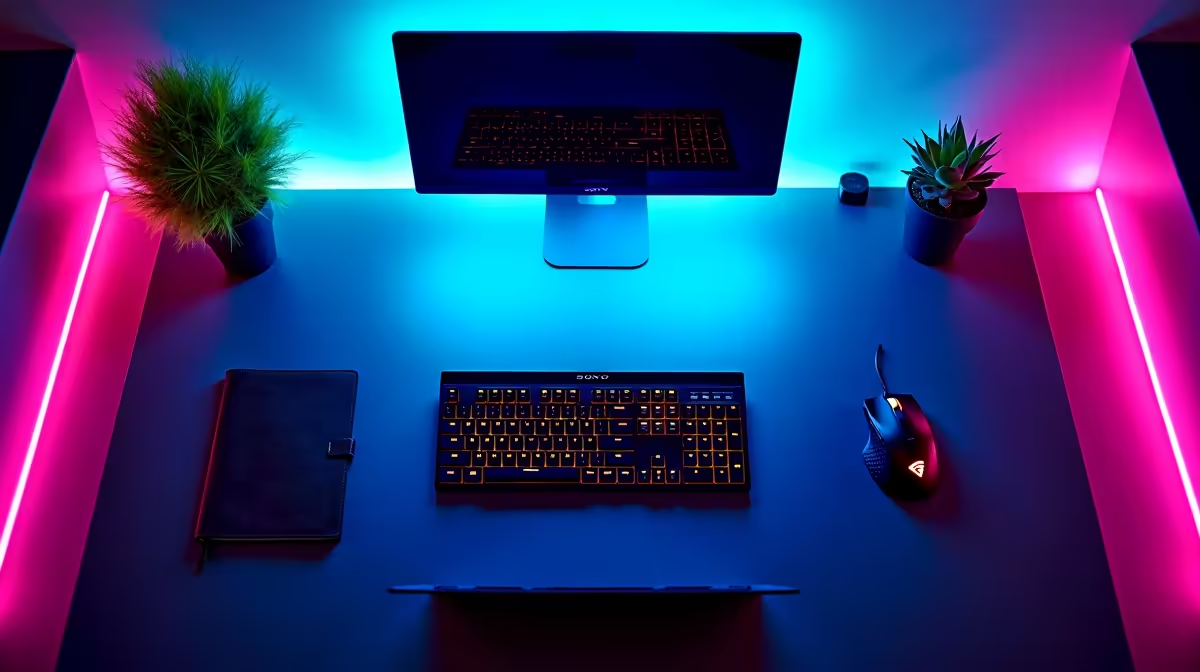
Gaming peripherals: A notable trend in Q4 2026 is students purchasing budget gaming mice and headsets for dormitory use. TUT students in res environments are building micro-gaming setups around their academic laptops during off-hours. Budget wired gaming mice in the R200 to R400 range are the entry point.
💡 Recommendations for TUT Students in Q4 2026
Students planning a laptop purchase before the 2027 academic year should prioritise models with upgradeable RAM slots, as starting with 8GB and adding another 8GB later is significantly cheaper than buying 16GB upfront at an NSFAS-constrained budget. SSD capacity is less expandable, so starting at 512GB where possible is worthwhile.
For students in the engineering faculties planning to run demanding software, a discussion with the faculty's IT support desk about minimum recommended specifications before purchasing is time well spent - some software packages have specific GPU requirements that affect which laptops are suitable.
❓ Frequently Asked Questions
Can a student use their NSFAS laptop allowance for gaming peripherals instead?
NSFAS funding is intended for academic hardware. The allowance is meant to cover a laptop suitable for studies. Peripherals purchased separately fall outside the scope of the allowance - students fund accessories from personal budgets.
What connectivity features do TUT students prioritise in Q4 2026?
USB-C ports, standard USB-A ports for connecting existing peripherals, and HDMI output for connecting to external monitors or projectors for presentations are the most-cited connectivity priorities. Wi-Fi 6 support is increasingly expected but not always available at the NSFAS price point.
Is a Chromebook viable for TUT students in 2026?
For most business and humanities programmes, Chromebooks running Google Workspace and cloud tools can be adequate. However, engineering, built environment, and many ICT programmes require Windows-native software that Chromebooks do not run natively, making a full Windows laptop the safer universal recommendation for TUT students.
Evetech stocks Graphics Card Deals and Evetech Best Sellers — shop online with fast delivery across South Africa.