

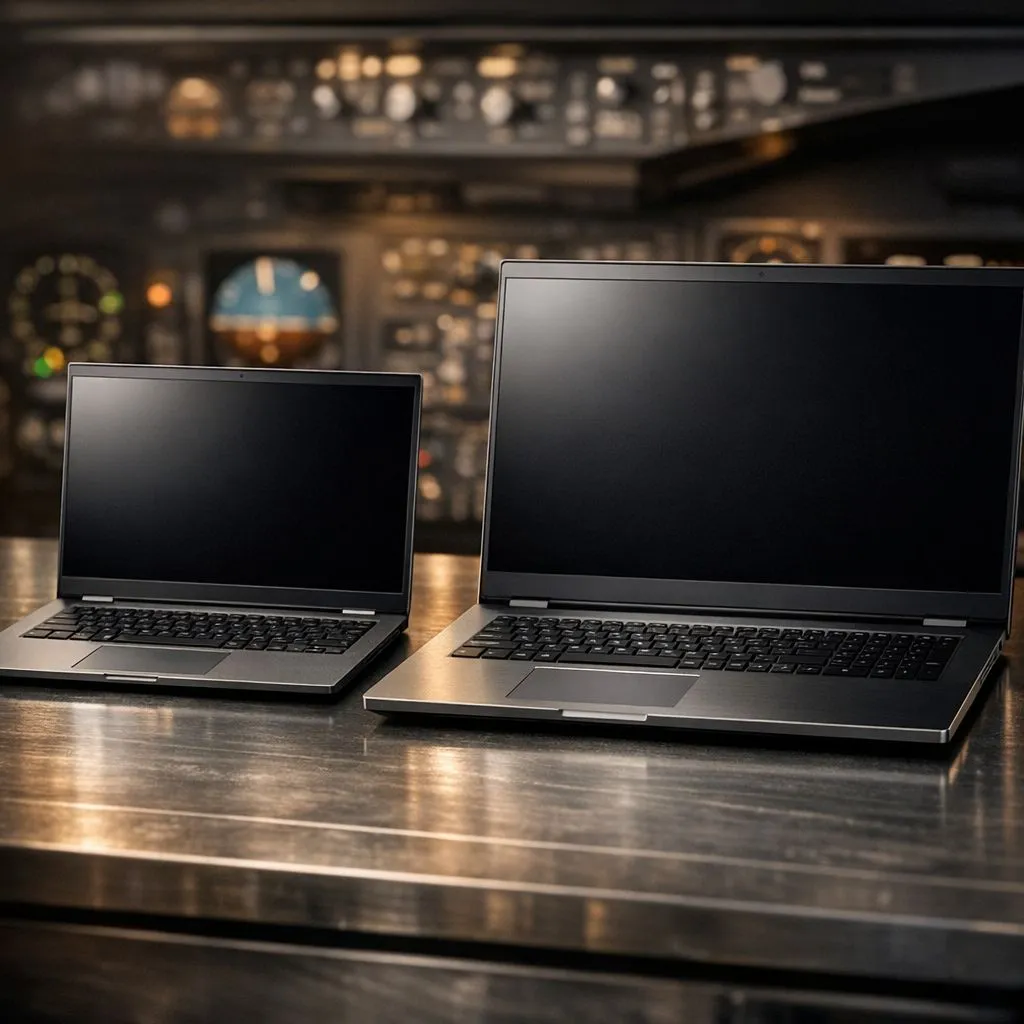
When you are lining up for a night landing at OR Tambo, every pixel on your altimeter counts. Choosing between a 15 vs 17 inch laptop: Best Screen Size for Cockpit Instruments is a decision that defines your flight simulation experience. While smaller screens offer portability, the larger 17-inch panels provide the immersion needed to read complex dials without straining your eyes during a long haul...
The Visual Demands of Flight Simulation
Modern flight simulators like Microsoft Flight Simulator or X-Plane 12 are incredibly detailed. If you are flying a "glass cockpit" aircraft like the Boeing 787, you need to monitor multiple digital displays simultaneously. On a 15-inch screen, these instruments can appear cramped, forcing you to zoom in and lose your peripheral vision.
For those seeking raw clock speeds to handle these complex physics and high-resolution textures, checking out Intel laptops on special is a great starting point for any virtual pilot. A 17-inch display generally offers about 20% more screen real estate... this makes a massive difference when you are trying to read a tiny fuel flow gauge while navigating a stormy approach.
Portability vs Instrument Clarity
If your cockpit is mobile, a 15-inch machine is easier to fit into a backpack. However, the trade-off is often "pixel squinting". Many South African simmers find that a 17-inch laptop acts as a better primary display because it mimics the physical size of real-world aviation instruments more closely.
If you prefer high core counts to manage background flight data apps and AI traffic, Ryzen laptop deals offer incredible value for local enthusiasts. You can also find some of the best gaming laptop deals that balance this larger screen size with the advanced cooling systems required for long-distance virtual flights.
Cockpit Visibility Tip ⚡
If you find your instruments hard to read on a 15-inch screen, try adjusting the 'UI Scaling' in your simulator settings to 110% or 120%. This increases the size of the gauges without requiring a higher resolution, though it may slightly reduce your overall field of view.
Performance Considerations for Larger Displays
A larger screen often comes with a more robust chassis. This allows for better thermal management, which is vital when your GPU is working overtime to render volumetric clouds. To ensure every digital needle moves smoothly without stuttering, investing in GeForce RTX gaming laptops is essential for modern simulators.
Even if you are just starting your pilot journey and working with a tighter budget, there are excellent gaming laptops under R20k that handle 1080p cockpits beautifully. Ultimately, the 15 vs 17 inch laptop: Best Screen Size for Cockpit Instruments debate comes down to how much you value immersion over desk space. For the most realistic experience in South Africa, the 17-inch model remains the gold standard for serious flight simulation. 🚀
Ready to Find Your Perfect Match? The 15 vs 17 inch debate is about finding the balance between portability and immersion. For maximum power, choice, and value in South Africa, our range of high-performance laptops is hard to beat. Explore our massive range of laptop specials and find the perfect machine to conquer your virtual skies.











