

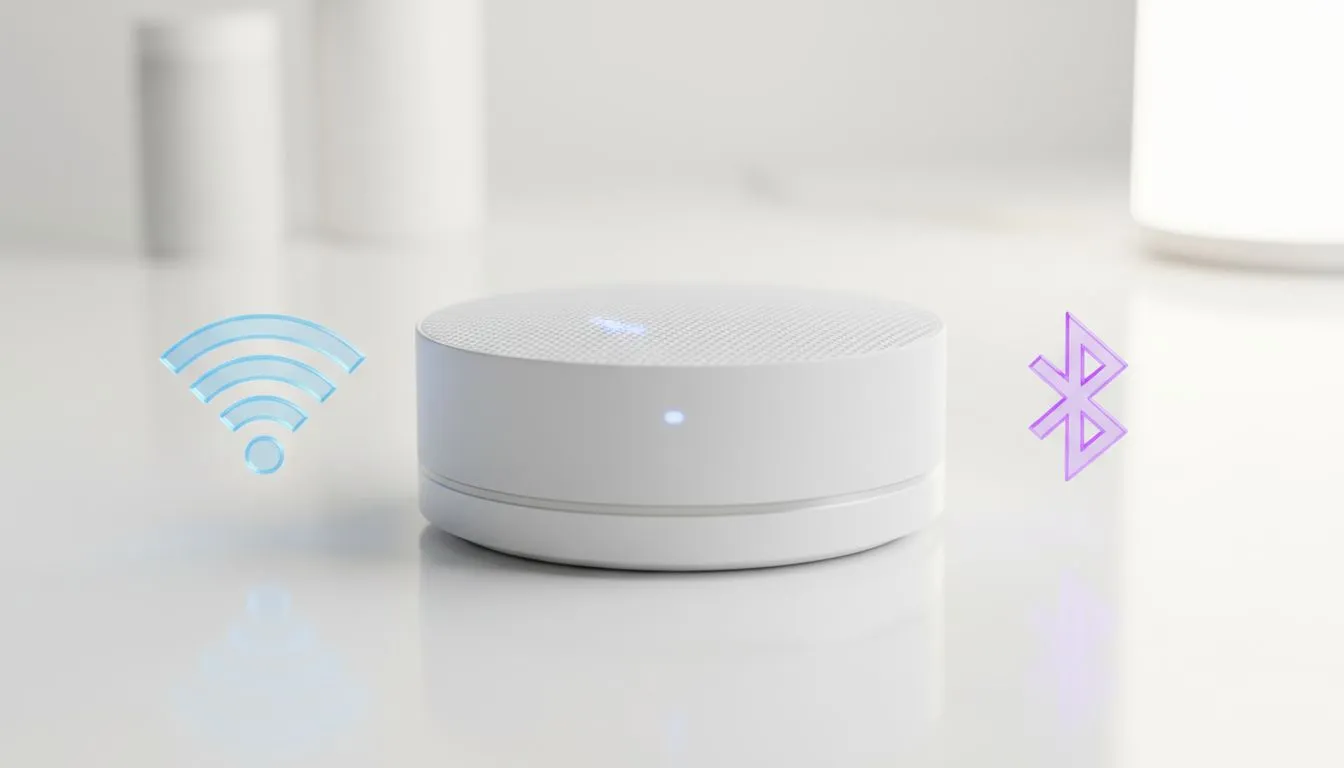
Setting up the perfect battlestation in South Africa involves more than just a high-end GPU. You need the right atmosphere. But nothing kills the mood faster than a light strip that refuses to sync with your gameplay. When comparing 2.4GHz vs Bluetooth smart lighting, the choice impacts your daily reliability. Whether you are dodging loadshedding schedules or automating your room, understanding these wireless protocols is essential for a seamless experience ⚡.
Understanding the Wireless Connection Gap
The primary difference between these two technologies lies in how they communicate with your devices. Bluetooth is a point-to-point connection. It is perfect for a single bulb in a small lamp, but it often struggles when you try to control an entire room. If you are browsing for new gaming accessories, you will notice that entry-level kits often rely on Bluetooth to keep costs down.
However, Bluetooth has a limited range... usually around 10 metres before the signal starts to drop. In a brick-and-mortar South African home, those walls can degrade the signal even further. This leads to that annoying delay where you press "on" in the app, and the lights only react five seconds later.
Why 2.4GHz Offers Superior Reliability
Most high-performance smart lighting systems use the 2.4GHz frequency, either via your home Wi-Fi or a dedicated hub. This protocol is the gold standard for a 2.4GHz vs Bluetooth smart lighting reliability guide because it handles distance and obstacles much better. Because these lights connect to your router, you can control them from the other side of the house... or even while you are sitting in traffic on the N1.
Signal Interference Tip ⚡
If your 2.4GHz lights are flickering or disconnecting, try changing your router's channel. Most routers default to the same frequency as common household appliances. Switching your Wi-Fi to channel 1, 6, or 11 in your router settings can often clear up the signal and stop your RGB from lagging during intense gaming sessions.
For those looking to save some ZAR without sacrificing quality, keeping an eye on gaming accessories deals is a smart move. You can often find 2.4GHz kits for under R800 that provide a much more stable experience than their Bluetooth counterparts.
Making the Right Choice for Your Setup
If you only need one light for a bedside table, Bluetooth is fine. But for a full gaming room with strips behind the monitor and bulbs in the ceiling, 2.4GHz is the clear winner. It allows for better synchronisation, especially when using software to match your lights to the colours on your screen.
Evetech offers a wide selection of gaming accessories that cater to both protocols. When reliability is your priority, always check the box for Wi-Fi or 2.4GHz support. It ensures that when you sit down to play, your lighting is as responsive as your mechanical keyboard 🚀.
Ready to Find Your Perfect Match? The 2.4GHz vs Bluetooth smart lighting debate comes down to how much you value stability. For the best responsiveness and range in South Africa, 2.4GHz is the superior choice. Explore our massive range of gaming accessories and find the perfect lighting to conquer your world.











