

MacBook Pro 16-Inch M5 Max: Complete Specs, Features and SA Pricing Guide
MacBook Pro 16-Inch M5 Max: Complete Specs,. Everything you need to know with SA pricing, step-by-step instructions & expert recommendations.
Read more2.4GHz Wireless vs Bluetooth for gaming headsets: learn latency, range, pairing, and audio tradeoffs so you pick the right link for low-lag play 🎧⚡
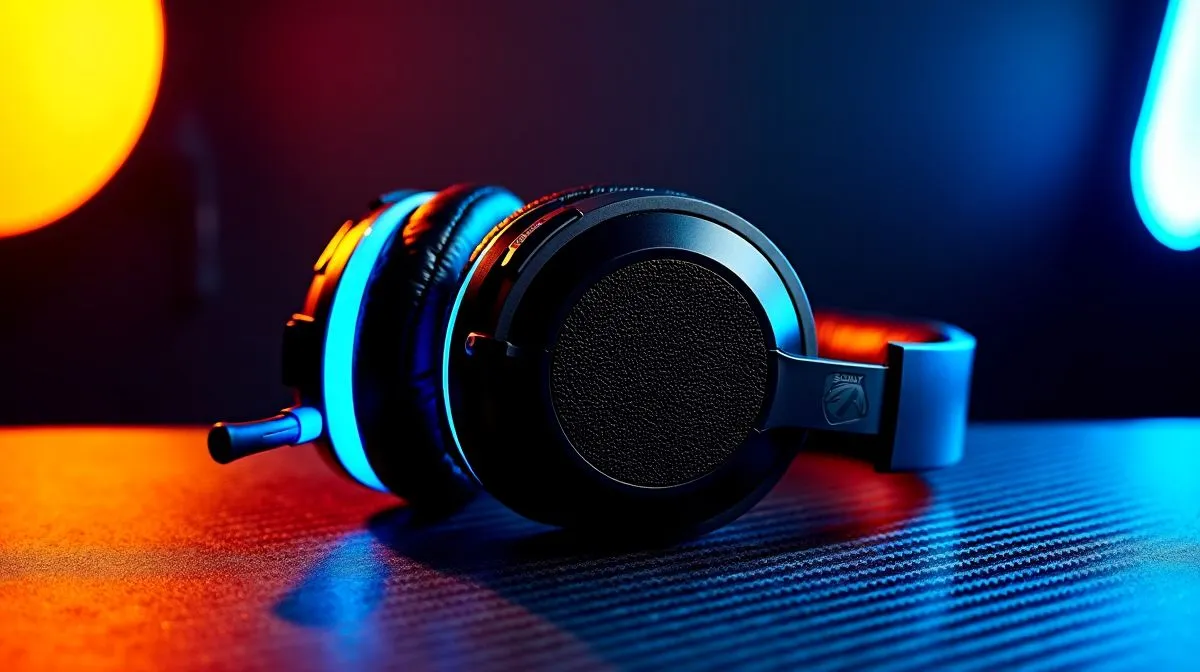
If you are weighing 2.4GHz Wireless vs Bluetooth for Gaming Headsets, start with the problem you need solved and choose the option that removes that problem with the fewest compromises. The right answer for 2.4GHz Wireless vs Bluetooth for Gaming Headsets depends on workload, platform, and tolerance for tradeoffs. For 2.4GHz Wireless vs Bluetooth for Gaming Headsets, prioritise connection type, ear-cup comfort, and platform support before you compare prices. For South African buyers, also check current stock, warranty support, delivery timing, and whether the upgrade leaves room for the next part you are likely to change.
The reason 2.4GHz Wireless vs Bluetooth for Gaming Headsets deserves a practical guide is that the spec sheet does not show the full setup. Comfort, compatibility, warranty route, and supporting hardware decide whether 2.4GHz Wireless vs Bluetooth for Gaming Headsets still feels good after the first week.
For 2.4GHz Wireless vs Bluetooth for Gaming Headsets, the useful filter is whether the choice improves clearer voice chat, easier positional cues, and less fatigue during long sessions. If 2.4GHz Wireless vs Bluetooth for Gaming Headsets does not change that result in your setup, it belongs lower on the priority list.
The easiest 2.4GHz Wireless vs Bluetooth for Gaming Headsets mistake to miss is choosing heavy ear cups for daily use. Put that 2.4GHz Wireless vs Bluetooth for Gaming Headsets check into the list before buying, because it affects daily comfort and upgrade flexibility.
| Decision point | Option to favour | Why it matters |
|---|---|---|
| Best fit | connection type | Choose the option that improves clearer voice chat, easier positional cues, and less fatigue during long sessions. |
| Watch out for | buying only by driver size | This can turn a good-looking deal into a poor fit. |
| Proof point | voice clarity | Use this to judge the result after setup. |
| Final filter | 2.4GHz | Keep it only if it solves the main reason you searched for 2.4GHz Wireless vs Bluetooth for Gaming Headsets. |
If two 2.4GHz Wireless vs Bluetooth for Gaming Headsets options are close, choose the one that gives more confidence on voice clarity and directional cue accuracy. Those 2.4GHz Wireless vs Bluetooth for Gaming Headsets details are usually harder to fix after purchase.
Do not let a global recommendation override local fit for 2.4GHz Wireless vs Bluetooth for Gaming Headsets. Local stock mix, warranty handling, and bundle timing can change which 2.4GHz Wireless vs Bluetooth for Gaming Headsets option is the better value in the moment.
Keep the decision honest by ranking the final options for 2.4GHz Wireless vs Bluetooth for Gaming Headsets against your current setup. The 2.4GHz Wireless vs Bluetooth for Gaming Headsets winner should be the one that improves latency feel, avoids the obvious compatibility issue, and leaves budget for the next weak link.
Start by matching 2.4GHz Wireless vs Bluetooth for Gaming Headsets to your actual setup. Check connection type, then confirm whether this 2.4GHz Wireless vs Bluetooth for Gaming Headsets choice improves voice clarity; otherwise the feature may be interesting but not important enough to decide the purchase.
Do not choose 2.4GHz Wireless vs Bluetooth for Gaming Headsets only by headline specs. The better 2.4GHz Wireless vs Bluetooth for Gaming Headsets choice passes mic pickup pattern, avoids ignoring wireless mode, and still leaves a practical upgrade path.
Use 2.4GHz Wireless vs Bluetooth for Gaming Headsets as a decision checklist. Confirm ear-cup comfort, compare the cost against the rest of the setup, and pick the 2.4GHz Wireless vs Bluetooth for Gaming Headsets option that gives the cleanest path to clearer voice chat, easier positional cues, and less fatigue during long sessions.
2.4GHz Wireless vs Bluetooth for Gaming Headsets is worth acting on when it solves a clear problem in your setup. Use the checks above for 2.4GHz Wireless vs Bluetooth for Gaming Headsets to protect compatibility, comfort, reliability, and price before you commit.
Use the guide above, then compare Logitech Headsets: https://www.evetech.co.za/PC-Components/logitech-gaming-headsets-234
For most competitive gaming, 2.4GHz wireless usually wins on latency and sync stability. Bluetooth can feel delayed, especially on some devices.
Bluetooth gaming headset delay can be noticeable due to codec and connection handling. Low-latency modes help, but 2.4GHz typically stays more consistent.
Yes. 2.4GHz wireless is designed for real-time audio, often delivering faster response times and tighter lip sync for gaming.
Range depends on USB dongle quality and obstacles, but many 2.4GHz headsets work reliably around a room or more. Walls and interference reduce it.
Often, yes. Bluetooth support varies by console and PC Bluetooth stack, so pairing can be easy but latency may differ across devices.
Usually no. You plug in a USB dongle, pair once, and go. Bluetooth may require more pairing steps each time or per device.
Choose Bluetooth when you want multi-device convenience, no dongle, or quick switching between phone and PC. Expect higher latency than 2.4GHz.
Focus on low-latency support, stable wireless connection, effective range, mic quality, and compatibility with your PC or console for reliable performance.
MacBook Pro 16-Inch M5 Max: Complete Specs,. Everything you need to know with SA pricing, step-by-step instructions & expert recommendations.
Read more
Travelling With a MacBook: Travellers. Everything you need to know with SA pricing, step-by-step instructions & expert recommendations.
Read more
Back-to-School Parent Guide: Laptops. Everything you need to know with SA pricing, step-by-step instructions & expert recommendations.
Read more
MacBook Air 13-Inch M5: Complete Specs, Features. Everything you need to know with SA pricing, step-by-step instructions & expert recommendations.
Read more
MacBook Neo Unboxing and First Setup Guide for. Clear setup instructions with SA-specific considerations, troubleshooting tips & recommended components.
Read more
MacBook Pro 16-Inch M5 Pro: Complete Specs,. Everything you need to know with SA pricing, step-by-step instructions & expert recommendations.
Read more
CS2 Low FPS: Monitor Bottleneck. Real-world benchmark data, FPS numbers & performance analysis. What SA gamers can actually expect.
Is AOC a Good Monitor Brand for Gaming in South Africa Detailed answer with SA data, expert analysis & practical recommendations for local buyers.
What Gaming Monitor Can You Get for R20,000. Full parts list, Rand pricing & expected performance. Build confidently with SA-available components.
What Gamers Actually Bought: November Report. Real purchase data from SA retailers revealing what local buyers are actually choosing and why.
Can the RX 7700 XT Handle 1440p 144Hz Gaming. Performance testing verdict with real data & practical recommendations for SA buyers.
Top Laptop with Core i7 + RX 7700S: Picks picks evaluated on performance, value & SA availability with current Rand pricing from Evetech.
RX 7700 XT Black Myth Wukong 2 FPS: Performance. Real-world benchmark data, FPS numbers & performance analysis. What SA gamers can actually expect.
RTX 6080 Gran Turismo 7 PC Performance: FPS Test. Real-world benchmark data, FPS numbers & performance analysis. What SA gamers can actually expect.

Eliminate background noise in gaming voice chat using cardioid microphones to focus on your voice and reject room sounds. Get cleaner comms fast with smart placement and settings—🎮🎧
Wondering how much to spend on a high-end gaming headset in South Africa? We break down budget vs performance, what you actually get, and smart upgrade steps 🎧⚡
Wondering about THX Spatial Audio vs 7.1 surround for positional awareness? We compare imaging, depth, and cueing so you can pick the best option for gaming. 🎧👣
50mm bio-cellulose drivers vs standard drivers: does material affect audio precision? Compare clarity, bass control, and imaging so you can choose the right headphones. 🎧🔍