Quick Answer
For SA strategy and sim games, a 240mm AIO is enough for most Ryzen 5, Ryzen 7, Core i5, and many Core i7 gaming builds; a 360mm AIO is mainly for hotter CPUs, quieter operation, or long rendering loads. If the case has weak radiator space, a quality air cooler around R800-R2,000 can beat a cramped AIO.
240mm vs 360mm in real use
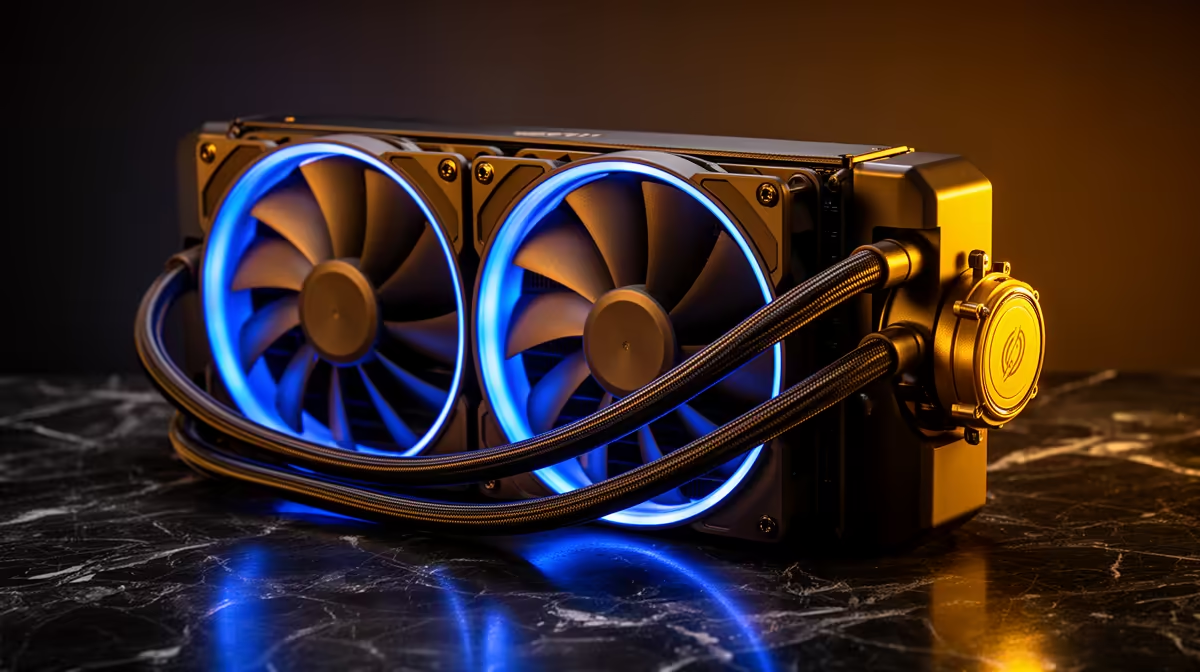
A 240mm AIO fits more cases and is usually easier to route cleanly. A 360mm AIO has more radiator surface, so it can hold lower fan speeds during long sessions. In games, a Ryzen 7 7800X3D often draws modest power, while a high-end Core i7 or Core i9 under creator workloads can reward the larger cooler.
When air cooling is the better buy
Air cooling makes sense when reliability, price, and simple installation matter most. Models in the DeepCool AK400, AK620, Cooler Master Hyper, and Noctua-style class can be excellent for gaming PCs that do not run heavy all-core workloads all day. Keep R1,000-R3,500 as a broad planning band across decent air and AIO options.
SA case and climate checks
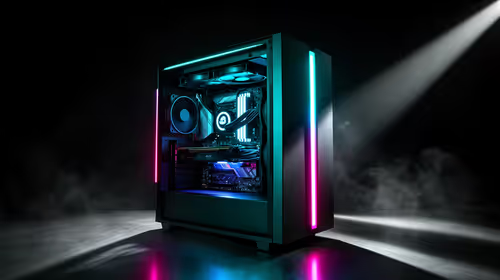
Check radiator clearance before buying: 240mm often fits top or front, while 360mm may block tall RAM or reduce GPU space. Pretoria and inland rooms can run warm in summer, so case airflow matters as much as the cooler. A mesh-front ATX case with two or three intake fans usually helps more than hiding a radiator behind a sealed front panel.
FAQ
Is a 360mm AIO faster for gaming?
Not usually. It can run quieter and cooler, but many games will show little FPS difference once the CPU is below thermal limits.
Is an air cooler safe for strategy and sim games?
Yes, if the CPU power draw and case airflow are sensible. A strong tower air cooler is often the value pick for Ryzen 5, Ryzen 7, and locked Core i5 builds.
What should SA buyers check first?
Check case radiator support, motherboard clearance, warranty terms, and fan noise. Buying the biggest cooler is not useful if it forces bad airflow or blocks parts.