

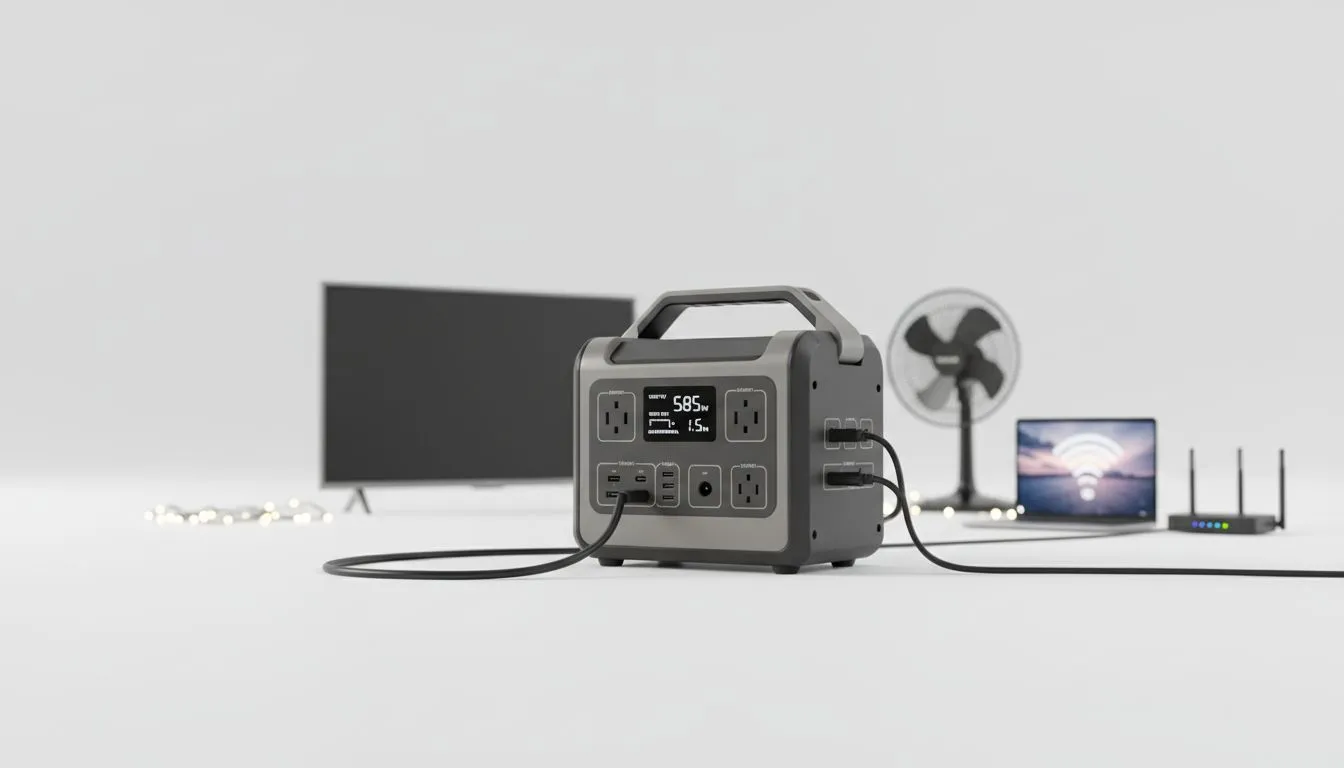
Essential Gear for Your 600W Power Station
Loadshedding is a reality we all face. When the lights go out in South Africa, you do not want your gaming session or work project to vanish. A 600W power station is often the "sweet spot" for many households. But what can it actually handle? Let's break down exactly what a 600W unit keeps running when the grid fails. ⚡
For most users, the priority is staying connected. You can easily run your fibre ONT and a high-end Wi-Fi router for several hours. If you are looking for portable power solutions to keep your internet alive, a 600W unit is more than enough. It provides the stability needed for sensitive electronics that larger, noisier petrol generators might damage.
Managing Your Loadshedding Power Budget
Understanding 600W Power Station: What It Can Run During Loadshedding requires a bit of simple math. A 600W rating refers to the maximum "push" or output it can handle at once. This means you can comfortably plug in a 55-inch LED TV (roughly 100W), a PlayStation 5 (about 200W), and still have plenty of overhead for charging your smartphone or running a floor lamp.
If you are on a tighter budget, you might start with entry-level power banks for your mobile devices. However, for a full home office setup, the 600W tier is superior. It can power a modern laptop (60W–100W) for an entire work day... provided the battery capacity (Wh) matches your needs. We often recommend brands like Promate power banks for those who need reliable backup for smaller peripherals while their main station handles the heavy lifting.
Power Calculation Tip ⚡
To estimate how long your device will last, take the battery capacity in Watt-hours (Wh) and divide it by the wattage of your device. For example, a 500Wh station running a 50W TV should theoretically last about 10 hours... though we recommend leaving a 20% buffer for safety.
Why a 600W Power Station is the Sweet Spot
The beauty of a 600W unit lies in its versatility. It is light enough to carry from the lounge to the bedroom, yet powerful enough to run a small fridge or a CPAP machine if necessary. While it won't power your kettle or oven... those require thousands of watts... it covers almost every entertainment need. 🚀
If you are looking for affordable power options under R1200, you might find smaller units that handle routers and lights. But for the full "lights-on" experience, moving up to the 600W range is the most logical step for the average South African gamer. It ensures that when the schedule hits Stage 4 or 6, your rank in Apex Legends doesn't suffer just because the neighbourhood went dark. 🔧
Ready to Beat the Blackouts? Don't let the next round of loadshedding catch you off guard. Whether you need a massive 600W unit or a compact backup for your phone, we have the stock to keep you online. Browse our full range of power solutions and take control of your uptime today.











