

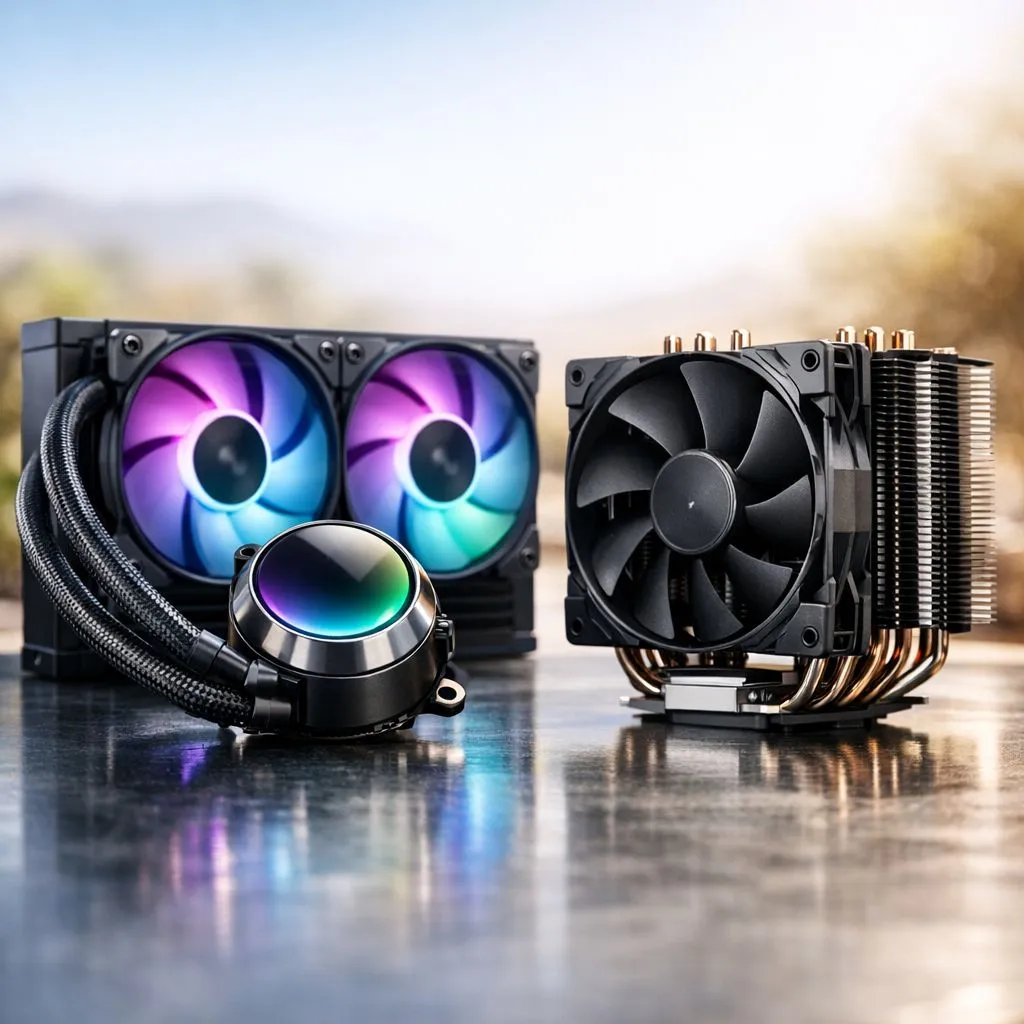
When the mercury hits 35 degrees in Johannesburg or Durban, your gaming PC feels every bit of that heat. Choosing between an AIO vs Air Cooler: Best for South African Summers isn't just about aesthetics... it is about survival for your silicon. High ambient temperatures can lead to thermal throttling, killing your FPS when you need it most. Let's find the best way to keep your rig frosty. 🔧
Beating the Heat with the Right CPU Cooler
Our local climate presents a unique challenge for PC builders. Unlike Europe or North America, our "room temperature" is often significantly higher. This means your cooling solution has to work harder to dissipate heat. If you are running a high-end Ryzen 9 or Intel Core i9, the stock cooler simply won't cut it. You need to browse a massive selection of CPU coolers to find a solution that matches your specific chassis and workload.
The Case for Traditional Air Cooling
Air coolers are the reliable workhorses of the tech world. They use heat pipes to pull warmth away from the CPU into a fin stack, where fans blow it away. They are generally more affordable, with decent units starting around R600 to R900. There is no pump to fail and no risk of leaks. However, in a hot South African summer, a small air cooler might struggle if your case airflow isn't perfect.
Airflow Pro Tip ⚡
Ensure your case has a "positive pressure" setup during summer. This means having more intake fans than exhaust fans. It helps prevent dust buildup... which is a major heat-trap... and ensures a steady supply of fresh air for your CPU cooler to use.
Why AIO Liquid Coolers Rule the Summer
For those pushing their hardware, investing in a liquid cooler (AIO) is often the smartest move. All-In-One (AIO) coolers use liquid to transfer heat to a radiator mounted against the case vents. This allows the heat to be exhausted directly out of the system rather than lingering inside the chassis.
If you want the gold standard in software control and build quality, the premium CORSAIR AIO solutions offer incredible performance. For gamers looking for a balance of performance and budget, the excellent value found in Deepcool liquid coolers makes them a top seller in the South African market. 🚀
Sizing Your Cooling for Local Ambient Temps
Size matters when the heat is on. A larger radiator has more surface area, which means it can dissipate heat more efficiently without the fans spinning at deafening speeds.
- The Heavyweights: If you have the space, a high-end 360mm radiator is the ultimate defence against a February heatwave. It provides the thermal headroom needed for overclocking or intensive video rendering.
- The All-Rounders: For most mid-range gaming builds, a versatile 240mm radiator fits in almost any modern case while offering a significant upgrade over air cooling. ✨
Final Verdict: Which One Should You Buy?
If you are on a tight budget and want "set and forget" reliability, a beefy air cooler is great. But if you want the lowest possible temperatures during a scorching South African afternoon... and a cleaner looking build... the AIO is the clear winner. By moving the heat directly to the edge of your case, you protect not just your CPU, but your GPU and motherboard too. ⚡
Ready to Find Your Perfect Match? The AIO vs Air Cooler debate is complex, but for maximum cooling performance during a South African summer, liquid cooling is hard to beat. Explore our massive range of CPU coolers and find the perfect partner to keep your PC running cool and quiet.











