Quick Answer
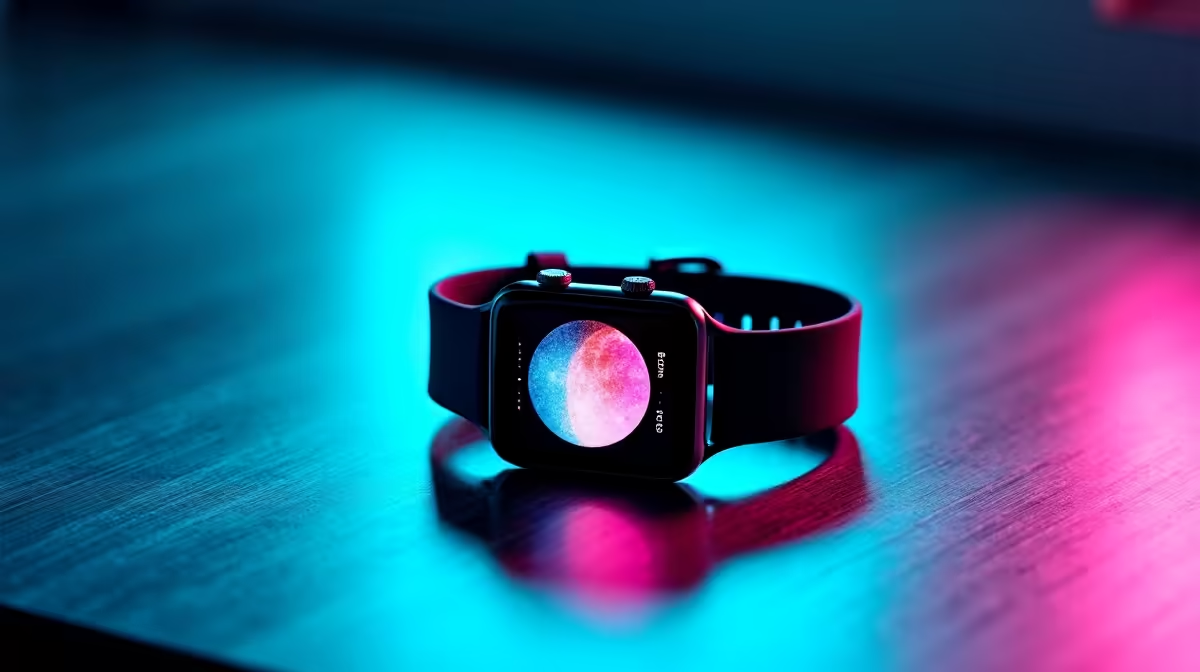
Apple Watch sleep tracking automatically logs sleep stages (REM, Core, Deep, Awake) once you set a Sleep Schedule, wear the watch overnight, and keep at least 30% battery. Accuracy is solid for total sleep duration and wake events but less precise on stage breakdowns compared to a polysomnogram, making it a reliable trend tool rather than a clinical device.
How Apple Watch actually measures your sleep
The watch uses an accelerometer, optical heart rate sensor, and (on Series 9 and later) wrist temperature to infer when you fall asleep, when you cycle through sleep stages, and when you wake. Apple's sleep stage algorithm was validated against polysomnography in a 2022 internal study, and independent reviewers have generally landed in the same ballpark: total sleep time tends to be within five to ten minutes of clinical results, while stage classification (Deep vs Core in particular) is the weakest link.
For most SA users that's perfectly fine. You're tracking trends like "am I getting enough sleep before varsity exams" or "does loadshedding waking the geyser pump destroy my Deep sleep", not diagnosing apnoea.
Setting it up properly in the Health and Sleep apps
Open the Health app on your iPhone, tap Browse, then Sleep. Set a Sleep Schedule with a consistent wind-down and bedtime, enable Sleep Focus to silence notifications, and toggle on Track Sleep with Apple Watch. On the watch itself, charge it before bed (aim for 60% so it survives the night and your morning) and make sure the band is snug but not tight, the optical sensor must read your pulse cleanly.
Common setup mistakes to avoid: leaving Theatre Mode off (the screen lights up when you roll over), wearing a loose sport band that slides down past the wrist bone, or forgetting that Sleep Focus needs to be enabled in the Focus settings, not just the Sleep app.
Reading the data and what's worth acting on
In the morning, swipe through the Sleep complication or open the Health app for a stage breakdown. The numbers worth watching are total sleep, time in bed vs time asleep (sleep efficiency), and overnight wrist temperature deviation, which can flag early illness or stress before symptoms hit. Heart rate variability (HRV) during sleep is another strong recovery signal for gym-goers and esports players grinding ranked at 2am.
Don't obsess over a single night's Deep sleep score. Look at seven-day rolling averages and changes when you adjust caffeine cut-off, screen time, or bedroom temperature.
SA-specific tips and pricing
Apple Watch Series 10 and Ultra 2 are stocked locally with full SA warranty, with Series 10 typically landing in the R10,999 to R14,999 range and Ultra 2 around R19,999. Importing through grey channels voids local service, which matters for a sensor-heavy device. For loadshedding-prone homes, consider a small UPS for your charging dock, a Stage 4 night can leave you with 0% battery and no sleep data at all.
If you pair the watch with a desktop running Apple Health export tools, a stable home rig matters too, especially for power users syncing fitness, sleep, and work data on one machine.
Frequently Asked Questions
What's the minimum Apple Watch model that supports automatic sleep stage tracking?
Apple Watch Series 8, SE 2nd gen, and later support the full sleep stages feature with watchOS 9 or newer. Older Series 3 to 6 models only log basic time-asleep data, no REM or Deep breakdown. If sleep tracking is your main reason for buying, a Series 9 or 10 hits the sweet spot for SA pricing.
How accurate is Apple Watch sleep tracking compared to dedicated devices like an Oura Ring?
For total sleep duration the two are within a few minutes of each other in most peer-reviewed comparisons. Oura tends to edge ahead on Deep sleep precision and resting body temperature granularity, while Apple wins on convenience, you're already wearing the watch. Neither replaces a sleep study if you suspect a clinical issue.
Will sleep tracking drain my battery overnight in South Africa's load-shed reality?
A full night of sleep tracking uses roughly 10 to 20% battery on a Series 10 and slightly less on Ultra 2. Charge to at least 60% before bed and you'll wake with headroom to spare. A small wall-socket UPS or power bank keeps your charger alive during overnight load-shedding so you never miss a sync.