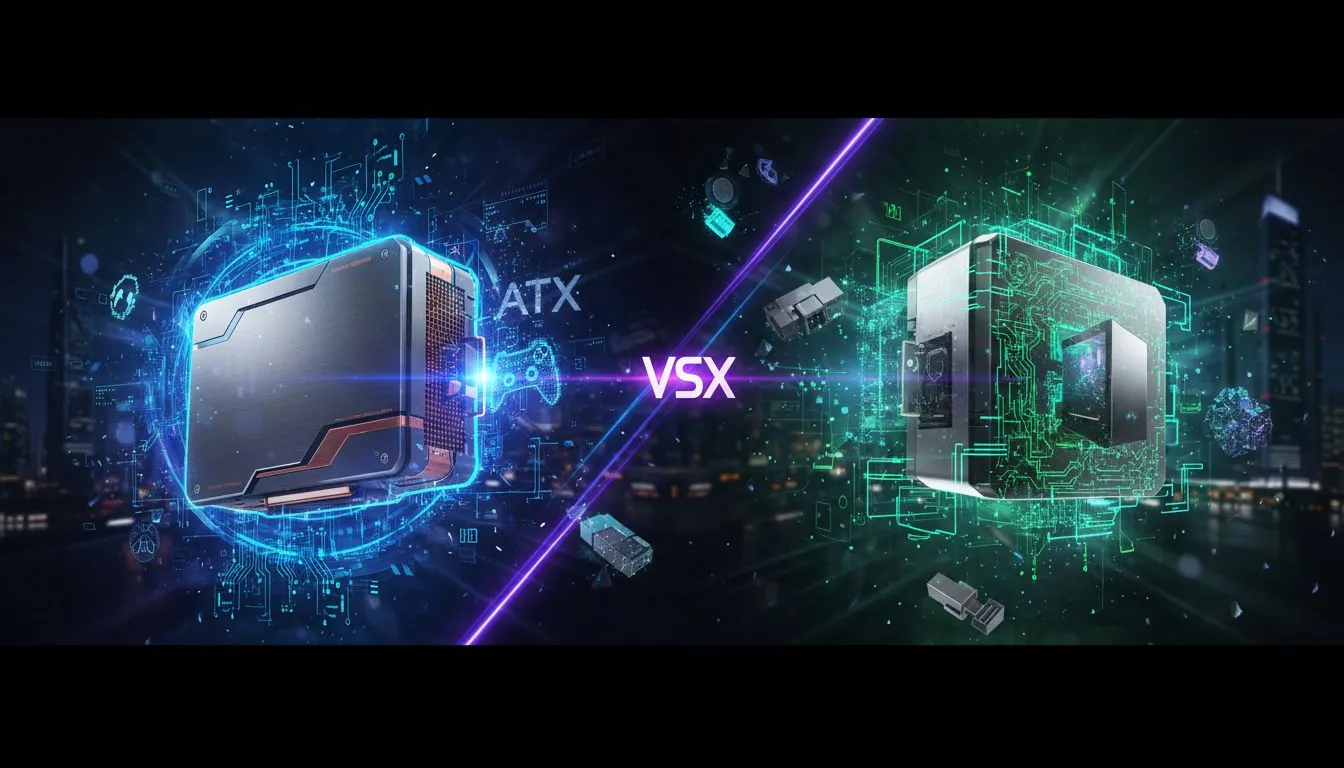
So you’re planning a new PC build… awesome! You’ve probably spent weeks agonising over the GPU and CPU, but what about the power supply unit (PSU)? It’s the unsung hero that fuels your entire rig. Choosing between an ATX vs SFX power supply isn't just a trivial detail… it's a foundational decision that impacts your case, cables, and even noise levels. Getting it right is key to a smooth, successful build. 🚀
Size Matters: The Core ATX vs SFX Power Supply Difference
At its heart, the debate between an ATX vs SFX power supply comes down to physical size. Think of it like choosing between a bakkie and a hatchback… both get you there, but they're built for different jobs.
ATX (Advanced Technology eXtended) is the long-reigning champion, the standard size you’ll find in most mid-tower and full-tower PC cases. Its typical dimensions are 150mm (W) x 86mm (H) x 140mm (D). This larger frame allows for bigger, slower-spinning fans, which often translates to quieter operation.
SFX (Small Form Factor), on the other hand, is the compact powerhouse designed for the growing world of Mini-ITX builds. It’s significantly smaller, usually measuring 125mm x 63.5mm x 100mm. This tiny footprint is essential for squeezing serious power into a case that can fit on your desk without dominating it.
Key Design Differences Beyond the Footprint
While size is the most obvious distinction, the design differences between ATX and SFX power supplies have practical consequences for your build.
Cooling and Acoustics 🔧
An ATX PSU’s larger size allows for fans of 120mm or even 140mm. These can move a lot of air at low RPMs, keeping the unit cool and your gaming sessions quiet. SFX units typically use smaller 80mm or 92mm fans. To achieve the same cooling, they often need to spin faster, which can create more noise under heavy load. However, many premium SFX models now feature zero-RPM modes for silent operation during light tasks.
Wattage, Efficiency, and Power
A few years ago, finding a high-wattage SFX PSU was a real challenge. Not anymore. Today, you can easily find high-performance SFX units capable of powering even the most demanding components. Whether you need a beastly 850 WATTS power supply or something more modest, both form factors offer excellent 80 Plus efficiency ratings (from Bronze to Titanium) to minimise wasted energy.
Check Your Clearances! 📏
Always double-check your PC case specifications before buying a PSU. Some compact cases might require an SFX PSU, while some larger ones might not have mounting holes for one. Using an ATX PSU in a case designed for it gives you more room for cable management. An SFX PSU in a big case might need cable extenders, which adds clutter.
Cables and Modularity
This is a big one. SFX power supplies come with shorter cables, perfectly measured for tight spaces in Mini-ITX cases. Using them in a large ATX tower would be a nightmare… the cables simply wouldn’t reach. Conversely, the long cables of an ATX PSU are a pain to manage in a tiny case. Thankfully, fully modular designs are common in both, allowing you to use only the cables you need. This is a lifesaver in SFF builds where every cubic centimetre counts. Many top brands like GAMDIAS offer great modular options.
So, Which PSU is Right for Your Rig?
The choice between an SFX vs ATX power supply ultimately comes down to one thing: your PC case.
Go for an ATX power supply if:
- You are building in a standard ATX mid-tower or full-tower chassis.
- You want the widest possible selection of models from various brands.
- Quiet operation under load is a top priority for you.
- You prefer the easier cable management that longer cables provide in a spacious case.
Go for an SFX power supply if:
- You are building in a Mini-ITX or other small form factor (SFF) case. ✨
- Space inside your chassis is extremely limited.
- You need the shorter, more manageable cables designed for compact layouts.
Brands like Corsair are famous for their reliable and powerful SFX units, proving that big power can come in small packages. Ultimately, matching your PSU to your case is the golden rule. It ensures compatibility, simplifies the building process, and sets your rig up for stable, reliable performance for years to come. Take a look at the vast array of power supply units available to see the options for yourself.
Ready to Power Up Your Build?
The ATX vs SFX debate is all about matching the component to the case. For the best performance, stability, and value in South Africa, getting the right PSU is crucial. Explore our massive range of PC components and find the perfect power supply to bring your dream rig to life.