

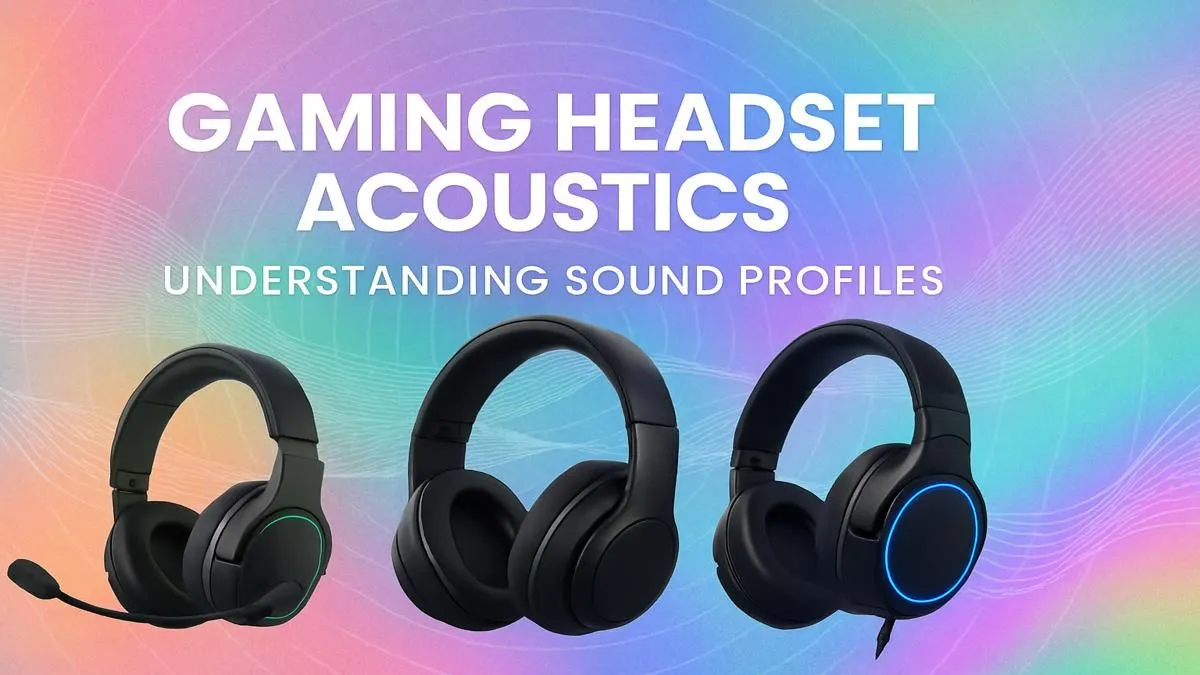
Tired of flashy RGB headsets that sound... well, flat? You're not alone. In the high-stakes arenas of competitive gaming in South Africa, seeing the enemy is only half the battle. Hearing them first is the real advantage. This guide cuts through the marketing noise to deliver a clear, no-nonsense breakdown of the best gaming headset acoustics. We'll help you understand what truly matters for that match-winning audio cue, turning your ears into your sharpest weapon. ⚡
What Defines the Best Gaming Headset Acoustics?
Forget confusing specs for a moment. Excellent gaming audio is about two things: immersion and information. You want to feel the thunder of an explosion, but more importantly, you need to pinpoint the exact location of that sneaky footstep. This is where understanding the core principles of the best gaming headset acoustics gives you a massive edge.
Soundstage: Your 360° Audio Radar
Think of soundstage as the perceived size of the audio environment. A narrow soundstage makes everything sound like it's happening inside your head. A wide soundstage, however, creates a sense of space around you. For gaming, a wider soundstage is generally better, as it helps you judge distance more accurately. Is that reload happening in the next room or down the hall? A great soundstage tells you instantly.
Imaging: Pinpointing Your Target 🎯
If soundstage is the size of the room, imaging is your ability to place every single sound within it. Superior imaging lets you track an opponent's movement with pinpoint accuracy, even when you can't see them. It’s the difference between hearing gunfire "to your left" and knowing it’s specifically coming from the second-floor window of the building at your 10 o'clock. This is arguably the most critical element of competitive gaming headset acoustics.
Frequency Response: The Full Spectrum of Sound
This refers to the range of bass, mids, and treble a headset can produce. While music lovers might chase a "flat" response for accuracy, gaming headsets often benefit from a slightly tweaked "V-shape" curve. This means slightly boosted bass for impactful explosions and enhanced treble to make crucial high-frequency sounds like footsteps and glass breaking stand out.
Open-Back vs. Closed-Back: Choosing Your Immersion
One of the biggest decisions you'll make concerns the physical design of the earcups. Each style offers a distinct acoustic experience.
- Closed-Back Headsets: These are the standard. They seal your ears off from outside noise, providing excellent passive noise isolation. This is perfect for blocking out distractions at a LAN party or in a noisy home. The trade-off is often a slightly narrower soundstage.
- Open-Back Headsets: These have grilles on the outside of the earcups, allowing air and sound to pass through. This creates a remarkably wide and natural soundstage, but it also means they leak sound and don't block any external noise. They're an amazing choice for gaming in a quiet room.
Exploring the full range of headphone and headset options can help you see which design fits your gaming setup best.
Pro Tip: Tune Your EQ for Victory
Most modern headsets come with software that includes an equaliser (EQ). For FPS titles like Valorant or Warzone, try creating a custom profile. Slightly lower the bass frequencies (around 60-250 Hz) and boost the upper-mids and treble (2-6 kHz). This will make footsteps and other critical audio cues pop, giving you a distinct competitive advantage.
The Great Debate: Wired vs. Wireless Audio Quality
Years ago, going wireless meant sacrificing audio quality and dealing with latency. Not anymore. Modern 2.4GHz wireless technology is virtually lossless and offers ultra-low latency that's indistinguishable from a wired connection for 99% of gamers.
The choice now comes down to convenience versus pure, uninterrupted signal. A top-tier wired headset guarantees a flawless connection with zero battery anxiety, which is a massive plus for marathon sessions. On the other hand, the freedom of a quality wireless headset is undeniable—no more getting tangled in cables during a clutch moment.
Tailoring Acoustics for Your Platform 🎮
Your gaming platform also plays a role in your audio experience. Consoles have their own unique audio processing technologies that the right headset can leverage beautifully.
Sony's PlayStation 5, for example, features the Tempest 3D AudioTech, designed to deliver incredibly immersive and accurate spatial sound. Pairing it with a compatible set of PlayStation headsets can truly elevate your gameplay. Similarly, the Xbox ecosystem supports technologies like Dolby Atmos for Headphones and Windows Sonic, so choosing from a range of certified Xbox headsets ensures you get the most out of your console's audio capabilities.
Ultimately, the goal is to find a headset with great fundamental acoustics that can accurately reproduce the spatial audio your platform is outputting.
Ready to Hear the Difference? Understanding acoustics is the first step. The next is finding the perfect headset that brings it all to life without destroying your budget. Check out the best gaming headset deals in South Africa and equip yourself with the audio advantage you deserve.











