You’re one kill away from clutching the round in Valorant. You peek, line up the perfect headshot… and a lag spike teleports you into the enemy’s crosshairs. We’ve all been there. That frustrating, controller-throwing moment often isn't your fibre provider's fault. It’s your Local Area Network (LAN) letting you down. Getting the best LAN configs to reduce ping isn't just for pro players; it's essential for any real gamer wanting a smooth, responsive experience.
Why Your Local Network Is a Silent FPS Killer
Many South African gamers invest in fast fibre but forget about the final, crucial meter of their connection: the link between their router and their PC or console. This is your LAN. While your internet speed (WAN) determines how fast data reaches your home, your LAN config determines how efficiently that data gets to your gaming device.
A poorly optimised setup, even with a 200Mbps line, can introduce latency, packet loss, and jitter… the three horsemen of a laggy apocalypse. An optimised LAN setup for lower ping ensures your inputs are registered instantly, giving you that critical competitive edge. ⚡
The Ultimate Showdown: Wired vs. Wireless
For pure, unadulterated performance, nothing beats a physical connection. A dedicated Ethernet cable provides the most stable and low-latency link possible, bypassing the interference and signal drops common with Wi-Fi. If you're serious about competitive gaming, exploring quality wired networking components is your first and most important step.
Of course, running a cable across the house isn't always practical. Modern Wi-Fi has come a long way, offering incredible speeds and much-improved stability. For many, a powerful router and a good wireless adapter are more than enough for a great gaming session. The key is choosing the right wireless networking gear to handle the demand.
Optimising Your Connection: Best LAN Configs to Reduce Ping
Whether you're Team Ethernet or Team Wi-Fi, you can take steps to slash that latency. Getting the best LAN configs to reduce ping involves a few key tweaks that can make a world of difference.
For the Wired Warriors 🔧
If you’re plugged in, you’re already ahead. But we can still fine-tune things:
- Cable is King: Don't use that old, frayed Ethernet cable from 2005. A Cat 6 or Cat 6a cable is the sweet spot, providing more than enough bandwidth for gaming and protecting against crosstalk (signal interference).
- Enable QoS: Quality of Service (QoS) is a feature in most modern routers that lets you prioritise traffic. Log into your router’s settings and set your PC or console as a high-priority device. This tells your router to handle your game data first, even if someone else starts streaming 4K Netflix in the next room.
Quick QoS Pro-Tip
Can't find a simple "Gaming Mode" in your router settings? Look for QoS settings by device. You can usually find your PC's or console's MAC address in its network settings and add it to the highest priority list in the router's QoS menu.
Making Wi-Fi Work for You 🚀
Stuck on a wireless connection? Don't despair. You can still dramatically improve your experience.
- Use the 5GHz Band: The 5GHz band is faster and less congested than the 2.4GHz band. If your router and adapter support it, make the switch.
- Router Placement: Keep your router in an open, central location, away from thick walls, metal objects, and other electronics like microwaves.
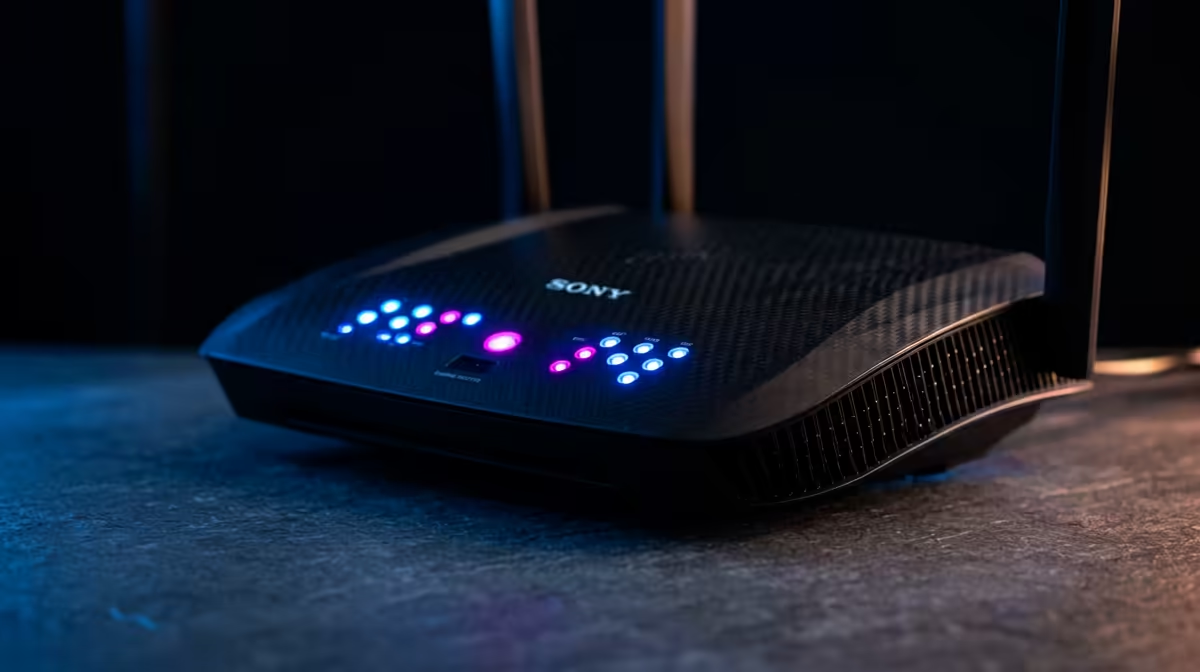
- Upgrade Your Hardware: Sometimes the router your ISP gave you just won't cut it. Brands like TP-Link offer fantastic gaming-focused routers with powerful processors and antennas designed for stability. Similarly, value-packed brands like Cudy provide excellent mesh systems and adapters that can eliminate dead zones and deliver a stronger signal to your rig.
Ultimately, a stable, low-ping connection is the foundation of every great gaming moment. By implementing these LAN config tips, you can ensure your gear isn't the reason you're staring at a respawn screen.