Ever dreamt of building the next big video game right here in South Africa? For years, that dream felt distant, blocked by massive hardware costs and the challenge of reaching a global audience. But now, the rise of cloud gaming game development is rewriting the rules. This new frontier offers incredible opportunities for local studios to compete on the world stage. But is it the magic bullet we’ve been waiting for, or just another hurdle?
So, What is Cloud Gaming Game Development Anyway?
Before we dive in, let's clear something up. This isn't just about playing games streamed from a server. Cloud gaming game development involves two key ideas:
- Developing for the Cloud: Creating games specifically optimised to run on platforms like NVIDIA GeForce NOW or Xbox Cloud Gaming, where the hardware is in a data centre, not your lounge.
- Developing in the Cloud: Using powerful cloud-based virtual machines and services to compile code, render complex 3D assets, and test games. This means a developer's local machine doesn't have to do all the heavy lifting.
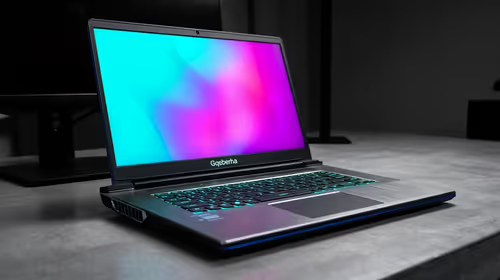
For a small studio in Johannesburg or Cape Town, this could mean getting started with more accessible hardware, like one of these budget gaming PCs, while offloading the most intense tasks to the cloud.
The Upside: Lowering Barriers for Local Studios 🚀
The potential benefits of cloud-based game development for Mzansi's creators are massive. The most significant is levelling the playing field.
Democratising Power
Instead of needing a R50,000 beast of a PC for every artist, coder, and tester on the team, a studio can use more modest local machines for creative tasks. The brutal, time-consuming work of compiling a massive game build or rendering a 4K trailer can be sent to a cloud server. This makes scaling a team more affordable, allowing studios to invest in talent rather than just silicon. While the lead dev might still need a powerhouse from our PCs above R20k range, the rest of the team could thrive on more affordable setups.
Global Reach from Day One
Publishing a game globally is a logistical nightmare. With cloud gaming platforms, a South African studio can theoretically launch their game simultaneously across the world. A player in Pretoria and a player in Paris could access the exact same high-fidelity experience, instantly. This bypasses traditional distribution hurdles and puts local stories on the global map. ✨
Local Dev Pro Tip 🔧
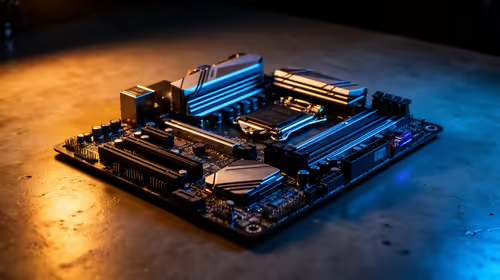
Even when using cloud services, a fast local drive is non-negotiable. Keep your source code, project files, and frequently used assets on a speedy NVMe SSD. This dramatically cuts down on sync times and lets you run local tests instantly before pushing bigger tasks to the cloud. Your local machine is still your primary creative tool!
The Reality Check: Mzansi's Unique Challenges
Of course, this is South Africa... and we have our own unique set of challenges. The two biggest elephants in the room are latency and data costs. High latency can make real-time collaboration on a cloud desktop feel sluggish, and the constant syncing of large game assets can chew through data caps faster than you can say "an unexpected outage.".
This is why a powerful local PC remains the heart of any serious development studio. The core creative loop—writing code, designing 3D models, creating textures—still happens best on a responsive local machine. The cloud is a powerful assistant, not a replacement. Your team still needs reliable hardware, whether that's a solid selection of PCs under R20k for the junior devs or a few key machines from our pre-built PC deals to act as local build servers.
Is the Cloud the Future for South African Game Dev?
Ultimately, cloud gaming game development isn't a silver bullet, but it is a powerful new tool in the arsenal for local studios. It promises to lower costs, simplify global distribution, and allow our incredible local talent to focus more on creating and less on managing hardware limitations.
The future is likely a hybrid model: strong, reliable local PCs for creative work, augmented by cloud services for the heaviest processing tasks. For aspiring developers, the message is clear: the dream is more accessible than ever, but it still starts with a solid foundation. And that foundation is a great PC. Finding the right balance of local power and cloud potential will be the key to unlocking the next generation of South African-made games. Check out the best gaming PC deals to find that perfect starting point.
Ready to Build the Next Mzansi Masterpiece?
The cloud offers new horizons, but every great game starts on a great PC. Whether you're a solo indie dev or building a studio, the right hardware is your foundation. Explore our massive range of Gaming PCs and find the perfect machine to bring your vision to life.